'It was too much to handle': What happens when remote travel goes wrong

 Getty Images
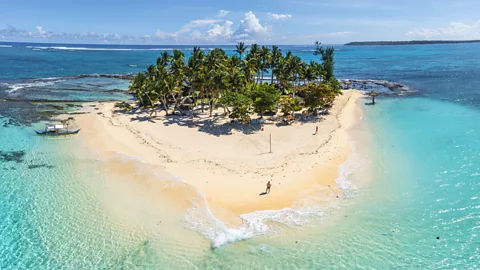
The idea of being a castaway on a desert island has an irresistibly romantic appeal: sun, sea and a whole ocean between you and your desk-bound life. What could possibly go wrong?
For a group signed up to a Desert Island Survival holiday, the answer was: everything. While they had willingly agreed – and paid – to be marooned for a week on an uninhabited tropical island with little more than a knife, a fishing line and a small group of companions, the group wrote SOS in the sand and asked to be rescued after just 24 hours.
But you do not have to sign up for a survival challenge to find yourself overwhelmed by a long-anticipated holiday to a faraway destination. Kelly Forbes, CEO of UK-based responsible luxury travel agency A'Aru Collective, says some guests in remote settings are finding even mild forms of immersion unexpectedly difficult.
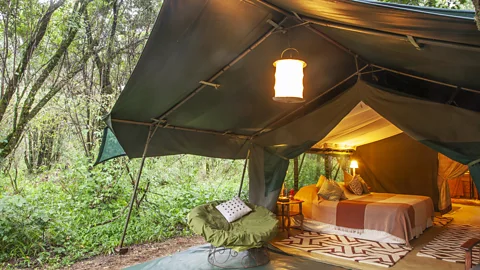
"One guest in the Seychelles was unhappy that they were woken by birds in the morning," she said. "Another found their over-water bungalow in the Maldives was too close to the ocean – the sound of the waves kept them up all night. Then there was the guest staying in a tented camp in a Kenyan game reserve who complained about a hippo brushing up against their tent. For me, these things would have been exhilarating, but for these guests, it was too much to handle."
 Getty Images
Similar complaints are being fielded in remote locations all over the world. At Skog Aurora Igloos in Kalix, Swedish Lapland, a guest noted that the silence was so complete it almost made their ears ring. "They were so used to sleeping with the soft background noise of a city that the absence of sound kept them awake at first," said founder Lea Pierrefitte. At one of Nomadic Resort's luxury Thai resorts in a primary forest overlooking the Gulf of Siam, guests were so disturbed by frogs croaking in the night that they demanded that the caretaker team go out and round them up – all in a resort renowned for its biophilic and sustainable approach.
These stories point to a growing chasm between the idea of a remote, nature-led holiday and the reality of experiencing one. With the dominance of off-grid travel in this year's travel trend and behaviour reports, it seems likely that this clash will only grow as 2026 continues. Virtuoso's 2026 travel trend report cites "space and serenity" as a key trend, while Vogue Business is calling disconnection the new luxury. Over the last year, A'Aru Collective has seen demand for remote island stays double.
We want to escape our increasingly hectic, screen-driven worlds, but when we do, it seems we're unable to handle the rewards.
When nature stops feeling idyllic
Tom Williams, founder of Desert Island Survival, believes part of the problem is that many people are no longer used to discomfort. "We have never lived in easier, more comfortable times," he said. "The payoff is our ability to deal with adversity."
 Getty Images
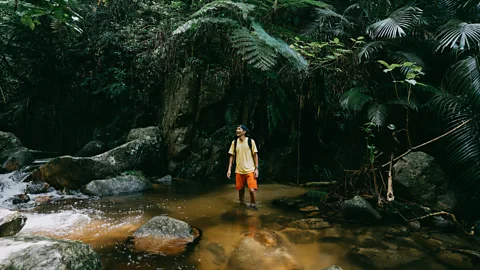
For those who can push through the initial shock, he says the rewards can be significant, "from building self-belief and resilience to dispelling limiting beliefs and helping you gain perspective and gratitude".
But that does not mean the transition is easy.
Louis Thompson, founder and CEO of Nomadic Resorts, agrees that many travellers are simply habituated to highly controlled environments, meaning that experiencing nature in the raw can be a surprise. "Most people live in a sanitised, air-conditioned environments and though they can sleep with the noise of constant traffic and sirens, natural noises sometimes astonish them," he said.
"We have also noticed that many children at our resorts have literally lost the ability or appetite to play outdoors or appreciate nature," he added. "It simply does not provide enough distraction – and they don't know what to do with themselves."
The holiday self versus the real self
Environmental psychologist and transport researcher Dr Sonja Haustein, a professor at the Technical University of Denmark, says that the issue is not just a mismatch between the holidays we want and the holidays we get. It is also a mismatch between the traveller we imagine ourselves to be and the person we actually are.
 Getty Images
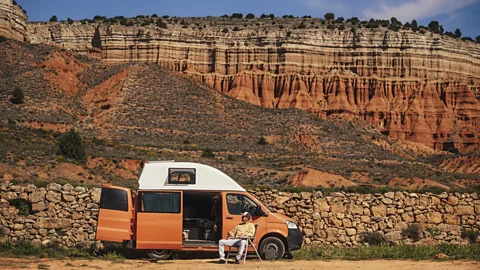
"In tourism research, we often see people wanting to be a different self when they travel," she said. "They want to be the ideal person on holiday and see themselves as a relaxed traveller, but it might not be true."
Often, she says, the desire for remoteness is tied to identity as much as experience. "Do you really want to travel somewhere remote," she said, "or is it really about how you want to see yourself and want to be seen by others?"
More like this:
Understanding that motivation can help travellers choose destinations that genuinely suit them. "If you're seeking status," she added, "maybe there is a more comfortable way to do it than going completely off-grid."
How to avoid remote-travel disappointment
If you are tempted to venture far off the beaten track, how can you make sure you are not set up for disappointment? Researching the destination carefully can help, but taking a moment to think about what you expect from a holiday is important too.
Travel advisors can help bridge the gap. While travellers once relied heavily on human advice, today's trips are often planned entirely online. Social media, AI tools and booking apps now allow travellers to book complex itineraries without speaking to anyone who has experienced the destination.
 Getty Images
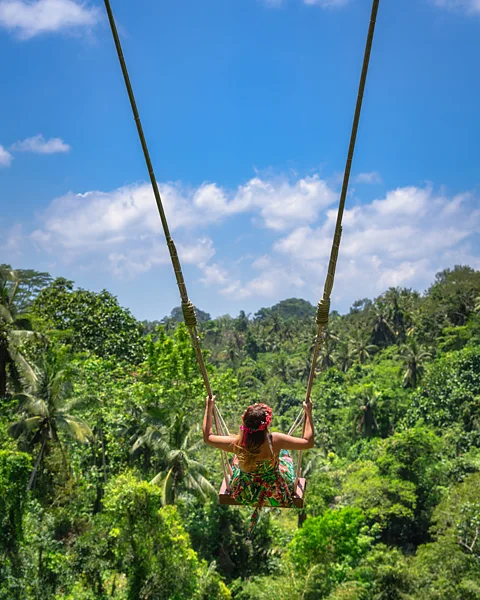
The result, says Haustein, can be a loss of essential context. While a social media post can show you the glamour of a jungle swing in Bali, it is unlikely to show you the hours-long queue to get on it.
"You have no actual bodily experience of the place, so it can feel really different when you arrive," she said.
Forbes says she spends time discussing destinations in detail with clients so they know what they are getting into. She is keen that they book a trip that's right for them – not just something that looked good on someone else's socials.
"Just because someone can afford these experiences – or because a friend has visited – doesn't necessarily mean it's the right fit for them," she said.
None of this means remote travel has lost its value.
Thompson argues that immersive time in nature can expose how unnatural many modern routines have become, and that contemplative experiences outdoors can be deeply restorative. "Many of the afflictions of modern life could be effectively treated with a digital detox in a woodland cabin," he said. "Just look at Finland, where public health guidelines recommend five hours per month in nature as a baseline for wellbeing."
The only question is, will you be tough enough to cope with it?
--
If you liked this story, sign up for The Essential List newsletter – a handpicked selection of features, videos and can't-miss news, delivered to your inbox twice a week.
