'Imperialistic urges and sexual politics': The story that skewered the British class system

 Alamy
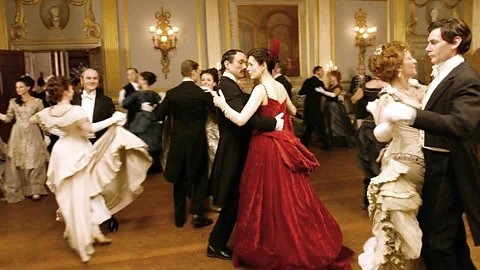
AlamyThe Forsyte Saga novels were "the lens through which we observe the state of the nation". As a new adaptation is about to stream in the US, how did this tale – of an upper-middle-class family in the late Victorian and early Edwardian era – encapsulate the timeless themes of power, generational tension and "new money"?
It has been lavishly adapted three times for TV, and there are several film and radio versions – including a 1949 Hollywood version with Errol Flynn. A recent five-hour stage production was a huge critical hit. The Forsyte Saga may have been around for more than a century but John Galsworthy's study of British class, family dynamics, social status and "new money" still has the power to resonate with, and sometimes shock, audiences and readers. Now a new TV adaptation is about to stream on PBS Masterpiece.
"The Forsyte family is the lens through which we observe the state of the nation," playwright and screenwriter Lin Coghlan tells the BBC. "It was a moment in history where imperialism and profit built families and institutions – but at an extraordinary cost. A theme which never becomes irrelevant."
The Forsyte Saga comprises three novels and two short stories, and is the first section of the larger trilogy The Forsyte Chronicles. Coghlan adapted – with Shaun McKenna – Galsworthy's novels for BBC Radio 4, and subsequently their two-play adaptation transferred to the Royal Shakespeare Company (RSC). She says: "Although the early books in the series open at the close of the 19th Century, the family that Galsworthy creates feels like a family we can recognise, whatever the era we live in. The family members are competing in terms of success, and also in the battle for recognition. These are largely men. The women are grappling with different challenges."
Galsworthy's writing career spanned the first three decades of the 20th Century and in 1932, he won the most prestigious literary award of all, the Nobel Prize "for his distinguished art of narration which takes its highest form in The Forsyte Saga", said the judges.
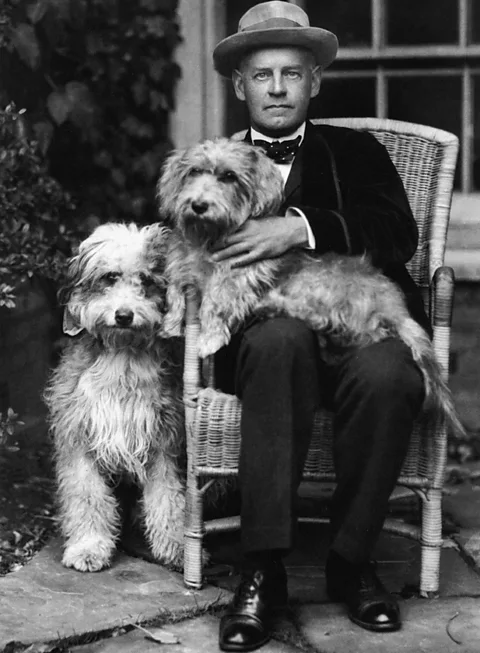
Gill Durey, honorary associate professor at Edith Cowan University in Western Australia and the author of a book about Galsworthy, says he was a worthy recipient of the prize. "He is a realist writer, writing about issues considered modern in his era," she says. "The novels are very readable, the characters well drawn and distinctive. The focus is on relationships and the difficulties encountered in life. The main characters are the wealthy Forsytes, but ordinary people's struggles feature, too."
 Alamy
AlamyDurey points out that writers from a different literary tradition didn't rate Galsworthy and were critical of his work. "The Modernists – Virginia Woolf, Rebecca West, DH Lawrence, James Joyce – were furious about Galsworthy's Nobel Prize and tried to denigrate him," she says. Yet The Forsyte Saga has nevertheless proved to be an exceptionally enduring tale, that is still pertinent today.
The British Gilded Age
The first Forsyte novel, published in 1906, is called The Man of Property. This is about Soames Forsyte, a wealthy London solicitor. He and his beautiful but emotionally distant wife, Irene, are at the heart of the story, which features four generations of the family.
The Forsytes are "new money" who, only a few generations ago, were farming the land. Consequently they are looked down upon by older, monied families, in much the same way that the elite New York families of America's Gilded Age in the late 19th Century saw themselves as socially superior to the industrialists newly arrived on the scene. Galsworthy was sometimes compared to Edith Wharton, Pulitzer-Prize winning chronicler of the Gilded Age.
 Mammoth/ Masterpiece
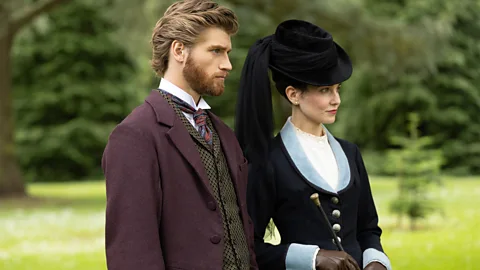
Property, in the sense of capital and investments, is Galsworthy's key theme. "We are, of course, all of us the slaves of property," remarks one character. Galsworthy uses Soames to explore the damage that can be caused by the attachment to wealth and possessions. To Soames, Irene is as much a piece of his property as the paintings and beautiful objets d'art he collects (purely as financial investments). Everything is transactional to him.
Pivotal to the entire story is an episode in which he rapes his wife – although marital rape was not illegal when Galsworthy was writing: it was not outlawed in the UK until 1991. But it is evident from the far-reaching and profound consequences of the incident that it is a moral offence, even if it is not a legal one.
However, Coghlan argues that the books can be viewed as empowering, when it comes to their depiction of female characters: "There is no doubt that at the time the books were written, Irene cut a powerful and challenging figure in terms of the norm for middle-class women of the time. She is pressured at 19 into marrying Soames, mainly because she has no money and no family to protect her."
 Alamy
Alamy"After enduring years of unhappiness and then physical abuse," says Coghlan, "she escapes the family but must endure disgrace. However, she crafts a life of self-respect and independence, earning her own money and becoming her own person. In this respect her journey celebrates a woman fighting against the system and ultimately triumphing. When she finally marries again it is on her own terms."
Durey agrees with this reading of the novels as socially progressive. "His female characters increasingly show their influence in society: Fleur [daughter of Soames and his second wife Annette] with her philanthropic work and Dinny Charwell [of the third trilogy] with her interest in slum clearance," she says.
Another of the books' themes is imperialism – dominion over other nations, as well as the dominion of one generation over another, and of one person over another. The family is the empire in miniature. Says Coghlan: "The younger characters argue with the older generation about the ethics of one country having power over another against its will, and at one point this is likened to a man having power over a woman who wishes to be free of him. Imperialistic urges and sexual politics are explored repeatedly in the books."
Generational conflict
Soames is a man stuck in the past who struggles to adapt to the new era's different ways and social mores, but the younger Forsytes struggle to escape the shadows cast by the family elders. This reflects what was a major period of national transition, as Britain moved from the Victorian period to the Edwardian era.
Towards the end of his life, it is obvious that Soames has regrets and is questioning whether his materialistic philosophy has made sense. Spoiler alert – the deeply ironic manner of his death, in the sixth novel in the sequence, makes very clear what Galsworthy's view was.
More like this:
• The 19th Century US home that embodied the super-rich
• The truth about Tudor England’s 'most hated woman'
• The 1958 novel that skewered the super-rich
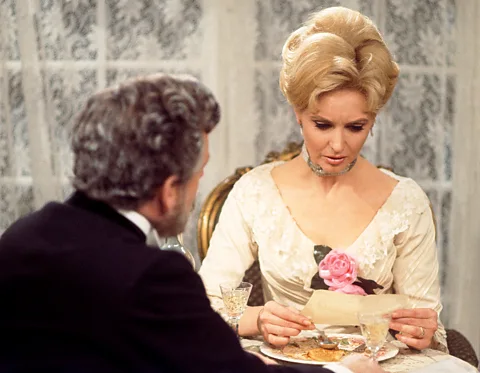
Galsworthy's novels, and especially the much-loved 1967 BBC television adaptation of them, paved the way for period dramas such as Upstairs Downstairs and Downton Abbey, shows with large casts and wealthy characters, in which social hierarchies and complicated family relationships are placed under the spotlight. There are echoes of them in the likes of media dynasty drama Succession, even in the new Netflix documentary Dynasty: The Murdochs, testimony to the timelessness of Galsworthy's portrayal of tricky familial rivalries.
 Alamy
AlamyGalsworthy, who had been born into the same wealthy social milieu as the Forsytes – and attended Harrow School and Oxford University – died in 1933, the year after winning the Nobel Prize. He had already given away much of his wealth, and in his will, he made the inhabitant of the tied cottages on his estate their owners.
In his five-star review of the two-play adaptation of The Forsyte Saga at the RSC, Times theatre critic Clive Davis expressed his hope that the shows "will send audiences off in search of the novels". Perhaps the latest TV version, The Forsytes (with a second season to follow), will too.
The Forsytes premieres on 22 March on MASTERPIECE on PBS and Prime Video.
--
If you liked this story, sign up for the Essential List newsletter – a handpicked selection of features, videos and can't-miss news, delivered to your inbox twice a week.
For more Culture stories from the BBC, follow us on Facebook and Instagram.
