Everybody Digs Bill Evans review: A moving, tragic biopic of a tortured jazz great ★★★★☆

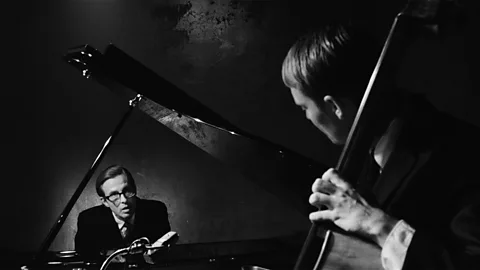
Bill Evans was a boundary-breaking US pianist who contended with multiple personal tragedies, and a serious drug problem. This new drama about him will draw you to his hypnotic music.
While they may be a favourite of awards season, musician biopics have become an increasingly maligned genre, with their clichéd tropes – the sudden creative revelations, the tortured rise-and-fall-and-rise narrative arcs. The big problem – as with films about any type of artist, frankly – is: how do you really go about conveying and exploring their genius, ineffable as it may be?
This drama about tortured US jazz legend Bill Evans, played by Norway's Anders Danielsen Lie (The Worst Person in the World), doesn't entirely crack that conundrum, but it's atmospheric, beautifully visualised and captures something powerful about the poisoned chalice of possessing exceptional creative talent.
Its Irish director Grant Gee is perhaps best known for his disorientating 1997 rockumentary Meeting People is Easy, which caught the band Radiohead at a low ebb as they travelled the world following the overwhelming success of their album Ok Computer. Everybody Digs Bill Evans is a more collected, composed piece of work, but no less frank.
Evans was a pianist known for his pioneering influence on the form, and in particular for how he revolutionised the jazz trio alongside bassist Scott LaFaro and drummer Paul Motian. The film opens vividly, by pitching the viewer into a New York club in 1961, where the threesome are performing: cutting between the musicians' hands, lips, and eyes, the latter closed in quasi-orgasmic reverie, Piers McGrail's gorgeous black-and-white cinematography is deeply, beguilingly sensual, to match their playing.
But before the credits have even finished, tragedy has struck – Scott dies in a car crash after falling asleep at the wheel. And from there, the film becomes a much starker, bleaker – and altogether less musical – affair. Evans deals with the emotional fallout – or not, as the case may be – by cancelling gigs, retreating into heroin use (cue familiar close-ups of bubbling spoons) and sleeping on the couch of his brother Harry (Barry Ward).
There's an incredibly moving early scene where Evans opens up to Harry's empathetic wife about Scott: in his regretful speculation about how he may have disappointed his musical partner, and his quiet tears, we sense the magnetic, quasi-romantic connection of their relationship. But it's a rare moment of emotional expressiveness from Danielsen Lie; otherwise, Evans remains a taciturn, inscrutable figure, who at some points recedes into the background of his own story like a ghost.
More like this:
That's particularly so when Evans moves in with his parents, played by Laurie Metcalf and Bill Pullman, and sets about going cold turkey. Metcalf is both tough and tender, while Pullman is given notes of Willy Loman-esque disillusionment with the middle-class American dream. Both these beloved Hollywood old hands are simply wonderful, and their screen presence is so hefty that they often pull focus from our withdrawn protagonist.
Nevertheless, as the film goes on, Gee and screenwriter Mark O'Halloran offer insight into Evans' enigmatic character. While those around him, including Harry and his girlfriend Ellaine, tragically struggle to regulate their emotion, he shuts down not just as a form of self-protection, but to enable his virtuosity. In order to be in the present moment with his jazz, he explains in the film's closing moments, he must “push everything away”, grief included, and exist “outside life”.
Everybody Digs Bill Evans
Director: Grant Gee
Cast: Anders Danielsen Lie, Laurie Metcalf, Bill Pullman, Barry Ward
Run-time: 1hr 42m
Conceptually, it's interesting – the portrait of an artist who feels less than others, not more – though in practice, it makes for a slightly too affectless viewing experience at times. Brief flash forwards to the 1970s and '80s take place in colour, which you'd expect might signal a vibe shift – except Evans hardly seems more animated, and they're too brief to really elucidate anything further about his life and career.
But this is a deeply humane, tragic work, that is all the better for focusing on a perhaps lesser-known name to contemporary audiences than many biopics. It should have you searching out Evans's music if you didn't know it before: we may only hear relatively brief snatches of it, but it's no slur on the film to suggest its piercing intimacy is the single most hypnotic thing here.
★★★★☆
--
If you liked this story, sign up for The Essential List newsletter – a handpicked selection of features, videos and can't-miss news delivered to your inbox every Friday.
