Lord of the Flies review: This desert island-set drama is a 'bold, chilling' nightmare ★★★★☆

 Eleven Film
Adolescence writer Jack Thorne has adapted William Golding's classic novel for his latest TV series about murderous male youth – but it's a very different beast.
Jack Thorne has long been an acclaimed and prolific playwright and screenwriter, with credits including mega stage-hit Harry Potter and the Cursed Child. Nevertheless, last year's Netflix phenomenon Adolescence, which he co-created with actor Stephen Graham, sent him into a different stratosphere, given how its tale of a 13-year-old killer cleaned up at the Emmys and sparked a global debate.
So you might say that Thorne choosing next to adapt William Golding's classic novel Lord of the Flies was simultaneously good brand-building and tempting fate, given its superficial narrative similarities – another tale of boys behaving gruesomely. Yet in fact, Golding's story of a school party gradually descending into violent anarchy and murderousness after their plane crashes on a desert island, is a very different beast – much more an allegory about the troubles of society full stop than those of male youth.
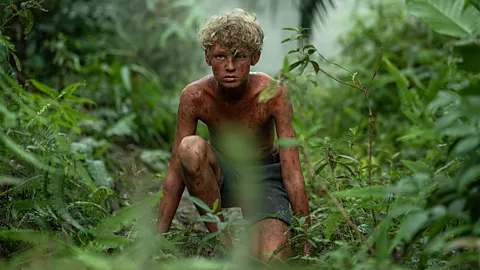
What Thorne's bold, chilling four-parter pulls off so expertly is to make the narrative function on two levels – naturalistically, as a tense and immersive thriller, and philosophically, as a dark inquiry into the malignity of collective human behaviour.
His version of the story, which has had its international premiere at the Berlin Film Festival, retains the book's period setting, with the boys speaking in an archaic, upper-crust British vernacular involving "long vacs" (holidays), "togs" (clothes) and "gnasher paste" (toothpaste). But otherwise, as takes on widely-studied classics go, this feels strikingly fresh and distinct.
Structurally, Thorne's key innovation is to present each episode from a different point of view, lending it an intimacy of characterisation that is complemented by Marc Munden's impactful direction. From disorientating fish-eye-lens camerawork to Terrence Malick-style cutaways to nature in action (ants swarming, beetles scuttling), Munden really envelops the viewer in island life. Meanwhile the over-saturated colour palette – blazing reds and oranges, horrifyingly garish greens – gives the whole thing the hallucinogenic quality of a nightmare, something bolstered by The White Lotus composer Cristobal Tapia de Veer's rumbling, discordant score.
All props should go to the casting department too – it's certainly a boon that the series begins with an hour centred on such a charismatic performer as David McKenna, who plays the doomed Piggy – the group's bespectacled voice of reason who tries to establish order but is disregarded and mocked for his weight, among other things. Far from making him a tragic victim, the 12-year-old Northern Irish actor (making his professional debut, astonishingly) imbues him with such charm and self-possession that it's even more unjust that he is so roundly ignored by the others. It's almost a shame when, come the second episode, the protagonist's mantle passes onto his nemesis, the entitled, populist Jack, who forms a breakaway camp and is the real instigator of chaos – though Lox Pratt is also excellent in that role, capturing the vulnerability beneath the character's sneering bravado.
More like this:
Another embellishment here is that Thorne affords Jack and other main characters a little more backstory about their pre-island childhoods, including via flashback. Such extra detail is fine, though I'm not sure it was strictly necessary either – because the real, disturbing power of Lord of the Flies lies in the fact that these characters, and their dynamics, are so archetypal.
That's no more so the case than with Ralph, the group's elected chief, a leader who is fundamentally decent, but whose flaws are evident from the beginning in the way he joins in the derision of Piggy to curry favour. It may centre children, but this is, of course, far from a children's story – yet by the same token, it's a series made for the most enlightening kind of family viewing, from which all generations can really take something.
★★★★☆
Lord of the Flies is currently screening on BBC1 and BBC iPlayer in the UK, and will be available on Netflix in the US at a later date
--
If you liked this story, sign up for The Essential List newsletter – a handpicked selection of features, videos and can't-miss news, delivered to your inbox twice a week.
