'His intense, unblinking stare is perfect': The dog-centred horror led by a new canine acting 'superstar'

 Vertigo Releasing
Acclaimed indie film Good Boy tells its scary story from the point of a view of a pooch. It's the latest project to showcase an extraordinary performance from our four-legged-friends.
In the middle of night in a remote farmhouse, a mysterious dark figure flits through a living room. The main character looks up, and a sense of dread flashes in his eyes, as he gingerly walks across the room to investigate further. But then a whistling noise stops him dead in his tracks. This scene, among others in new horror film Good Boy, has earned huge plaudits for its lead actor, Indy, since the film premiered at South By South West festival in March. A critic from IndieWire dubbed the mononymous star "one of the most emotive actors of his generation… regardless of species", while The Hollywood Reporter commented on his "emotional power… he takes the ball and runs with it".
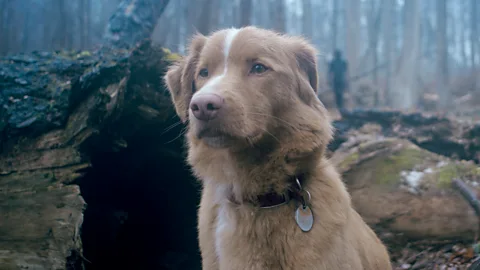
If you haven't already guessed, Indy is a dog – a Nova Scotia Duck Tolling Retriever, in fact – whose serious screen presence is propelling the low-budget indie into the cultural conversation. Good Boy, co-written by Ben Leonberg and Alex Cannon, also directed by Leonberg, takes the hoary haunted house genre and flips it on its head with an ingenious twist: the story is told from the point of view of a dog, who is called Indy in the film as well.
It's a truly mesmerising watch, as Indy's owner, Todd (Shane Jensen) – suffering from an unspecified serious illness – moves the pair to his late grandfather's spooky house in the countryside. But Indy sniffs out some dark forces who threaten his and Todd's existence, and we follow the dog's surprisingly well portrayed fears as he investigates the ghoulish situation.
"The idea started as a concept after watching Poltergeist [1982] for probably the 100th time," Leonberg tells BBC Culture. "In the opening of that film, the family's dog clearly senses the presence of the ghost before anyone else. That trope of 'the dog who knows better' appears in so many horror films, and I thought, 'Someone should really tell that story from the dog's perspective.'"
Leonberg didn't have to search far to cast the lead, as Indy is his own dog, who he thought could be perfect due to his "intense, unblinking stare". Through expressive head tilts, whimpers and inquisitive stares, Indy certainly takes the audience along with him on the terrifying experience of the discovery of some sort of supernatural force. And, as the human faces in the film are mostly obscured, the viewer also experiences the frustration of a loyal animal trying to warn his owner of trouble, only to be – sometimes cruelly – dismissed. This unusual perspective makes the film surprisingly affecting.
Over the course of three years, Leonberg and his wife, Kari Fischer – also a producer on the movie – filmed Indy in a huge variety of situations and scenarios. "It came down to having the camera ready at the right time in the right place," he explains, "then guiding him with simple cues, noises, gestures, and food into those circumstances, and being ready to capture his instincts rather than impose our expectations on him.
"These [moments] could be edited together to create an illusion of a performance," he says. "On camera, if you cut from his gaze to what he's looking at, the audience instinctively creates the meaning. We often connect the dots when watching horror films and Indy was naturally suited to help the audience do that."
Indy is not the only domestic animal currently winning accolades for their performances in a film. Darren Aronofsky's heist caper Caught Stealing features the scene-stealing Tonic the cat, playing Bud the cat – his co-star Austin Butler told NPR: "He had this very primal fire in his eyes, you know… On top of that, he could stay on a mark for an hour and a half, he's just so focused".
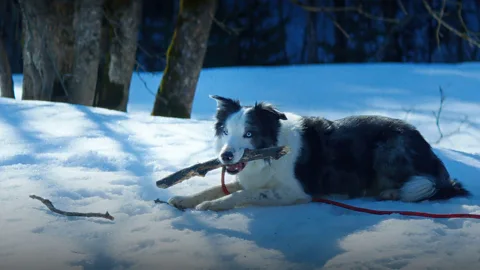
Meanwhile, 2023 French Oscar-winner Anatomy of a Fall shot blue-eyed border collie Messi to fame, thanks to his virtuoso performance as Snoop the dog. He received so much acclaim – in particular for a climactic scene, in which he had to play dead, to imitate being poisoned – that there were even calls for him to be awarded with an Oscar.
 Alamy
AlamyUpcoming Spanish Oscar contender, apocalyptic road-trip drama Sirât, also has a starring role for a dog: a Jack Russell terrier called Pipa. Although she has sadly passed away – as revealed by her owner, one of the film's human stars Jade Oukid – she was recognised posthumously with a Grand Jury prize at this year's Palm Dog awards in Cannes. A quirky spin-off from the main festival awards, founded in 2001 by film critic and dog-lover Toby Rose, it gives accolades for the best canine performance in that year's crop of films. The winner in 2014 was the entire canine cast, all plucked from animal shelters, of White God, a Hungarian production in which dogs rise up against humans who have treated them with cruelty. That film still stands out as one of the most ambitious examples of what can be achieved with dogs on screen.
A canine screen 'resurgence'
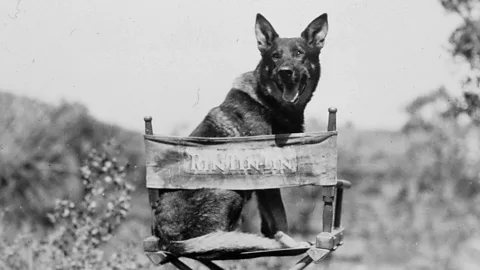
Since the advent of cinema, man's best friend has had a starring role to play on screen, from famed German Shepherd Rin Tin Tin in the 1920s – who acted in 23 films – to the sequence of collie dogs who took on the role of Lassie across films and TV shows since 1943, right through to the late Uggie, another Jack Russell terrier, who won the Palm Dog in 2011 for his role in Oscar-winner The Artist.
Whether we're seeing more dogs – or animals in general – in films is debatable, but the film critic Peter Bradshaw, who is also on the jury of the Palm Dog awards, noted that this year there were a remarkable 25 films at Cannes with significant roles for dogs that were up for consideration. And Wendy Mitchell, author of Citizen Canine: Dogs in the Movies, and a juror for the Palm Dog, believes "there's been a real resurgence of dogs in movies recently".
"I think more people are realising how they can use animals, especially dogs, to great effect in cinema, and it's not just a cute little dog in the corner curled up at somebody's feet," she explains. "They can stand in for human emotions in a way that we sometimes don't see in humans. I think this trend probably really started again with Uggie in The Artist – a fantastic performance, totally scene-stealing. It's hats off to some of these dog trainers and the film-makers.
"I think Good Boy is an absolutely stunning piece of work and Indy is a superstar," she adds. "There is so much emotion from this dog, and I think it's a triumph."
According to long-time Hollywood and Broadway animal trainer Bill Berloni, the realisation that animals need to be properly incorporated into sets, and can't simply be treated "as props" is in turn bringing out better performances from dogs on screen.
 Alamy
AlamyBerloni – who most recently worked on the HBO series And Just Like That…, where he trained the animals playing Carrie's cat Shoe and Charlotte's bulldog Richard Burton – says he helped pioneer "positive reinforcement training" for dog actors, involving rewarding them with treats for obeying commands, as opposed to old-school discipline training, based around punishment for not obeying, which was harmful to them as it caused them stress. He made his name as a trainer aged just 20 when his shelter dog Sandy starred in the original 1976 Broadway production of the musical Annie. Working with Sandy on his performance, he conceived what became known as the "Baloney drop" – a technique in which a human actor dropped a piece of baloney, which made less noise than a conventional treat, to get the animal to hit their mark.
Berloni drew up on a farm with a dog, a cat and a rabbit. "I realised that I had to play their games," he says, "and if I hurt their feelings, they wouldn't play with me. So the idea is communicating with another animal to work out what they enjoy and is fun."
"The key to good performance," he explains further, "is all tied in to nature, nurture, personality and past experience. All those things play into who they really are when you start training them. You need a dog that's naturally social, motivated – so they have something to work for – and not too shy. That's easy to find in a golden retriever, but in chihuahuas, for example, it's more difficult. But they're out there."
The secret to great dog 'acting'
Berloni has a very particular way of working on film and TV sets with animals, and asks to be brought in early on in the production. If the animals aren't given rehearsal time or time to bond with their co-stars, who also need to become their trainers, then he will pass on the job.
"Humans with cognitive thought processes are given as much time as they need to prepare for a performance," he says, "while the animal is expected to be dropped into the set and be like a robot." He cites the 2024 film, The Friend – in which Walter (Bill Murray) leaves a Great Dane, Apollo, to his friend Iris (Naomi Watts) after his death – as one of his best experiences working on a production: "That felt like a once-in-a-lifetime film and it really paid off."
 Alamy
AlamyFrom the outset of The Friend – which was six years in the making – Berloni was on board, consulting on ways to incorporate aspects of the canine actor Bing's personality into the script. "I asked Naomi Watts if she would be willing to rehearse with the dog," he adds, "and she said, 'Yes, come to my house and work with me there, I'd be glad to do it.' So for a month, we turned her into a trainer, so from day one on the set, she had a relationship with the dog, and those themes helped the dog be motivated to do the scenes and [portray] the emotions it needed for the film."
More like this:
• 12 of the best films to watch this October
• One Battle After Another is a 'dazzler'
• The overlooked goddess of Italian cinema
However, while Berloni helps dogs to give great performances, he disputes the idea that they – or any other animal – can "act": "It's all play," he says. "As I say to directors, dogs don't act. I get upset when the reviewers talk about the acting abilities of a dog, they don't have any – the trainers have made that all happen."
There have previously been calls for animals to get their own Oscars category, but with casting agents only just being set to be recognised in the 2026 Academy Awards, this seems unlikely. "I don't think animals should receive Oscars," says Berloni, but he believes "animal trainers should. Think about the Oscars that go to people who are not on camera. They are recognised for the work they do to create the onscreen images. I love animals, but to give them acting awards is to anthropomorphise them, and that's inappropriate."
In any case, maybe cinema's star canines don't need the validation of an Academy Award. As Good Boy prepares for its global release, Leonberg says, Indy is thriving. "We've had lots of requests for new videos with Indy for social media and festival intros," he says. "He's happy to be back to work and to keep getting treats for a job well done."
Good Boy is in cinemas in the US from 3 October, and in the UK from 10 October.
--
If you liked this story, sign up for the Essential List newsletter – a handpicked selection of features, videos and can't-miss news, delivered to your inbox twice a week.
For more Culture stories from the BBC, follow us on Facebook and Instagram.
