12 stunning buildings that bring nature inside

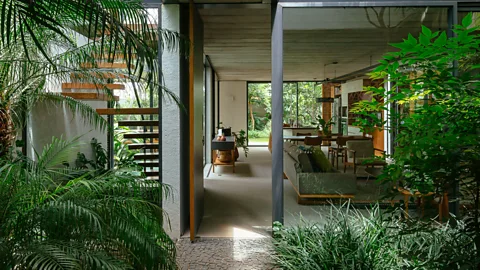 Pedro Kok/ CHX Arquetitos
A new book showcases projects around the globe that offer a way forward for building with nature – from an "office farm" in Vietnam to rammed-earth villas in the Costa Rican jungle.
The following is an edited extract from an introduction by Carlo Ratti to The House of Green (Gestalten).
How can we build with nature? Designers have been asking this question for the past 150 years but often without understanding the meaning of the word "with".
Think of the great Victorian planner Ebenezer Howard, who believed that nature could cure the ills of city life – pollution, disease, and overcrowding. In 1898, he laid out his vision for a "Garden City," where even the poorest worker could enjoy green spaces, which were painfully unavailable in his London.
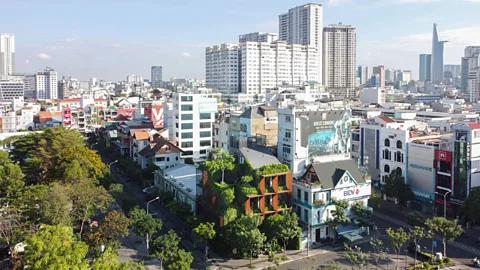 Hoang Le/ TAA Design
Today, variants of Howard's "Garden City" have bloomed across the world but by another name: the suburb. Suburban areas might exhibit a semblance of greenery, but it tends to be merely superficial in nature. Their key feature, the lawn, must be carefully mowed, weeded, and watered to imitate an English country estate. Even worse: the creation of "natural" suburbs often destroyed vast swathes of actual nature.
Pedro Kok/ CHX ArquetitosDespite their good intentions, Howard and his followers did not build with nature; they used it as a prop. Building with nature means listening to it. In the age of climate change, we cannot afford to simply use green elements for our enjoyment. If we do not build with nature, we will demolish ourselves along with it.
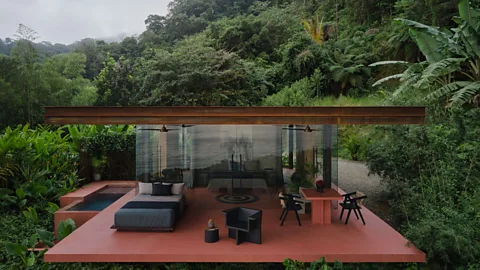 Rory Gardiner/ Formafatal
This requires more than decorative greenery; our task as designers is much deeper, almost philosophical. It involves ending the conflict between the built and natural environment. In other words, building with nature means that architects must take nature as a partner – not an easy feat for a profession where egocentricity often prevails.
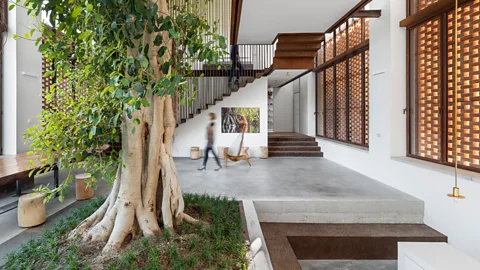 Delfino Sisto Legnani & Alessandro Saletta/ CRA
First, we must protect nature – and copy nature – in our use of resources. Reducing unnecessary, wasteful building is an even more important strategy, but we still need to create new homes and businesses, especially where the population is growing. When we do have to build, we need to shift away from a linear economy in which resources are used and disposed of in a one-way, straight line. Instead, we need a circular economy, where everything is recycled and reused. When a plant or an animal dies, its body returns to the soil. Could our buildings do the same?
 Jaime Navarro/ Soler Orozco Arquitectos + JSA
One solution to achieve a circular economy is to embrace natural construction materials. Wood, stone, and mud bricks create much less waste than concrete and steel. Even better, we can use new technologies to create experimental bio-based materials. We can build with mushroom mycelium, or even food waste – and innovate design along the way.
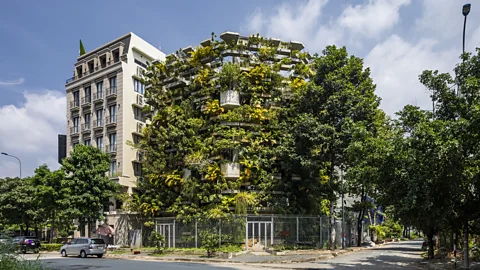 VTN Architects
Second, we must bring living things into the built environment – not solely for aesthetic appeal but for practical functionality as well. In Urban Jungle (2023), Ben Wilson explains that metropolitan areas are havens of biodiversity. Almost half of Australia's endangered animals live in cities – with lots of rubbish to eat and alleys to hide in.
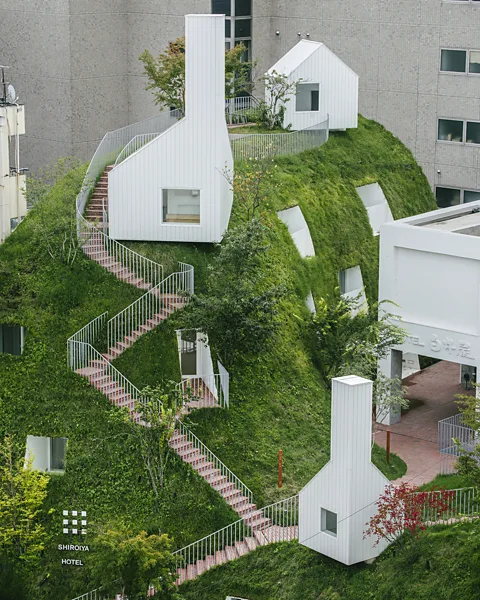 Katsumasa Tanaka/Sou Fujimoto Architects
The biologist EO Wilson famously theorised that all humans experience a love of nature called "biophilia". To satisfy that, we need more than fancy parks. Our cities need wild gardens and green corridors for animal migration – more messy but more natural. The more species we save, the more we can help the Earth adapt to climate change.
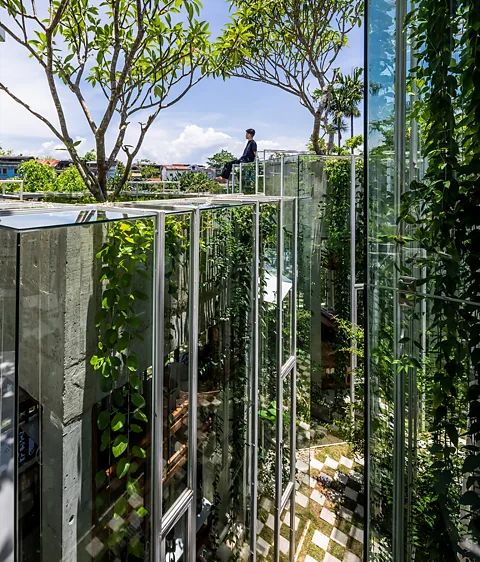 Nguyen Khai Architects
It is perfectly possible to build with nature in the middle of our cities. Other benefits of green building are even more immediate. Cities from 16th-Century Tenochtitlan to 19th-Century New York once grew huge amounts of food. We should bring back urban agriculture today. Even if the food produced through urban farming is not enough to feed all city inhabitants, it can foster a closer connection between people and nature.
Methods like hydroponics (growing plants in water), aeroponics (growing plants in the air), and robot-assisted indoor farming can help us grow plants in new places, and old-fashioned community gardens can create social opportunities.
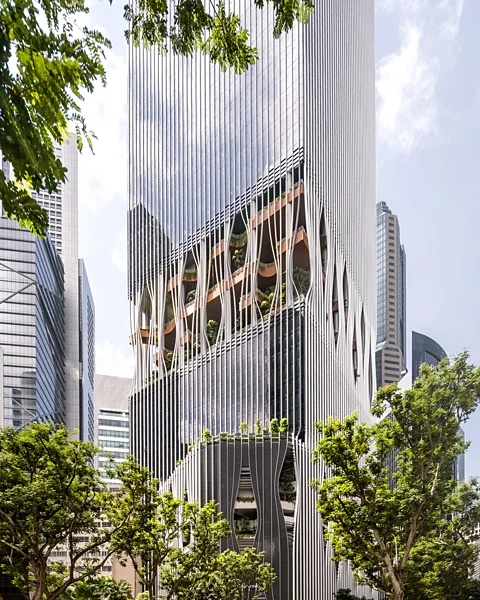 Finbarr Fallon/ BRG/CRA
Across the world, building projects are finding ways to reunite the natural and artificial worlds. There are many fancy names and theories: philosopher Bruno Latour calls it "transhumanism"; anthropologist Albena Yaneva and architect Alejandro Zaera-Polo call it "cosmopolitics". The architect R Buckminster Fuller famously told us to imagine that we are all passengers on a single "Spaceship Earth" flying across the stars.
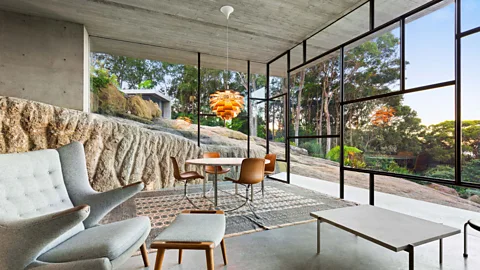 Tony Marshal/ James Stockwell Architect
To make environmentalism work in design, we must embrace today's tools: the digital revolution. We sometimes think that technology is the opposite of nature, but this dualism misses the point. In fact, sensors, networks, and artificial intelligence can make our buildings more like living things: able to respond and evolve. "Smart" and "sustainable" can form a harmonious alliance.
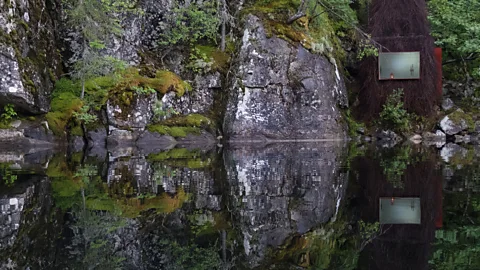 Mariana de Delás/ Gartnerfuglen Arkitekter
Nature always finds places to grow: in holes between bricks and cracks in the sidewalk. With technology, we can create new cracks for life to take hold. For example, my design studio has been working on a 51-storey "farmscraper" in southern China, where 108,000 sq ft (10,000 sq m) of crops will grow along the walls. Not only will the tower produce enough vegetables to feed 40,000 people a year, but the plants will absorb sunlight and keep the building cool without using air-conditioning.
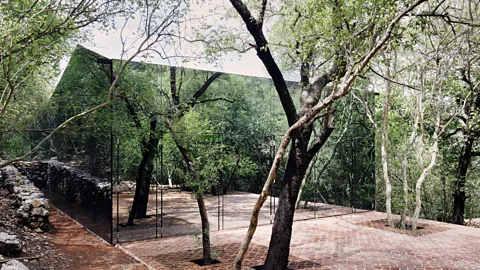 Rory Gardiner/ Tatiana Bilbao Estudio
We need diverse experiments to discover what works best. Then, if we succeed at changing our way of building, we can change our way of thinking about the natural world. When we see nature as a resource to be exploited or even a purity to keep unblemished, we do it a great disservice by forgetting how much we are part of it. Only by building with nature can we remember that we are building and living in nature. In the words of the Pulitzer-Prize-winning poet Gary Snyder, "Nature is not a place to visit, it is home."
The House of Green is out now, published by Gestalten.
--
If you liked this story,sign up for The Essential List newsletter– a handpicked selection of features, videos and can't-miss news delivered to your inbox every Friday.
For more Culture stories from the BBC, follow us on Facebook, X and Instagram.