Spencer and the ever-transfixing mystery of Princess Diana

 Neon Pictures
With the acclaimed new film starring Kristen Stewart, as well as a much-mocked Netflix musical, depictions of the late Princess of Wales' life keep on coming. Jack King explores why.
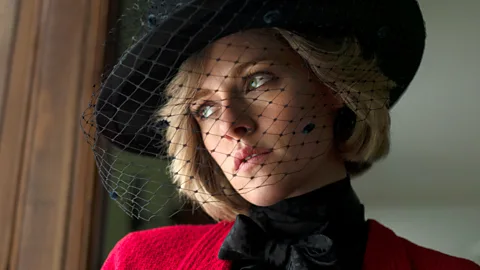
"A fable from a true tragedy," reads a title card in the dawning moments of Pablo Larraín's Spencer (2021): an early signpost, perhaps, of the fantastical twists and turns to come. This may ostensibly be a film about Lady Diana, Princess of Wales, née Spencer, but it is not, by any measure of conventional wisdom, the sort of period biopic generally en vogue in Hollywood cinema.
More like this:
Most will be familiar, of course, with the last attempt to render Diana's life on the big screen: Oliver Hirschbiegel's infamously schlocky Diana (2013), which covered her two-year, post-divorce dalliance with heart surgeon Hasnat Khan, as adapted from Kate Snell's biography Diana: Her Last Love (2001). The two films couldn't be more different: while Diana is a formulaic, artistically vacant disaster, Spencer benefits from Larraín's deft directorial hand. Like the titular woman herself, it is simultaneously familiar and enigmatic, brimming with challenging, expressive surrealism, as it imagines Diana on a horrifying Christmas break at the Queen's Sandringham House estate in 1991, when her relationship with Prince Charles is reaching its death knell.
 Press Association
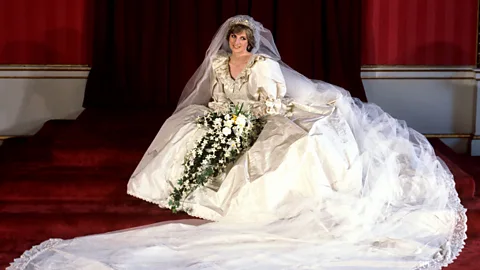
Much to Diana's dismay, everything that she does during this stay is regimented in militaristic fashion, from her sartorial choices to the food she can eat. One scene, in particular, sticks in the mind, in suggesting the oppressive rigidity of the world she must endure. It finds Diana at dinner with the other royals, who scoop their soup into their mouths with robotic symmetry. The camera shows a stern-looking Queen from Diana's point-of-view; then, the reverse shot seems to constrict around her, placing us within her spiralling mind. In a panic, she spills the ivory pearls around her throat into her own puddle of pea-green gloop. Then, in a moment of bracing horror – as if consuming eyeballs from a poisonous broth – she swallows the pearls whole, struggling all the way. It's one of the film's many rich visual metaphors conveying Diana's suffocating solitude – literal and psychological – and another indication, among indications, that Larraín plays by no biopic rulebook.
Chilean director Larraín, whose wider filmography might be considered esoteric, has gone on record as having made Spencer because he wanted to make a film his mum would appreciate. But why does he think Diana – as a cultural figure, a pop icon, a mythology – resonates so much with her? "Well, I'm not sure," he tells BBC Culture. "That's the thing. Because, of course, when I grew up in Chile and saw my mum become very interested, I was a little boy. And then I realised that she was just one of millions [of Diana fans] around the world. When [Diana] died in '97, I realised that the world was grieving." It was after Jackie, his similarly challenging 2016 biopic about the titular Kennedy, née Bouvier, later Onassis, that he decided to make Spencer, diving into a deep research process around the late Princess – including reading a lot of articles from the BBC, he notes. "I think, culturally speaking, she's one of the best-known people of contemporary culture. And at the same time, is the most mysterious person ever. That paradox… is just wonderful for film, and for art."
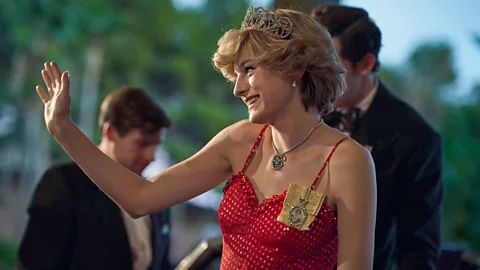
That so many filmmakers, documentarians, television commissioners, authors, artists, performers, and musical theatre composers have tried to tackle the Diana story, and indeed myth, serves to suggest that Larraín is right. Certainly, whether owing to that dramatically fruitful paradox or another impetus, she has inspired innumerable works of popular culture, from visual art (see Ian Rank-Broadley's statue of Diana, erected earlier this year at her former Kensington Palace home and portraying her as a deific being) to theatre and film to TV: at least a dozen actresses have portrayed her on screen over the years, including, to most acclaim, Kristen Stewart in Spencer and Emma Corrin in series four of The Crown.
On the other end of the quality scale, among the various straight-to-TV biopics, Hirschbiegel's film, starring Naomi Watts as the Princess, is arguably the biggest turkey of them all. "Diana doesn't even need to be compared to any other films to be identified as a failure," says film critic Guy Lodge, "it was just a perfect storm of appalling writing, a muddled directorial perspective and actors completely adrift in the confusion". More celebrated in its tackiness, meanwhile, has been the recent Diana: The Musical (2021), the low-rent Broadway show placed in stasis by Covid-19 but released in a filmed version on Netflix last month to gleeful derision.
Among its many absurdities, it finds itself beholden to one of the more erroneous Diana myths peddled by popular culture: that her early courtship with Prince Charles was a rags-to-riches fairytale. This, despite the fact the Spencer family boasts both a multi-million-pound fortune and a multi-generational aristocratic lineage. "It's wholly untrue [to think of Diana as working class]" Lodge says, "but it plays neatly into the mythos" – a mythos that was established within popular culture from the moment Diana entered the public consciousness.
The beginning of a cultural obsession
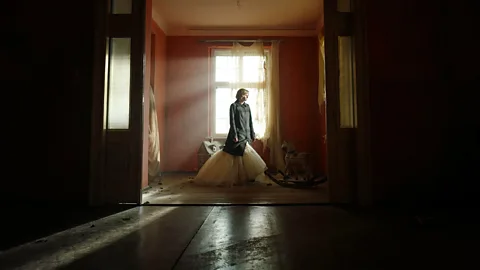
As early as 1982, just a year after her wedding to Prince Charles, US television networks turned their attention to the burgeoning Diana narrative with Charles & Diana: A Royal Love Story. A docudrama produced by ABC and released in September of that year, it superficially framed their early courtship within the fairytale framework – culminating in a reenactment of the ceremony at St Paul's Cathedral. Then, just three days later, CBS debuted their own dramatisation of the nuptials, aptly titled The Royal Romance of Charles and Diana, which was even more of a saccharine, blemish-free affair, though a ratings hit. Tom Shales of the Washington Post compared the latter negatively to the ABC film, describing it as "slack-jawed heraldic voyeurism incapable of, and apparently uninterested in, transforming remote news figures into believable mortals." However even the former, with its quasi-regal brass flourishes, majestical pomp and fantastical gawp, is a product of brazen Anglophilia, seeing the monarchy as if through a child's glistening eyes.
 Press Association
It wasn't long until the rumours of marital trouble started, of course, before in 1992 the "Camillagate" tapes revealing Charles' intimate conversations with his childhood sweetheart, Camilla Parker-Bowles, were soon followed by Charles and Diana's official separation. "Those who were alive to see her marriage… got to see a constructed fairytale narrative unravel in real time," says Lodge. "Catnip to the media, of course, through which most of us digested her story in the first place." Thus subsequent interpretations of Diana's life, for the most part, imagined the fall of a fairytale princess, anchoring themselves to the tragic maelstrom of aggressive paparazzi, public obsession, toxic celebrity, eating disorders and romantic disillusionment that would come to dominate her popular image. One such example pre-dating her death is Princess in Love (1996), another CBS, straight-to-TV capitalisation on Dianamania, which focuses on her affair with Captain James Hewitt – this time based on Anna Pasternak's eponymous book, for which Hewitt was, allegedly, a central source. Here, the familiar beats are brought up: Diana and Charles fight over Camilla, the "third party" in their marriage ("don't you think it's a bit crowded?" Diana asks, a line adapted from her infamous 1995 interview with journalist Martin Bashir for the BBC's Panorama programme); the latter hypocritically accosts the former for her indiscretions; lovelessness drives her into the arms of another. With its maudlin score and ensemble of cookie-cutter facsimiles, it is less than distinguished.
It's impossible to know quite how Diana might exist in the cultural consciousness if she were alive today. That she was effectively deified by her unexpected death in 1997, as is often the case with gone-too-soon pop icons, however, is a matter of little debate. Within hours of her reported demise, British Prime Minister Tony Blair had called her the "people's princess," and it would be the perception of her that stuck. This has only been reified further in contemporary popular culture by the emphasis on her as a tragic figure – one that Spencer, as one might expect from the aforementioned title card, weds itself to. But the core of that tragedy is still subject to interpretation. "Everything that a Greek tragic hero does is to escape from tragedy," says Larraín. "But by doing so, all they really do is come closer to tragedy. And finally face death. Which is what, unfortunately, I believe Diana experienced in a metaphorical way. And, in a very practical way, she was driving fast to escape from the press when she crashed in Paris that night."
Larraín notes that he and Steven Knight, the film's writer, deliberately wanted to forgo the "tragedy itself" – that is, Diana's very final years, months and days, and, indeed, the fatal crash – for something more metaphorical: "a tragic feeling, a tragic mood in the character," as he puts it. And while the likes of Diana and Diana: The Musical superficially engage with Diana's anguish, cynically exploiting the tragedy for cheap pathos in the style of a tabloid newspaper, Spencer offers a more full-bodied representation of her. "I like Spencer very much, but even if you don't – Larraín's cinema remains divisive – you can see that it commits to a point of view," says Lodge. "It crafts a physical and psychological world around its heroine that is wholly immersive, and is crucially interested in Diana as a human character, not as a walking headline."
Diana's infinite variety
Duly, Spencer has earned an abundance of critical plaudits since its premiere at the Venice Film Festival back in September, blindsiding audiences with its formally audacious approach to the princess's life. Sandringham looks as "spooky as Kubrick's hotel in The Shining," wrote Xan Brooks for The Guardian, "with endless corridors and haunted chambers and sulphurous guests sat ramrod-straight at the table." Many critics, too, have highlighted the film's apparently republican viewpoint, more text than subtext: "If you have even the smallest dislike of the… British monarchy," wrote Jessica Kiang for The Playlist, "one of the greatest pleasures … is envisioning how [Spencer] will play to the still-living people it glancingly portrays." Some, like Xan Brooks in the Guardian, have argued that the film's daringly irreverent approach could only come from an 'outsider' – someone who didn't grow up in the nation-spanning shadows of Buckingham and Windsor. But Larraín doesn't quite see himself as that. "I come from a republic – whether that's better or not – but I don't think I'm an outsider with regards to Diana," he says. "I think that she is part of the universal narrative, and regions and countries have different perceptions and approaches [to her]. Some of them are very simple: they're related to fashion, to family, to charity."
 Netflix
Each actress to portray Diana, too, has offered up their own interpretation of her, albeit with varying success. Of the more famous evocations, Watts goes for an obvious impersonation, while Corrin, though arguably possessing the least physical resemblance, offers perhaps the most subtle embodiment of Diana's character, expertly conjuring familiarity through affectations – the famous head tilt, for example. By contrast, Stewart's princess is the most unexpected, intentionally theatrical and wonderfully high-camp. The variety of these takes speaks to a salient point made by Larraín. "We all have a version of Diana inside us depending on where you're from, your education, your interests, your gender, your sexual orientation, you name it – you will ultimately come up with your own version," he says, adding that he sees Diana as these "fragments, almost like a Picasso… that, once you put them together, create the icon."
Larraín's own version of Diana changed as he conceived Spencer and realised that for him, it was a film ultimately about motherhood, he says. That epiphany certainly shines through: perhaps the most emotive scene in any of the hitherto mentioned works is when, at the beginning of Spencer's second act, Diana, Harry and William play "soldiers" at the dead of night. It's a made up game-cum-ritual predicated on candour, where the best players are charged – under the pretence of being dutiful privates (yes, a recurrent metaphor) – with sharing their most candid thoughts. It's through the prism of maternal affection, then, that Diana's soul is most effectively exposed.
What will come next for the myth of Diana? The Crown viewers can await Elizabeth Debicki taking over from Emma Corrin to once again play out the princess's last years in the saga's final two series, but after that, time will tell. Perhaps, after so many determinedly tragic takes on Diana's life, there will be some more depictions of her allowing for light as well as shade, and even some comedy – akin to the stage musical and episode of Sky TV's Urban Myths series that both told the apocryphal story of the princess clubbing at London's famous gay venue The Royal Vauxhall Tavern, with Freddie Mercury and DJ Kenny Everett. But, as each interpretation offers something new and creates yet more conversation, one thing remains certain: her mysteriousness will never quite be cracked.
Spencer is released in the US and UK on 5 November
Love film and TV? Join BBC Culture Film and TV Club on Facebook, a community for cinephiles all over the world.
And if you liked this story, sign up for the weekly bbc.com features newsletter, called The Essential List. A handpicked selection of stories from BBC Future, Culture, Worklife and Travel, delivered to your inbox every Friday.
