The TV that helped us survive the chaos of 2020

 Alamy
AlamyWe were never more plugged into television than in this extraordinary year – and from Tiger King to Schitt's Creek, it provided solace in myriad different ways, writes Hugh Montgomery.
If TV was already becoming ever more inescapable in our lives – with the advent of streaming drowning us in 'content' to watch morning, noon, and night – then in 2020 that inescapability became a more literal thing. For significant chunks of the year, many of us around the world were bound within our living rooms, and our television sets were both our portals to and means of escape from reality.
More like this:
– The year's most timely film hit
Even for a TV critic, the extent to which we became immersed in telly was unprecedented, characters and plotlines filling the void so as to seem more life-like than the strange new world outside our doors. And if that sounds dystopian, TV's monopolisation of our time felt like more of a solace than an affliction in the moment, for this viewer at least. So here's a tribute to the viewing that got us through a year unlike any other:
 Alamy
AlamyThe televisual wallpaper
Last month, an article in the New Yorker identified the "rise of ambient TV" – that is, in author Kyle Chayka's words, TV "that you don't have to pay attention to in order to enjoy but which is still seductive enough to be compelling if you choose to do so momentarily". Subsequently, it generated much social media debate and scepticism, from those who disputed the headline's sense of this being a new phenomenon. But while low-effort, high-comfort TV has evidently always been around in some form (and indeed, the writer acknowledged that in harking back to the creation of soap operas in the 1930s), it does seem instinctively fair to say that this style of passive, almost osmotic consumption has been the predominant viewing mode for many of us this year. After all, when TV is your near-constant lockdown acquaintance, just as with housemates or partners, you need it to give you some mental breathing space – to provide the reassuring companionship of sound and visuals, while demanding very little in return.
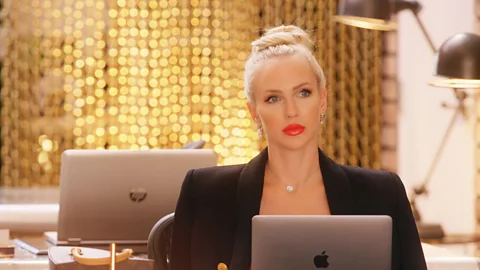
Certainly, this peculiar situation may explain the breakout success of Selling Sunset, Netflix's reality show about Los Angeles real estate agents, which premiered in the spring of 2019 but only became a true pop culture phenomenon with the launch of the third series in August. In some respects, it stuck to a familiar Real Housewives-like template of bitching and weaponised glamour but its USP was in the background to that: the parade of vast, characterless, and mysteriously over-bathroomed mansions and compounds we got to view, complete with price and basic listing info, as if we could be among the prospective buyers. In offering us this, it provided us with a vicarious experience of luxury living that, was as another New Yorker writer Naomi Fry put it, "a visual Xanax, sending the viewer into a state of soothing dissociation." (And if you inhaled Selling Sunset quickly enough, there was more where it came from: later in August came the inferior Million Dollar Beach House, also on Netflix and sold as "Selling Sunset but in the Hamptons").
More generally, lifestyle programming came into its own: here in the UK, I found myself drawn back to the seemingly incessant iterations of the Masterchef franchise for the first time in years, with their endless rounds of familiar challenges. Meanwhile caramel-voiced food writer Nigella Lawson graced British viewers with a new cookery series just in time for the doldrums of the country's lockdown two – and, from her now-infamous pronunciation of microwave to her leopard-print knife, it once again demonstrated the alchemy by which she converts domestic aspiration into golden high-camp.
But in drama, too, there were a number of shows that seduced because of their low stakes at a time of alarmingly high ones off-screen. To take two examples, both from Netflix, Ryan Murphy's Ratched was a pointless exercise: a predictably unconvincing, incoherent prequel to One Flew Over the Cuckoo's Nest wholly uninterested in taking itself seriously. But its sterile hyper-stylised aesthetic, which had something of a department window display about it, had a perversely soothing effect. And chess drama The Queen's Gambit, while hugely overpraised, with its perfectly poised heroine and mid-century modern sets, also made a virtue of its superficiality.
 Alamy
AlamyThe visionary rule-breakers
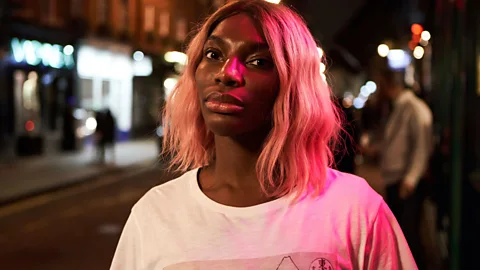
At the other end of the spectrum, there was some truly scintillating TV this year that demanded our absolute concentration through the sheer force of its daring. More than ever, we saw shows that simply threw out the rulebook and almost entirely shirked established conventions of the medium. I'm thinking of two shows in particular, both by British female creators and both telling stories of woman's paths through trauma: Michaela Coel's I May Destroy You and Lucy Prebble and Billie Piper's I Hate Suzie. What they also shared was a thrilling sense of abandon – the sense that these writers, brilliant as they are, had been allowed to veer between genres, tones and themes and dart around in time and setting as they wished, unchecked by overbearing producers' notes and any demand to cleave to storytelling formulas. In doing so, too, they plugged the viewer into the turbulent emotions of their protagonists in a more intimate, immersive way than I can ever remember on the small-screen before – a quality of connectivity which, at a time when we were all so atomised away from our fellow humans, gave them particular poignancy. Indeed, I don't think it would be too much of an exaggeration to say that it felt like these two series heralded the dawn of a whole new level of sophistication for the medium.
A shout out too, on this front, to the work of two filmmakers making their small-screen debuts: Luca Guadagnino's eight-episode evocation of the no man's land of adolescence, We Are Who We Are, and Steve McQueen's black British history anthology series Small Axe – Was it a TV show? Was it a series of feature films? Who cares! – both felt entirely sui generis. And also to The Good Fight, now in its fourth series and the most maverick legal drama in television history. It hangs but by a thread to its procedural format and, from its banned animations to its alternate realities, continues to be an exhilaratingly idiosyncratic proposition.
The pre-Covid nostalgia-inducers
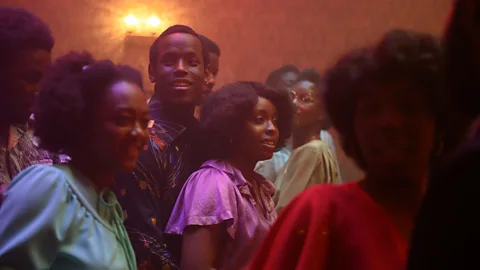
Before 2020, no-one would have guessed quite how powerful the simple sight of human bodies up close to each other on screen would one day be. And so while there were shows this year that generated a familiar kind of nostalgia, for youth and for childhood – I'm thinking in particular of the brilliant turn-of-the-millennium-set high school comedy PEN15 – the most potent yearning to be experienced from watching TV this year was for a very recent past: the innocent, freely-congressing pre-Covid world of a mere 12 months ago. For this reason, the third episode of I May Destroy You, with its incredibly visceral, perfectly disorientating depiction of a night out clubbing, hit particularly hard, as did the work hard/play hard hedonism of the graduate bankers in HBO's Industry and most of all, the second instalment of Small Axe, Lovers Rock, which traced the evolution of a house party in all its sweat-drenched transcendence.
Early on in the new normal, meanwhile, a less high-energy, but equally potent reminder of a pre-Covid world of human contact and possibility was provided by the BBC's fantastic adaptation of Sally Rooney's romantic novel Normal People. Premiering in the UK back during the country's first lockdown, it immediately became a national talking point and ended up as the BBC's most streamed series of the year. Remarkably tender as it was, it would have captured hearts in any year, but its sensual depiction of the messiness of young love felt even more agonising at a time where, for so many, the opportunities for in-real-life romance and physical intimacy were so extraordinarily stifled.
 Alamy
AlamyThe societal reckonings
As an artform, TV was quick out of the blocks to respond to the pandemic, with a whole host of shows made under restricted conditions and dealing with our new normal, from HBO's Coastal Elites, NBC's Connecting and Netflix's Social Distance in the US to BBC's Staged and ITV's Isolation Stories in the UK. Then there were the new shows with plotlines or moods that suddenly seemed very prescient: I'm thinking of pandemic conspiracy drama Utopia and the claustrophobic apocalyptic thriller Snowpiercer. But it has to be said that few of these shows made much of an impact. (Personally, for my pandemic-adjacent watch, I finally caught up on HBO's The Leftovers, a drama about the world recovering from a mysterious cataclysmic event which has caused 2% of the world to vanish. Testament to its uniquely reflective quality, I found watching it considerably less traumatic, and more cathartic, than might have been expected.)
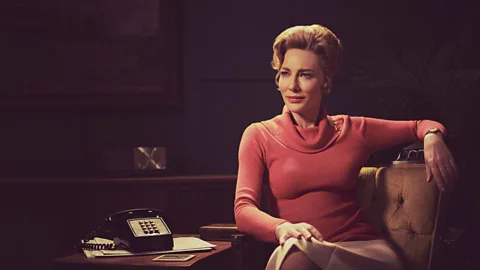
But Covid wasn't the only thing we had to reckon with in 2020, of course. In the middle of the year came the death of George Floyd in the US, followed by Black Lives Matters protests and a confrontation of systemic racism around the world. Then, towards the end of the year, the US election laid bare more explicitly than ever the rancorous political divisions – and dark currents – running through the West. And it was in these, non-pandemic-related areas that television more potently chimed with a mood. Both the miniseries adaptation of Philip Roth's counterfactual history novel The Plot Against America and Amazon's pulpy Nazi-hunter thriller Hunters, in very different but equally effective ways, dealt with the rise of fascism within democracies. Mrs America showed how the so-called 'culture wars' that now run rampant were born back in the 1970s. Meanwhile HBO's eye-popping Lovecraft Country offered a perfect conceit in using the fantasy-horror genre to reflect the very real monstrosity of racial violence in the US.
Across the Atlantic, when it came to UK society, Small Axe provided a profoundly important service in bringing the country's own historic bigotry to the fore, with stories of discrimination against London's West Indian community that have been shamefully sidelined in both popular culture and education. Then, also in November, a very different kind of reassessment of 20th-Century British history was served up by The Crown. If, up to this point, Netflix's saga about the British royal family had broadly offered its subjects good PR, then that all ended with the latest run, which focused most juicily on Charles and Diana's marriage, portraying the former as a toxic emotional inadequate. It was no surprise that there were murmurs of upset from the Palace – and demands for Netflix to label the series as fiction – though whatever the contestability of its version of events, its cultural impact was undeniably potent, darkening the image of a seemingly-long-redeemed figure in the eyes of a whole new generation. It was just a shame that the other key strand of this fourth series – the confrontation with the controversial legacy of Prime Minister Margaret Thatcher – was sunk in part by the somewhat panto-like impersonation of the actress playing her, Gillian Anderson.
 Alamy
AlamyThe head-spinners
In what has undoubtedly been the most surreal year many of us have experienced, sometimes it helped to lean into the weirdness. At one particularly intense moment of melancholy in the UK's first lockdown, I found consolation in the strange, gruesome absurdity of Netflix's eye-poppingly trippy philosophical animation The Midnight Gospel, in which two characters calmly discussed matters of life and death while simultaneously proceeding through madcap, gory, neon-coloured space adventures. Psychedelically-inflected, too, was one of the year's most memorable individual episodes, the penultimate hour of Mrs America, in which Sarah Paulson's conservative Christian activist inadvertently gets high and has some kind of hallucinatory liberal epiphany.
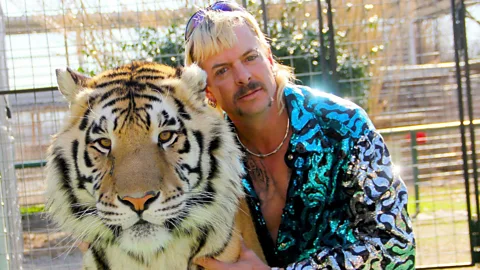
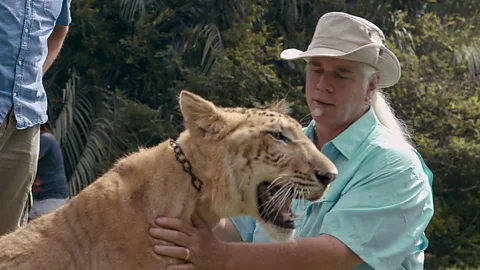
However, for better or worse, the show that was most totemic in these bizarre times, was of course the pop cultural phenomenon Tiger King, which launched on Netflix at a point when much of the world was just shutting down. Telling the story of mulleted, aberrant zoo-owner Joe Exotic and his spiralling feud with self-appointed big cat rescuer Carole Baskin, it was a dubious show in a number of respects. But in the grim preposterousness of both its protagonists and narrative beats, it was certainly effective displacement therapy.
Darker still, but equally haywire, was HBO's The Vow, which offered up an exposé of the infamous NXIVM cult, following its very public downfall and arrest of its key members, including Smallville actress Allison Mack. With the audience taken on the kind of initiation journey that would have been experienced by members, what was introduced to us in the first episode as a perfectly credible self-help programme took a mind-boggling left turn into sexual slavery and abuse. Neither of these shows was a great piece of documentary-making, exactly, but they certainly chimed with the pervading sense of unreality.
 Alamy
AlamyThe love to hate-watches
Hate-watching has been a well-established practice for quite a while now, but this year it had a watershed moment with Netflix's Emily in Paris. The huge numbers who watched Sex and the City creator Darren Star's gormless Gay Paree fantasy were matched by the huge numbers who derided it on social media. When it was then recommissioned by Netflix for a second run, just as the platform's critically-adored Glow was unexpectedly decommissioned from a fourth series, it led to a wave of concerned commentary that hate-watching was doing active artistic harm, allowing the dregs to rise to the top at the expense of quality. But while I won't deny that Netflix make some suspect commissioning decisions, this all seemed a little overly pious to me – as if there isn't an unmanageable amount of great TV that continues to be produced, and as if bad art hasn't been able to exert its own uniquely exhilarating effect since time immemorial.
In fact, Emily in Paris failed to cross my own personal hate threshold, and after two insipidly watchable episodes, I switched off. Now, Hollywood, though – there was a different story. Ryan Murphy's alternative-reality fantasy about a more enlightened post-war film industry was a work of such abject shoddiness mixed with such overweening self-importance – the killer combo – that, while narratively pretty boring, I still wouldn't have been able to stop myself enduring all seven episodes even if I hadn't been reviewing it – and from anecdotal evidence, it seemed a lot of other Hollywood haters couldn't resist either.
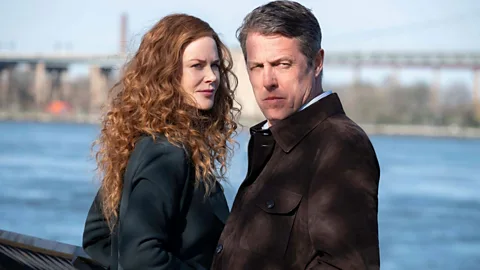
Other bad shows that many of us loved to hate this year? Well, HBO's thriller The Undoing was both successful watercooler TV, thanks to its old-school week-by-week roll-out-out, and total drivel, clunkily changing its source material so as to turn it into a whodunnit and then giving us an ending that simultaneously managed to be both underwhelming and totally ludicrous. And, across the Atlantic, Roadkill was an equally shambolic potboiler, a story of British political chicanery that seemed desperate to be relevant but felt laughably inauthentic when it came to portraying politics, journalism, the law, and, more generally, human beings.
 Alamy
AlamyThe faith-restorers
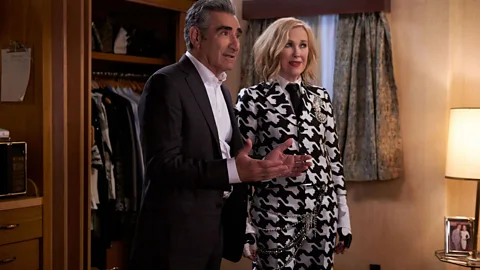
In a feel-bad year, special mention must go to Netflix's reimagining of the 1980s book series The Babysitters' Club for providing some elixir of hope: you did not need to be part of its young teen target demographic to be lifted by its light wit, camaraderie and real social conscience. But there was one show that offered a ray of sunshine like no other: the sleeper sitcom phenomenon Schitt's Creek, which bowed out for good with a sixth season before a victory lap at the Emmys where it achieved a clean sweep in all the comedy categories. Here was a show that started unprepossessingly on a little-talked about cable channel with an uninspired, fish-out-of-water premise – a family of spoilt New York socialites are forced to up sticks to a rural small town – and initially seemed like it would not offer much more than lazy caricatures. But the show got better and better as it bedded in, just as its characters defied first impressions: the Rose family were unworldly and ridiculous, yes, but also warm and loving, and the residents of Schitt's Creek were not conservative yokels but tolerant and open-minded. While it may have been a very easy watch, it pulled off a tricky feat for a TV show, dealing in goodness and kindness without ever becoming dreary or saccharine.
This was a world in which a hold-up was defused by the offer of a tote bag of wine and cheese, and some parents' only sadness about their son coming out was that he hadn't told them earlier. Above all, Schitt's Creek was filled with an optimism about human society that felt pretty radical in the moment, and made it a life-raft to hold on to amid the year's darker days, weeks, and months.
Love film and TV? Join BBC Culture Film and TV Club on Facebook, a community for cinephiles all over the world.
If you would like to comment on this story or anything else you have seen on BBC Culture, head over to our Facebook page or message us on Twitter.
And if you liked this story, sign up for the weekly bbc.com features newsletter, called The Essential List. A handpicked selection of stories from BBC Future, Culture, Worklife and Travel, delivered to your inbox every Friday.
