The Wolfpack and Me and Earl: Two hip indies to avoid?

 Magnolia Pictures
These films were hits at Sundance and could be major Oscar contenders. But be wary, writes critic Owen Gleiberman.
Each year, the Sundance Film Festival awards two Grand Jury Prizes: one for a dramatic feature, the other for a documentary. The winners are not necessarily the two best films of the festival. In 1989 sex, lies, and videotape premiered at Sundance four months before its celebrated triumph at Cannes, yet it was beaten out in Park City by the minor (and now mostly forgotten) romance True Love. Three years later, Reservoir Dogs was the hit of Sundance, and deservedly so, but Quentin Tarantino’s revolutionary movie got edged out for the top award by the trivially amusing In the Soup. And that’s how it goes. In truth, the Sundance Grand Jury Prize is no more an automatic seal of quality than the Academy Award for Best Picture. What it does celebrate, without fail, is what’s ruling the zeitgeist – the kind of movie that can get a festival humming because it reflects the values of the independent film world.
That’s certainly the case with this year’s two big Sundance award winners, both of which are opening more or less simultaneously in the US. Me and Earl and the Dying Girl, which took the dramatic feature prize, is a comedy drama of teenage heartbreak with a geek hero so self-conscious that he almost walks off the screen and watches the movie with you. The Wolfpack, which took the documentary award, is a film that seems no more trustworthy in its methods than a lot of reality TV, yet it features a clan of downtrodden adolescent siblings who make desperation look cool. Me and Earl and the Dying Girl and The Wolfpack may not have been the best films at Sundance this year, but they infuse crowd-pleasing with hipster cachet. That’s what makes them movies of the moment.
Too cool for school?
Greg (Thomas Mann), the central figure in Me and Earl and the Dying Girl, is a tall, mopey high-school brainiac who wears his self-deprecation like a natty accessory. He refers to himself as a “scrawny, pasty, groundhog-faced dude,” yet has there ever been a movie geek with quite this much tart-tongued confidence? You don’t have to listen to Greg for too long to realise that he’s wittier than anyone around him. His alienation is really a case of superiority run amok. Early on, there’s a deftly designed sequence in which Greg ingratiates himself with every clique in his midst (goth delinquents, supercilious theatre nerds) by mirroring their attitudes, yet he avoids joining any of them. The film’s not-so-subtle subtext is that he’s right to reject these groups. He’s the outsider who’s the school’s only real individual.
Greg is a character in the tradition of Molly Ringwald’s bohemian princess in Sixteen Candles and Jason Schwartzman’s restless preppie wannabe in Rushmore. Me and Earl owes a great deal to the latter film, though with an added sentimental hook: it’s The Fault in Our Stars if made by a young Wes Anderson. Greg starts hanging out with Rachel (Olivia Cooke), a girl in his class who is fighting leukemia. From the start, though, the friendship is true blue, since Rachel, a stinging waif, is the only girl at school who shares Greg’s talent for witticisms. “She’s, like, the LeBron James of nagging,” says Greg of his smothering mother, and Me and Earl and the Dying Girl glides along on ‘clever’ zingers like that.
Based on a novel by Jesse Andrews (who also wrote the screenplay), Me and Earl is jammed with cute, acerbic conceits, Andersonian camera movement and characters that skirt the edge of absurdity – like Greg’s professor dad, who spends all day gathering and cooking odd foods, or a tattooed teacher who may be slipping drugs into his daily thermos of Vietnamese soup. Greg also has a fast-talking friend, Earl (RJ Cyler); the two are movie maniacs who film their own variations on classic cinema, which gives the movie a chance to do cheeky riffs on everything from the mystique of Midnight Cowboy to the persona of Werner Herzog. These mini movies are a kick, yet as enjoyable as Me and Earl can be, the film, like its hero, could have used a little less self-congratulatory coyness.
Keeping up with the Angulos
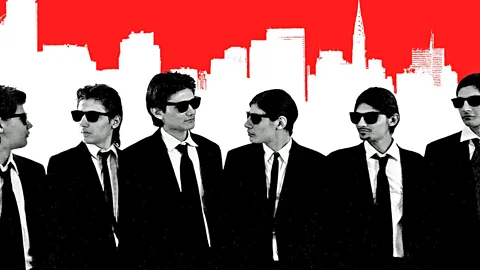
If all it took to make a great documentary was a great subject, then The Wolfpack would certainly qualify. It’s about the Angulos, a family of six brothers (and one sister, though we barely see her) who have grown up in a cramped apartment on Manhattan’s Lower East Side and have spent nearly every moment of their lives inside its claustrophobic confines. They are home-schooled, with no computer and no friends other than each other, and they are almost never allowed to leave the apartment. Yet to say that they have no contact with the outside world would be inaccurate: they watch movies – hundreds of them, over and over – and when they act out scenes from Tarantino or Scorsese or David Lynch, in primitively ingenious costumes fashioned out of cereal boxes and yoga mats they’re at once spooky and touching. The film implies that watching – and imitating – these films is their lifeline. Even more than the scrappy classic-movie parodies in Me and Earl, The Wolfpack speaks to a generation that has learned to filter every moment of its experience through pop culture. No wonder the film ruled at Sundance.
The Angulo sons all have long, straight black hair, prominent cheekbones and friendly grins that make each of them look like a different answer to the question: what if Johnny Depp and Jeff Goldblum had a baby? There’s a disarming sweetness to them, and that’s partly because they’ve managed to hold on to their individuality within a family that comes off like an oppressive cult. The father is described by his sons as a tyrant, but mostly we see him sitting around watching TV, and how he raised them remains a murky mystery. We have no idea where he got his money, whether he was – as one son claims – a violent abuser, or why, after all these years of treating his children like prisoners, he has suddenly agreed to let film-maker Crystal Moselle into his home. In the last part of the film, the kids are allowed out, seemingly at will, and that raises a further question: can we regard it as a simple coincidence that the father chose this moment, surrounded by cameras, to allow his sons into the great wide world?
The Wolfpack is like a staged reality show that fakes authenticity. The Angulo sons are so likable, and so tolerant about their deprived upbringing, that you can’t help rooting for them. Yet you also need to trust what you’re watching, and The Wolfpack never earns that trust. It’s a slipshod piece of manipulative non-fiction that leaves you desperate to see a documentary about the Angulos that would actually answer more questions than it raises.
Me and Earl and the Dying Girl: ★★★☆☆
The Wolfpack: ★★☆☆☆
If you would like to comment on this story or anything else you have seen on BBC Culture, head over to our Facebook page or message us on Twitter.
