China’s demanding consumers are fuelling a huge new industry

 Getty Images
Masseuse, home chef or live-in nanny? Taking the ‘I want it now’ industry to another level in a country of 1.38 billion.
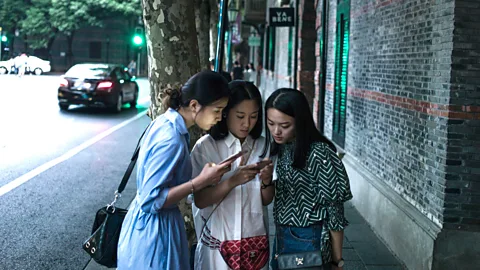
It is fast approaching lunchtime in Shanghai, and Li Huanhuan is getting hungry. But instead of leaving her office and walking to the nearest food mall to grab a bite, Li, a copywriter, picks up her mobile phone and orders her meal using Ele.me, a food delivery app.
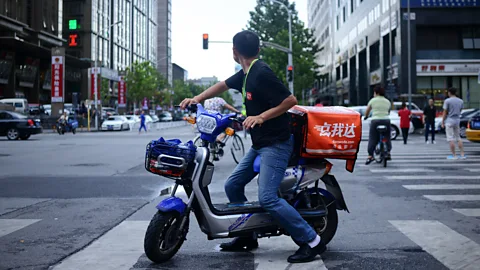
So far, so normal. In many other countries around the globe, on-demand delivery – especially for food – is standard. And, now there’s a seemingly limitless array of delivery apps catering to demanding consumers’ every need, from room sharing to ride sharing. But consumers in China, and the apps that serve them, have taken this concept to a whole new level.
 Getty Images
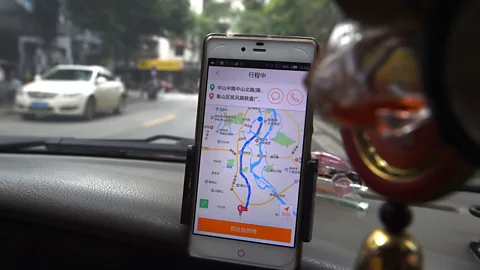
Sure, if Li is running late for an appointment and needs a taxi, she calls one using the app Didi Chuxing, China’s answer to Uber. But if she needs a masseuse, hotel chef in her home, or even a live-in nanny? No problem, she – like many other Chinese – just needs to turn to her phone. There's a proliferation of on-demand services available at her fingertips.
Demand for these apps in China is much higher than in the West, thanks to a growing tech-savvy middle class and heavy discounting by online retailers and service providers. The number of people who can be reached by a single Chinese app is also on another level entirely. According to a report by the official China Internet Network Information Center, China had 688 million internet users at the end of June last year, up 18.9 million from the end of 2014. Among those users, almost nine out of ten use smartphones to get online, the Center says.
 Getty Images
Tech-savvy convenience
More commonly known on the Mainland as O2O – online to offline – users order products and services online and take delivery in their homes or offices. Industry analyst iResearch expects the O2O market for lifestyle services to reach 1.6 trillion yuan ($240bn) in 2018, almost double its size of 879.7 billion yuan last year.
“At the core of the industry’s success is its ability to provide efficiency and convenience for the consumer,” says Mark Zhang, chief executive officer and founder of Ele.me, one of China’s largest food delivery apps. It started eight years ago as an online food delivery service for Shanghai university students seeking quick and easy meals, and now has 70 million users and handles five million food orders daily.
 Getty Images
In contrast, US food delivery company Grubhub, which owns the Grubhub and Seamless apps, has about 7.4 million active users and gets an average of 271,000 daily orders.
Heavy product subsidies, smartphone proliferation and advanced and easy, secure mobile payments have helped the industry’s rapid growth. Many of these apps allow for payments using popular messaging app WeChat or Alipay, China’s version of PayPal.
Labour and logistics costs are also lower in China than in other developed markets, making it much less costly to provide such on-demand services, says Wan Yuchen, a Shanghai-based analyst in China Market Research Group. This helps keep prices low and competitive with brick-and-mortar offerings, she says. For example, food delivery services in China often run promotions that offer free delivery, and the average cost of standard delivery is usually about $1.
 Alamy
AlamyIn the early years of China’s O2O development, food-delivery, retail and ride-hailing firms led the charge, as they are doing in other markets like Europe and the US. But now, more and more Chinese are demanding lifestyle services such as catering, entertainment, beauty, parenting, travel and weddings. And there are plenty of apps rising to the challenge.
“Such services are a necessity in China and demand is inelastic,” says Wan Yong, the chief executive officer of Ayibang, an app that helps provide housekeepers, nannies and movers on demand. “The pace of life in the big cities will only quicken, and Chinese consumers aren’t going to have the time to search for their housekeepers on their own, and will rely increasingly on such one-stop apps.”
 Getty Images
Job creator
Wan says the on-demand sector for lifestyle services in China is just starting to come of age, and is set to take off in a big way over the next two years as Chinese customers get wealthier and as companies refine their product offerings. Ayibang, which began in August 2013 matching housekeepers with clients in Beijing, has now expanded to more than 30 cities across China, and now provides nanny, furniture and home repair services as well.
And it’s not just consumers benefiting. Small business owners and the self-employed are also profiting from widened access to consumers. Ye Xiaorong, a 43-year-old housekeeper in Beijing, says signing up with Ayibang in March has helped link her to many new customers and increased demand for her services.
“In the past, I never had a fixed job or income,” says Ye, who had previously been earning money offering illegal electric scooter taxi rides outside subway stations for as little as 5 yuan ($0.75). Now, she gets a text every morning telling her the daily schedule and she works at least seven hours a day.
Getty Images“I really like my job now. This gives me a sense of responsibility and a regular income,” she says.
As Chinese smartphone adoption grows, their consumption habits are shifting accordingly to embrace this trend.
On-demand apps have changed the way her generation is shopping or buying things, says Shanghai copywriter Li Huanhuan.
“If my mum were hungry or want to buy new clothing, she might walk to an eatery nearby to buy food or a mall to shop,” Li explained. “Me? I will just do everything on my phone.”
