How some young people are shaking off gender binaries

Many Gen Zers are increasingly breaking out of the idea that gender means only 'man' or 'woman' – and these attitudes are having an impact.
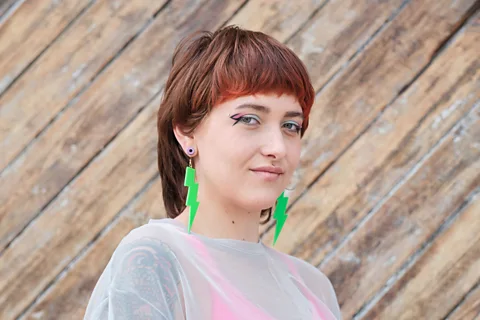
Like some members of Gen Z, 20-year-old Rain Ashley Preece views gender outside of the Western established norms.
“I think it is limiting everyone in society by saying there are only two genders,” says Cardiff-based Preece, who identifies a transgender male and uses he/they pronouns. “People may feel like they are both, neither or a bit of one or the other. I don’t personally feel completely masculine, even though I mostly see myself as a boy.”
In an Autumn 2018 Pew Research Center survey of more than 10,000 people exploring differing views of political and social issues across generation, a majority of Americans said that they are aware of people who don’t identify as a man or a woman, and at least six in 10 are familiar with terms like ‘non-binary’ and ‘gender fluid’.
Members of Gen Z, like Preece, have the highest degree of awareness: nearly three-quarters of respondents to the Pew survey said they’ve heard of non-binary pronouns, compared to 65% of millennials and 54% of Baby Boomers. The survey also showed that nearly 60% of Gen Zers believe that there should be an option besides ‘man’ or ‘woman’ on forms that ask about gender, versus half of millennials and just more than 30% of Baby Boomers.
As Gen Z enters adulthood, many are bringing their awareness and shifting perspectives about gender into the broader cultural conversation. It’s a dialogue that, experts say, will continue.
 Rain Preece
‘All kinds of lived experiences’
According to the World Health Organization (WHO) office for Europe, ‘gender’ is a social construct, which “includes norms, behaviours and roles associated with being a woman, man, girl or boy”. This differs from sex, which has a biological and physiological basis, and refers to the characteristics “such as chromosomes, hormones and reproductive organs” for males, females and intersex people.
“I feel like everyone experiences gender a little differently, and it's almost impossible to place people in a definitive box,” says 21-year-old Carden Cappi, a student who identifies as “trans, demiboy and genderqueer” and uses they/them pronouns. “The idea of a spectrum enables people to be more individual and express their identity and experience a little better.”
Approaching gender outside of a strict binary means some people have found a wider variety of ways to express themselves. This doesn’t look like a “gender-neutral beige and grey landscape we often see when discussing gender”, says Lisa Kenney, CEO of Reimagine Gender, a non-profit that helps organizations and other groups address new understandings of gender. “Instead, I think it is a vibrant world where our gender reflects who we are, rather than who we have been told to be.”
As Kenney says, “If there are ‘boy colours and ‘girl colours’, different activities, interests or careers for men and women, then there are emotions and ideas and speaking styles for men and women, too.” She believes traditional societal expectations of gender norms – what is ‘masculine’ versus ‘feminine’ – can be limiting in terms of personal expression, but a gender spectrum allows for a greater inclusion of all kinds of lived experiences.
For some Gen Zers, the stereotypes associated with traditional gender roles feel less and less appropriate or even relevant to their daily lived experiences. “Clothes and hairstyles do not define your gender – only you define it,” says Preece, who serves as an ambassador for the UK-based LGBT+ youth charity Just Like Us. “I don’t believe that gender should need a label. It helps explain to others how you identify, but it shouldn’t restrict or limit the individual.”
‘Most Gen Z will just go with it’
Jessica Hille, the assistant director for education at The Kinsey Institute in Indiana, US, explains that “all definitions and categories of gender are socially and historically situated, created by people in particular cultural contexts”. So, Gen Z’s different understanding of gender is part of an “ongoing development”, in which views and attitudes are constantly evolving. (Indeed, the WHO’s definition of gender stipulates that views around gender can change from society to society as well as over time.)
“From my experience, Gen Z is more accepting and less challenging to your identity when you come out,” says Cappi, who serves as an ambassador for the UK-based LGBT+ youth charity Just Like Us. “You might say: ‘Hey, I identify as this, could you please use this name and pronouns for me?’ Most Gen Z will just go with it, whereas I’ve experienced way more questioning, hesitancy and challenges from other generations.”
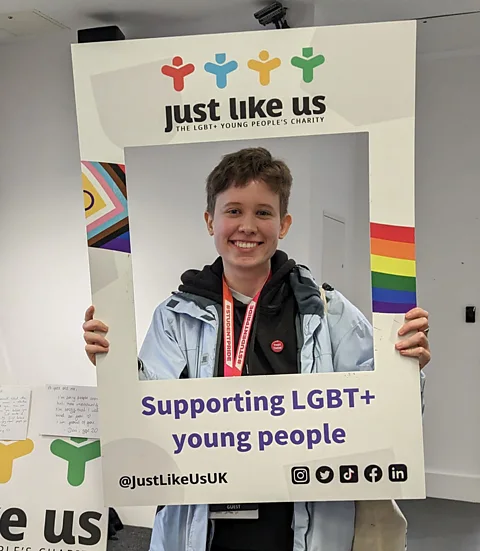 Carden Cappi
According to Lisa Diamond, psychology and gender studies professor at The University of Utah, US, social media and the internet have influenced how some young people are viewing gender binaries.
Diamond says young people now have access to endless information about gender identities and expressions that prior generations didn’t have. For many people older than 50, she says, role models and traditional media mostly framed gender and gender roles as binary. Both she and Gen Zers to whom BBC Worklife spoke say organic online communities and networks have introduced them to new concepts and terminology about gender, and facilitated new conversations.
“I think this has promoted a greater understanding and acceptance of experiences outside the gender binary,” says Hille.
Optimism for the future?
Data also suggests that shifting definitions of gender is beginning to have implications across some industries and institutions.
For instance, gender-fluid looks are “gaining greater traction amid changing consumer attitudes toward gender identity and expression,” according to consulting firm McKinsey and Company’s State of Fashion 2022 report. This is important for not only Gen Z, but also the brands that serve them: Gen Z’s purchasing power in the US is estimated at $360 billion. More gender-neutral fashion brands are cropping up in response to these evolving views, too.
The Gen Zers whom BBC Worklife spoke to have noticed. “Companies are getting there in making their services more accepting – for example my bank … let me change my name from my previous name to my chosen name,” says Preece. Though he describes the process as “long and sometimes uncomfortable”, he still calls these institutions recognizing him as a man “a positive start”.
Still, even as some younger people embrace a widened gender spectrum, not everyone shares these views.
For example, Diamond points out new legislation in the US aimed at regulating gender identity. In 2022, South Carolina senator Tim Scott introduced a bill that would require federally funded middle and elementary schools to obtain parental consent before changing a student’s gender markers or pronouns on any official form. The bill was not passed, but has been re-introduced in the Senate. Outside of the US, earlier this year, Hungary reversed earlier provisions that had allowed people to alter their gender or given name on official documents as part of a newly passed law that ends legal recognition for trans people.
Despite what Cappi views as setbacks, they are optimistic. “I am hopeful that with Gen Z going into the workplace and politics in the coming years, there will be a positive change in legislation, acceptance and celebration of gender diversity.”
Editor’s note (06/04/23): This article has been amended since first publication to include data from the Pew Research Center survey, and the WHO definitions of gender and sex, and to correct some inaccuracies in the framing of gender.
