The blind cricket commentator with an extraordinary talent

 Antoaneta Roussi and Matteo Lonardi
Dean du Plessis has combined a keen ear with a deep knowledge of the game to hone a remarkable career.
 Matteo Lonardi and Antoaneta Roussi
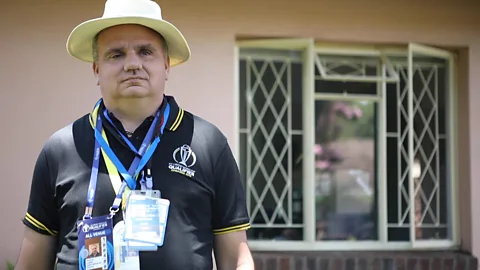
Dean du Plessis is one of a handful of cricket commentators in Zimbabwe. But he’s the only one who can convey the intricate details of the game just by listening to what’s happening on the field.
The 42-year-old has a regular cricket show – the only dedicated cricket show of its kind in Africa – on which he offers his post-match analysis of international and domestic games, as well as commentating on radio and television broadcasts of live test matches.
Du Plessis works largely independently, with occasional assistance from his colleagues. They might point out that a statistic has been displayed on the screen, describe a graphic or highlight subtle changes in players’ fielding positions.
 Antoaneta Roussi and Matteo Lonardi
Du Plessis can tell in which direction the ball has been struck through sound alone. “When the ball is hit through the offside [to the right of a right-handed player] there is definitely a sharper crack to it, as opposed to when the ball is played away through the legside, where it is more muffled,” he says. “You can tell when someone has bowled a yorker [a fuller delivery] because of the way the batsman has to bring his bat down on the ball quickly.”
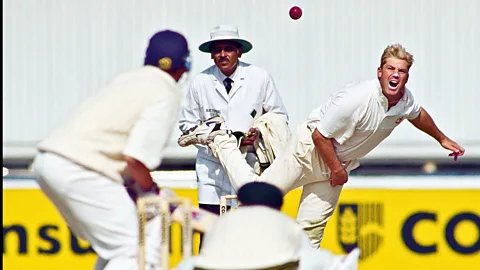
He is able to pick up new players’ styles quickly. “Normally, after about a game, I know who they are. It’s normally the bowlers who I recognise a bit quicker than the batsmen.
“I can tell who the batsmen are by the way they say ‘Yes’, ‘No’, ‘Wait’. But again it will take a bit of time. Whereas for some reason, bowlers’ run-ups I am able to pick up quite quickly, or the way they grunt when they deliver the ball.”
 Getty Images
When [Shane Warne] bowls he gave a massive grunt, almost as if he was constipated
- Dean du Plessis
 Getty Images
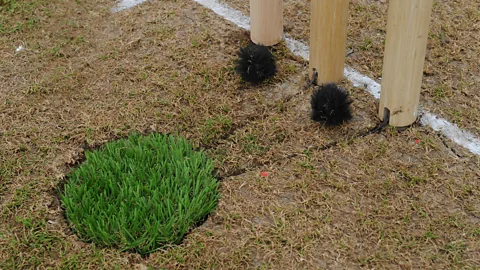
Thanks to small microphones embedded in the wicket at either end of the pitch, Du Plessis can pick up on the sounds that capture the action in minute detail.
After stump microphones were introduced in the 1980s, our understanding of subtle variations in cricketers’ styles expanded. The microphone at the bowler’s end captures the sound of their footwork as they release the ball. The microphone at the batsman’s end captures the crack of bat on ball, as well as the quieter clicks of deliveries clipping the edge of the bat and the shuffle of the batsman’s footwork. These sounds would be familiar to cricketers on the field but spectators might struggle to hear them. Likewise, microphones around the edge of the field help bring the action to viewers at home.
For Dean, this development played a crucial role in enabling him to follow the action as he listened at school on his radio. It meant he could become familiar with the unique styles of different players where previously the sounds would have been lost under the noise of the crowd.
 Steve Vickers
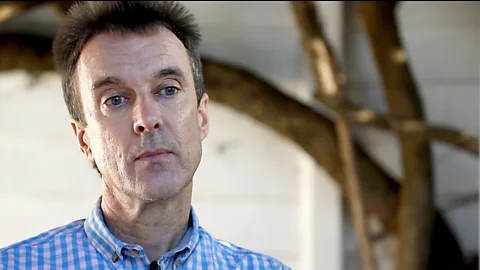
“He believes nothing is too difficult in terms of cricket reporting,” says Steve Vickers, a sports broadcaster and colleague for many years. He and Dean have co-presented on TV and radio, but Vickers says he is most impressed when Dean takes the lead on his own. “He’s anchored television solo because he totally believes that he can do it... that self-belief is incredible.
“The question people would say is ‘Can I trust what Dean is saying?’,” he says. “And what we have found out is yes you can. You can trust him because his senses are so acute that they can follow the moods inside the ground better than many others.
“Dean is out there in the mainstream of broadcasting,” he adds. “And he is justifying that he deserves to be there. That shows that you don’t have to be isolated with a disability. You can prove yourself out there at the highest level.”
 Antoaneta Roussi and Matteo Lonardi
Even so, du Plessis has had to convince producers he was capable of commentating, and his blindness wasn’t the only reservation they had. “The majority of cricket commentators are former players, which is what has made it so incredibly difficult for me to get where I want to be. And as far as I am concerned, I have still achieved nowhere near what I want to achieve,” he says.
 Antoaneta Roussi and Matteo Lonardi
Du Plessis reflects that his remarkable talents have not deterred him from pursuing his passion. “People are still sceptical about me, I’ve had to prove myself to everyone, but I do this because I love commentating and I love the game.”
