How perfectionism leads to depression

 Getty Images
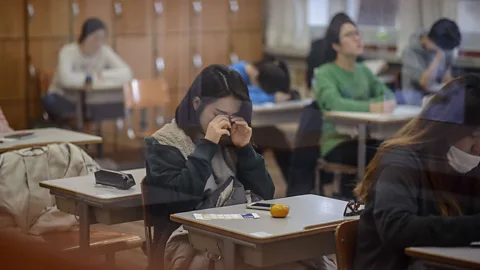
Perfectionism among university students is on the rise – and so is depression.
This article originally appeared on The Conversation, and is republished under a Creative Commons licence. The authors are Marianne Etherson, PhD candidate and graduate teaching assistant at York St John University; and Martin Smith, lecturer in research methods at York St John University.
The pressures of young adulthood coupled with the demands of university leave undergraduates at risk for depressive symptoms. In fact, nearly 30% of undergraduates suffer from depressive symptoms, which is threefold higher than the general population. As such, researchers are increasingly interested in identifying factors that contribute to depressive symptoms to help curb the ever-increasing depression epidemic. Our new study, published in Personality and Individual Differences, focused on one such factor, perfectionism, and its depressing consequences.
Perfectionism refers to a tendency to doggedly strive for perfection and hold quixotically high standards. However perfectionism isn’t just about setting lofty goals and trying one’s best. On the contrary, perfectionism involves a tendency to feel that other people, such as parents and teachers, demand perfection. Perfectionists are inclined to believe that good enough is never enough. As such, the typical perfectionist is stuck in an endless loop of self-defeating and over-striving in which each new task is seen as an opportunity for failure, disappointment and harsh self-rebuke. So it is not surprising that ample evidence implicates perfectionism in depressive symptoms.
 Getty Images
But why is perfectionism so widespread among undergraduates? University fosters optimal conditions for perfectionism to thrive and spread – whether in examinations or sporting trials, students are measured, evaluated and compared against each other. Such pressures are problematic for many students as it can lead to the perfectionistic belief that their value as a person depends on being perfect at everything they do. Indeed, evidence suggests that the incidence of perfectionism has skyrocketed among UK and North American undergraduates over the past three decades.
Social disconnection
Longstanding theoretical accounts suggest that a key reason why perfectionism and depression go hand-in-hand is social disconnection. Social disconnection refers to a tendency to feel disliked and rejected by other people. However, the exact nature of the social disconnection experienced by perfectionists was unclear.
Our study addressed this by investigating two specific forms of social disconnection: interpersonal discrepancies (perceiving a gap between how you are and how other people want you to be) and social hopelessness (negative expectations concerning the success of future relationships). We looked at these alongside perfectionism and depressive symptoms in 127 undergraduates over five months. Undergraduates completed self-report measures of perfectionism and depressive symptoms at the start. Five months later, they returned to the lab and completed measures of social disconnection, perfectionism, and a follow-up measure of depressive symptoms.
 Getty Images
Our findings revealed that perfectionism generated depressive symptoms in undergraduates because it caused students to feel like they were falling short of other peoples’ expectations (interpersonal discrepancies), which in turn caused negative expectations concerning future relationships (social hopelessness).
In other words, our results implied that perfectionism leads to a sense of ongoing disappointment and disapproval from others, which in turn triggers feelings that one’s future relationships will never improve and are doomed to fail. Feeling that they will never belong, fit in, or feel comfortable around others, subsequently leaves perfectionist students depressed.
--
To comment on this story or anything else you have seen on BBC Capital, please head over to ourFacebookpage or message us on Twitter.
If you liked this story, sign up for the weekly bbc.com features newsletter called "If You Only Read 6 Things This Week". A handpicked selection of stories from BBC Future, Culture, Capital and Travel, delivered to your inbox every Friday.
{"image":{"pid":""}}
