The objects that remind us of home

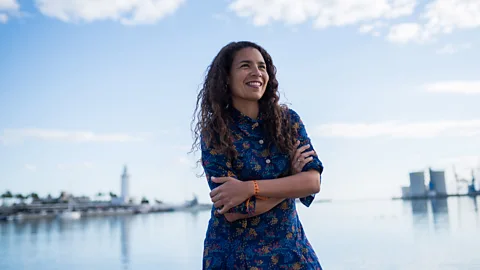 Fernando Gómez Mateos
Many who work abroad have a treasured object they won’t move without. Eight people from around the world share the mementos that remind them of home.
 BBC Capital
If you were moving away, what’s the one treasured item you would pack in your bag to provide a sense of familiarity?
People working abroad often have objects they take from place to place in order to make somewhere new feel more like home, according to a recent study by the University of Neufchatel.
When people travel or migrate, they usually need to keep a sense of being the same while living in a different environment, say the study’s authors, Tania Zittoun and Deborah Levitan. “Small objects and pictures can serve as reminder, or link, to these worlds they left behind. Looking at them or touching them can help to evoke these memories and create a feeling of being at-home while on the move.”
Eight people living abroad showed us the one comforting memento they always pack. Click or swipe through to see their stories.
Do you have an object that you’ve brought with you to a new country? Share a picture and description with us here, or post it to Twitter with the hashtag #BBCmemento.
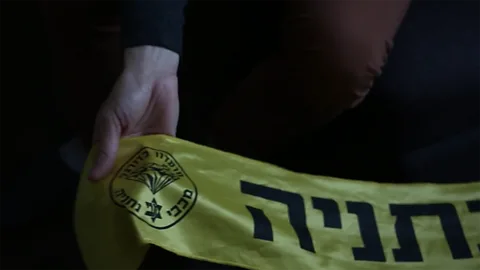
I’m emotionally attached both to the team and the life I had around it. It reminds me of friendships and a specific period of time
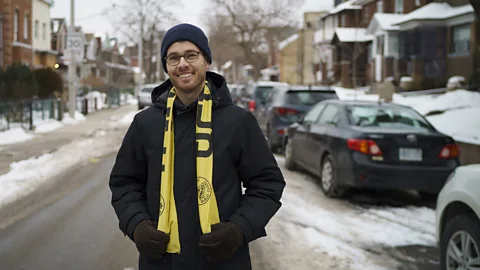 Cole Burston
Lior Sheffer
From Netanya, Israel, living in Toronto
When Lior Sheffer moved to Canada to start a PhD five years ago, he had to pack his entire life into two bags. “A lot of objects that make you feel at home are too big to take,” he says. But there was no doubt that he would take his fondest sentimental item: a scarf from his beloved hometown football team, Maccabi Netanya.
“I’m emotionally attached both to the team and the life I had around it,” says Sheffer. “It reminds me of friendships and a specific period of time living in Israel. In that sense, it’s heartwarming.”
On a recent trip home, Sheffer was sure to pack the scarf again so he could wear it to a football match. “And for the first time in I-don’t-know-how-many years, I actually got to see them win live because they’re a miserable team.”
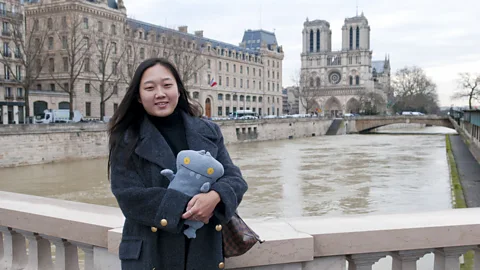 Andrea Neri
There’s this heavy, lonely feeling after a long day of working when you come back to your hotel room. But I hold Babo and I instantly fall asleep
 Andrea Neri
Eileen Cho
From Seattle, living in Paris
Photographer Eileen Cho moved to Paris two-and-half-years ago to study creative documentary and photojournalism at graduate school. Now, her work takes her backstage at fashion weeks all over the world, including New York, Milan and London.
And, while she’s surrounded by beauty and glamour in her daily work, there’s one thing she’s never without, her Babo Uglydoll. Bought by an aunt from Barney’s in New York when she was 12 years old, it was initially a gift for her brother. But, Cho fell in love with the doll and claimed it for herself.
Designed by a husband and wife team, Babo means ‘stupid’ or ‘ugly’ in Korean. “I was obsessed with the name and that the doll was Korean-American, just like me,” she says.
“It’s a piece of home that I can carry with me. I travel a lot and it can get really lonely. You suffer jetlag and there’s this heavy, lonely feeling after a long day of working when you come back to your hotel room. But I hold Babo and I instantly fall asleep.”
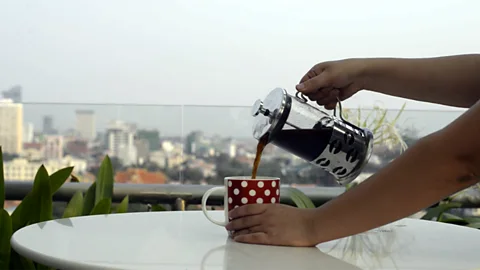
A cup of coffee is sometimes the only constant in my life and it’s a form of self-care
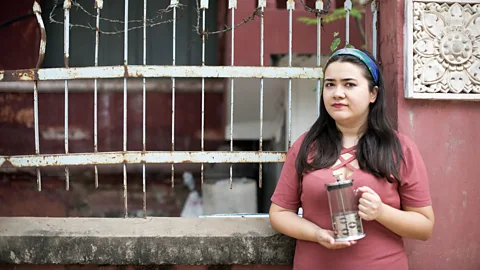 Didem Tali
Didem Tali
From Turkey, living in Phnom Penh
In March last year, after travelling the world as a freelance foreign correspondent for two years, Didem Tali decided to put down roots in Cambodia. “The 15-year-old me would jump with joy at the idea of living out of luggage, but living like this wasn’t always very glamorous or comfortable,” says Tali.
Tali developed a coffee habit while completing a master’s degree in London – which isn’t always easy to accommodate on the road. “Living in the Peruvian Amazon or travelling in Congo or other remote locations, I sometimes wasted hours on end trying to find a decent cup of coffee,” says Tali. “It wasn’t really something I could take for granted.”
Now, Tali always travels with a french press coffee maker in her checked luggage. “Being able to enjoy a cup of coffee is sometimes the only constant in my life and it’s a form of self-care.”
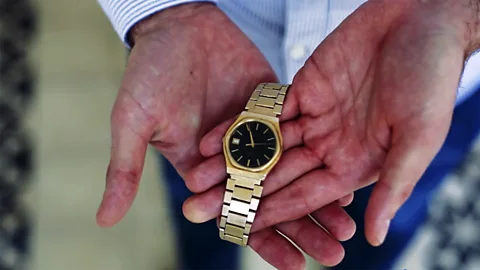
I couldn’t bring my dog, or my family, or my entire record collection, but I could bring this watch and every day it’s a reminder of where I’m from
 Tamir Elterman
Ross Belfer
From New York City, living in Tel Aviv
Ross Belfer, founder of Tel Aviv-based creative agency Xhibition, spent years writing about Israel from behind a computer in New York City. “It felt kind of obvious that I was in the wrong place,” says Belfer, who has now lived in Tel Aviv for six years.
Belfer isn’t really into accumulating “stuff,” but he does have one treasured object he takes everywhere: a gold vintage Longines watch from the 1950s, which belonged to the grandfather he never met.
“It’s a family heirloom that my dad let me borrow and I just kept wearing it because it felt passed down from generation to generation,” says Belfer.
“It reminds me of New Jersey, where my grandparents lived. I couldn’t bring my dog, or my family, or my entire record collection, but I could bring this watch and every day it’s a reminder of where I’m from.”
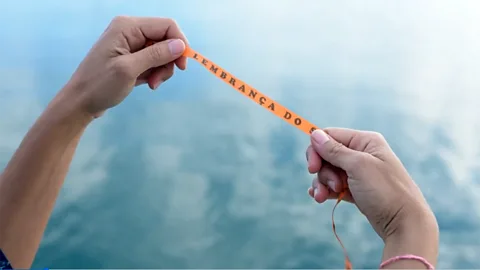
It really reminds me my city’s most beautiful church. And because it’s on my wrist, I see it every day
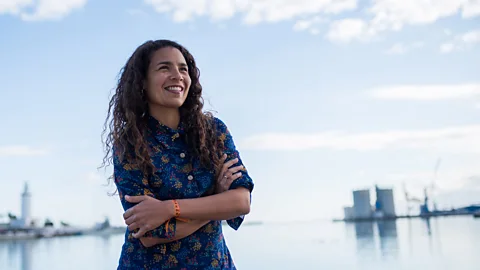
Raissa Modesto
From Salvador de Bahia, Brazil, now lives in Malaga, Spain
In 2002, Brazilian journalist Raissa Modesto was at a music festival in her country with some friends when she met a visiting Spaniard. “We fell in love – just like in the movies,” she says.
Modesto, whose native language is Portuguese, moved to Malaga that year. The new couple spent months trying to communicate in their shared language of English as she worked to learn Spanish. “It was very hard in the beginning because I only knew how to say, ‘ola, que tal?’” Uncertain about the future, the couple decided to marry so Modesto could stay in Spain legally. Fifteen years and two children later, the gamble appears to have paid off.
But Modesto has always found comfort in the colourful Catholic ribbons – sometimes called ‘Bahia bracelets’ – that she brought with her from her hometown. People typically tie them around their wrists or attach amulets and use them as necklaces.
In addition to functioning as a sort of good luck charm, Catholics make knots in the ribbons while making a wish. “In Brazil, we ask a lot about finding love because we’re very romantic,” says Modesto. “I knew I had to take them because it really reminds me my city’s most beautiful church. And because it’s on my wrist, I see it every day.”
“The Bahia bracelets give me a kind of hope. It reminds me of my roots, [of] where I come from.”
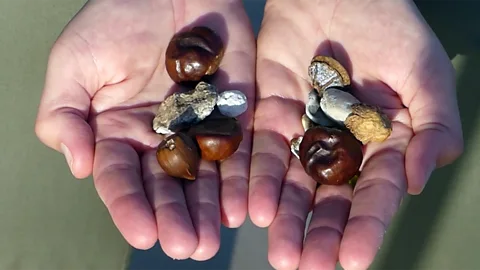
They’re a reminder of a really nice moment with my goddaughter, and sometimes, if I have a tough client call, I just hold them in my hands
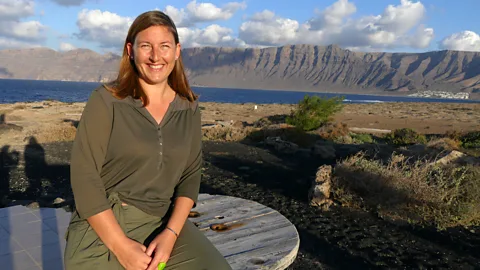 Angel Hernandez
Christine Hasebrink
From Gladbeck, Germany, living in the Canary Islands
When a prospective client in the Canary Islands contacted Christine Hasebrink, a marketing consultant, she decided in November that it might be a good idea to get on a plane to go and meet them – and make a new temporary home for herself.
“I decided to stay in the sun instead of going back to Germany, which is quite cold right now,” she says.
Hasebrink packed her favourite reminder from home: small stones she collected with her young goddaughter. “Ever since my godchild was a baby, we would collect stuff: small stones, sand, just everything she could find,” she says. “I keep the things we’ve collected in a small purse or next to my bed.”
The stones serve as part memento and part lucky charm. “They’re are a reminder of a really nice moment with my goddaughter, and sometimes, if I have a tough client call, I just hold them in my hands.”
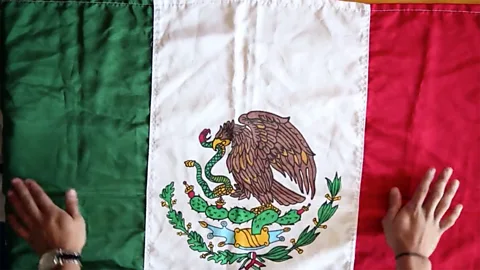
I can never forget where I’m from, my roots. I want to keep it with me at all times
 Sebastian Diaz
Isidro Gonzalez
From Penjamo, Mexico, now lives in New York City
Two years ago, Isidro Gonzalez, originally from Mexico, moved to New York City from Florida for love. The relationship didn’t last but he decided to stay in the city and found work bartending at a restaurant.
But he misses his large extended family – a life full of cousins and nephews – and the peace he used to feel visiting the rural land owned by his parents. His homesickness has been compounded by President Donald Trump’s immigration rhetoric and policies, which have heightened feelings of both uncertainty and pride in his Mexican heritage.
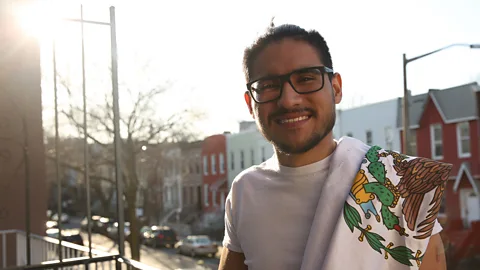
Gonzalez carries a Mexican flag with him on his travels, an explicit symbol of the country and extended family he left behind. “I can never forget where I’m from, my roots,” says Gonzalez. “I want to keep [the flag] with me at all times.”
He keeps the flag folded in his closet rather than displayed on a wall. But he sometimes takes it out, spreads it out carefully on his bed and then lies with it to daydream about the sopes his mother will make him on his next visit home.
When I put the sweater on and I smell that wool smell, I’m immediately taken back to sitting in the living room with my parents in front of the fire. It’s sort of like putting on a hug in sweater form
 Jeanette Seflin
Kate Slean
From Victoria, Canada, living in Stockholm
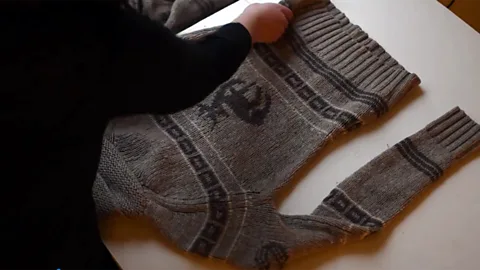
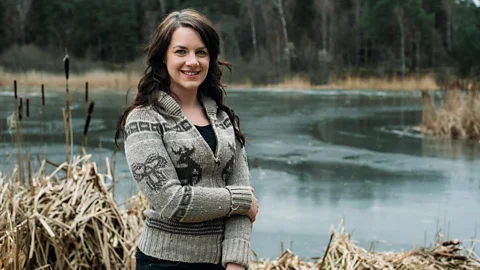
When Kate Slean’s boyfriend started looking at continuing his education abroad, the freelance writer, graphic designer and blogger was game. After stints in Leeds and Madrid, they’ve now been in Stockholm for three months – a much more appropriate climate for Slean’s beloved Cowichan-style sweater, a form of patterned knitting specific to the Cowichan people of British Columbia.
“I originally bought it in 2011 because I just thought it looked really great,” says Slean. But over time, the sweater has acquired more significance. “Cowichan is a smaller town north of Victoria, so it does feel like it brings me back to my [Vancouver] Island roots.”
Slean’s sweater has become her go-to comfort for days when she’s struck by homesickness. “When I put the sweater on and I smell that wool smell, I’m immediately taken back to sitting in the living room with my parents in front of the fire,” she says. “It’s sort of like putting on a hug in sweater form.”
