Where rivers are lined with gold

 Paul Zizka/All Canada Photos/Alamy
For more than 100 years, Dawson City has lured adventurous souls and nomadic wanderers with the promise of golden opportunities and the possibility of striking it rich.
 GC Stock/Alamy
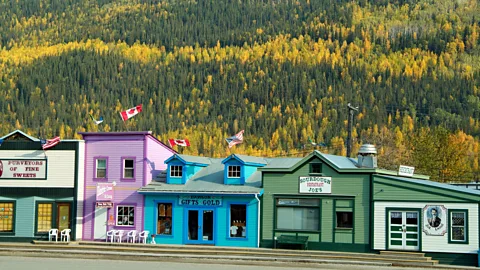
In 1896, George Carmack, Dawson Charlie, and Skookum Jim Mason found gold in the riverbeds of Bonanza Creek, an offshoot of the Klondike River outside of Dawson City, Yukon. After news of the discovery spread, a stampede of prospectors from around the world arrived on Front Street to stake their claims. By 1898, the town’s population of 1,500 had ballooned to 30,000.
For more than 100 years, Dawson City has lured adventurous souls and nomadic wanderers with the promise of golden opportunities and the possibility of striking it rich. Today a diverse community of miners, artists and First Nations people remains.
“This place has always retained really independent characters, colourful people,” said Dawson City’s Mayor Wayne Potoroka. “It adds a flavour to the town that is really unparalleled anywhere else in Canada.”
 Ryan MacDonald
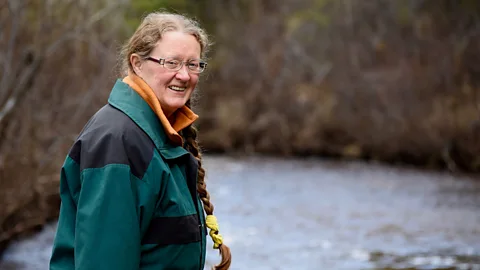
Dawne Mitchell seemed destined to end up in a place like Dawson City. As a young woman, she would often stare at her globe and point to places in the world that were far from anywhere she had ever been and imagined what it was like to live there.
Before arriving in Dawson City in the summer of 1977, Mitchell had left her family’s farm on the prairies of Saskatchewan to travel the south-western United States. She worked odd jobs for extra cash, content on exploring the world as a means of an education.
When a distant cousin told her about an opportunity to work on Bonanza Creek teaching tourists how to pan for gold, she packed her bags and headed north. Even though she knew little about the region – or gold mining – her wanderlust took over.
“I never even really heard of Dawson much,” she joked. “We, Canadians, don’t know much about our northland.”
 Larry Trupp/Alamy
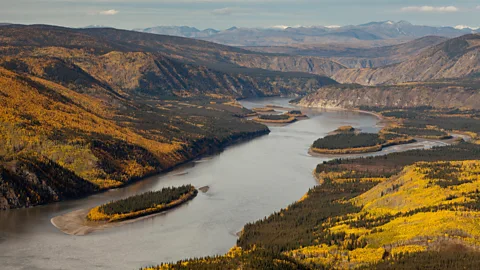
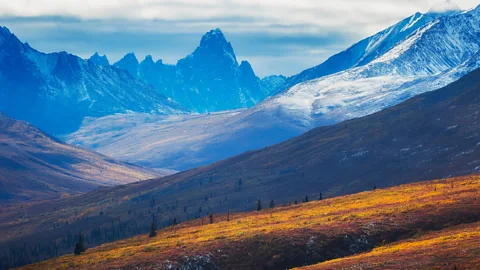
Nestled at the confluence of the Yukon and Klondike Rivers in the north-west pocket of the territory, Dawson City is cradled by the Ogilvie Mountains, a primitive mountain range that spans 2,000 sq km and protects a variety of wildlife, like caribou, grizzly bears and moose.
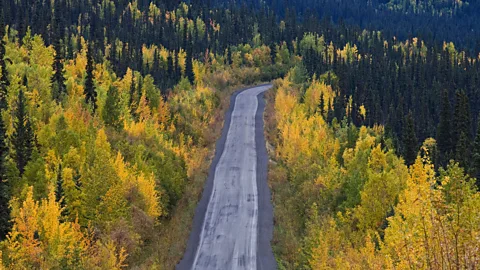
It can take up to seven hours to reach Dawson City along the Klondike Highway, a 533km road that begins in Whitehorse, the territory’s capital. The drive traces the route miners took during the Klondike Gold Rush and winds through many geographical environments.
Bordering Alaska, British Columbia and the Northwest Territories, the Yukon is the country’s least populated province or territory with the majority of its citizens residing in Whitehorse.
 Voyager Images/Alamy
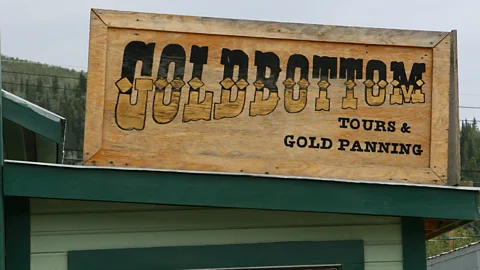
Intrepid travellers and seasonal workers arrive every year to Dawson City; some visitors simply want to escape modern life and explore the nearby landscapes, while others hope to strike it rich in the local goldfields, where for decades prospectors have shovelled sand into buckets, dunked their pans into icy waters and prayed for a golden fortune.
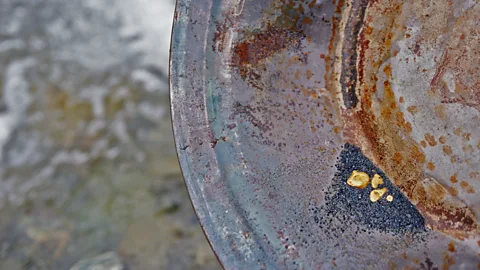
Over the last century, the price of gold has fluctuated, but today it sells for about $1,300 per troy ounce, which measures to be roughly the size of a teaspoon. It’s pulled from the Yukon River and Bonanza Creek in a variety of shapes and forms, like flakes, nuggets and chunks.
At the free public claim located along Bonanza Creek Road, anyone can dig up the riverbeds and mine the land for gold. Some ambitious visitors take it even further. “They’ll actually buy up claims and equipment and do it,” said Mitchell. “You can learn real fast and the gold is always there.”
 Ryan MacDonald
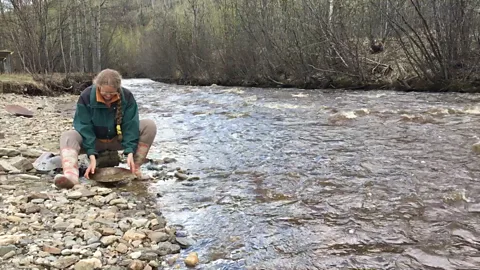
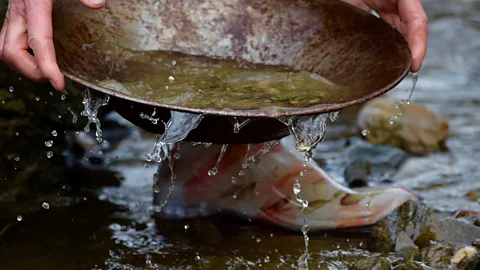
For three summers in the late 1970s, Mitchell taught gold panning to tourists at a small, mom-and-pop mining business. She lived in an old miner’s cabin off in the wilderness and cooked with water from a nearby stream. Before landing in Dawson City, she had no gold panning experience but quickly learned how to sift through the fine gravel, which was smooth like beach sand. Soon she mastered the techniques of swirling and tilting the metal saucers so that the gold would sink into the pan’s crevice, and taught the tourists to do the same.
It was a simple time in her life when she walked to work every day and rode her bike into town. On her days off, she wandered the ridges of the nearby mountains that inspired one of her favourite authors, Jack London.
“It was really a very special place to call home for a few summers,” she said, even though she was thousands of kilometres away from her friends and family. “A place can really grab you, and you just feel like you belong. You feel like, ‘Hey, this is home'.”
 Ryan MacDonald
Mitchell never got a case of ‘gold fever’ herself, but the lure of gold kept calling her. Miners are limited to a certain number of claims per year, and new ground only opens up when the original claim owner dies or allows their claim to expire with the miner’s recording office. When new ground did open up, miners and prospectors would line up to race into the wilderness like it’s an Olympic track and field event. Mitchell’s friends would often ask for her help to get there first.
“It was just an amazing rush,” Mitchell said of racing into the bush against half a dozen other miners. “It was like an old time gold rush in a way.”
By 1981, she took a job at one of the area’s gold mines. She became a part of the community.
 Kerrick James Photog/Getty Images
An old miner once said, ‘Dawne, gold is where you find it', Mitchell said.
 Andrew Wilson/Alamy
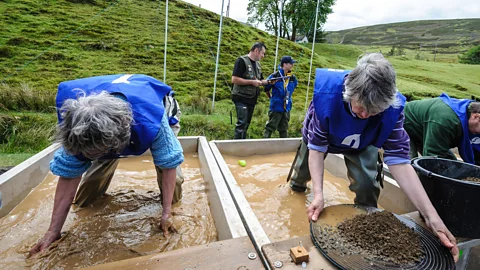
In 1984, the Women’s World Championships of Gold Panning came to Dawson City, and a friend suggested to Mitchell that she enter the competition. She had a knack for hand panning from her days working with tourists, so she entered on a whim. The event drew recreational panners from around the world, and the rules required the competitors to locate a specific number of coloured gold flakes planted in a five pound bucket of gravel and dirt.
With a time of about three and half minutes, Mitchell was not the fastest panner, but in this sport, it’s not just speed that matters. Competitors incur time penalties for each flake they fail to find in their buckets, which worked in Mitchell’s favour. She took first place.
“That was pretty exciting to be a world champ. I mean not everybody gets to claim that,” Mitchell said.
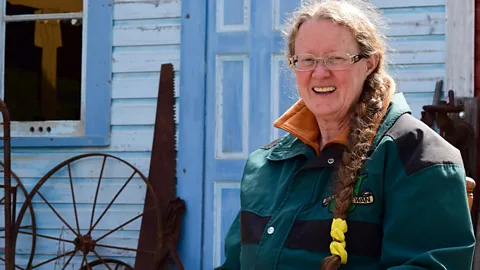
A few years later at the Yukon Open, an annual panning event held in Dawson City every July, Mitchell competed against her counterparts, veteran miners who Mitchell knew from her time working in the mines. Some of them had reputations for their quick panning abilities and expert technique. Mitchell was the only female to enter the competition. Much to her own surprise she pulled off another victory when the scores were tallied, making her the first woman to win the Yukon Open title.
 Ryan MacDonald
With a deep respect and admiration for the sport, Mitchell continued to compete internationally for a number of years after her original victory in Dawson City, and even coached other female competitive panners. While she still occasionally heads to Bonanza Creek with her pan, Mitchell now spends her time as an interpreter at the Jack London Museum, telling the story of the author’s time spent in the Yukon and how it inspired him to write Call of the Wild and taking things day by day, contemplating her future under the midnight sun.
“This is what I love,” she said of the round-the-clock sunshine. “The long days and short nights, and gardening until 1:00 in the morning.”
Mitchell expects gold to remain a prominent theme in her life story, too. Recently she discovered a claim application in the local archives made by a great uncle of her grandfather who came to Dawson City in 1903 just after the height of the Klondike Gold Rush. So no matter where life takes her, she said, “the history will always be here.”
 Robert Postma/Design Pics/Alamy
Gold mining remains the largest industry in Dawson City, with 124 of the Yukon’s 196 active mining sites found near the town. The Bonanza Creek district, site of the original Gold Rush, still maintains a large majority of the mines, which range in size from large, industrialized operations to small, grass roots explorations. “It continues to bring people up, and there is that feeling that gold mining will be here for a long time,” Mitchell said.
But if you come and expect to stay only for a summer, don’t be surprised if you stay a lifetime.
