Which country can claim steak?

 Alamy
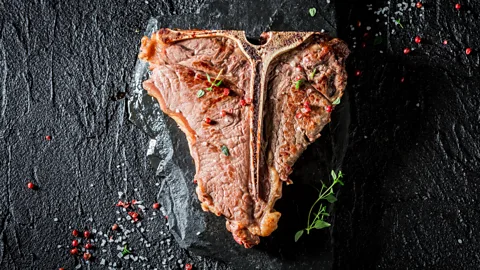
AlamyFrom Japan to Argentina to the US, nations around the world have put their own stamp on the mouthwatering meat – making beef a destination in itself.
People around the world enjoy steak, and a few countries even claim it as their national dish. But can any culture truly claim this primal meal as their own?
Not when you consider the long history of beef. Cave paintings depict hunts of early bovines, and archaeological evidence suggests that peoples living near Stonehenge ate cattle as early as 2500 BC.
But consumption of beef on a grand scale is relatively new. As meat became easier to transport and refrigerate in the 19th Century, chic Parisian bistros and lavish American steakhouses put steaks front and centre, equating steak with prosperity.
Today, from slow-cooked asado in Argentina to meticulously marbled Wagyu beef in Japan, countries around the world have put their own distinct stamp on the meal and folded it into their identities.
Here are six nations where steak is a destination in itself.
 Alamy
AlamyArgentina
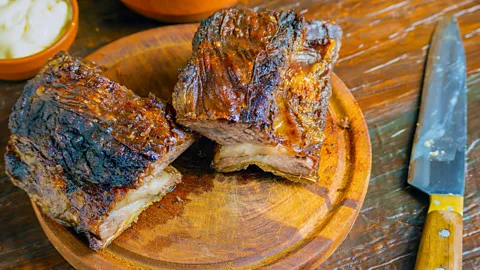
Beef was introduced to Argentina by Spanish colonists in the 16th Century, who released cattle onto the fertile Pampas grasslands. Gauchos (cowboys) created parrillas: makeshift grills with metal grates. The technique of slow-roasting meat over low heat became known as asado, and alongside the indelible association of gauchos with Argentine culture, a source of national pride.
Travel tip:
Asados feature endless options, so keep it simple and order the parrillada – a mixed grill that includes chorizo, kidney, ribs, flank steak and more.
Argentines generally roast their meat well-done, so if you'd rather a juicier cut, ask for bien jugoso (rare), jugoso (medium) or apunto (medium-well).
"Steak is part of our idiosyncrasy, it's so beautiful and very important," says world-renowned Argentine chef and author Francis Mallmann. "No matter if we have a tenderloin or an incredible ribeye or just a little scrap of the edge of the leg, the idea is to be together and to talk about politics, about football, about happiness, about friendship."
Today, an asado is joyful gathering, typically occurring at weekends. The meal starts with small morsels and innards, progressing to heartier cuts. "You generally have tira de asado (strip of roast beef) – the ribs of the beef cut very thinly with the bone in, " says Mallmann. "Those ribs are the biggest statement in an asado, because it takes a lot of understanding of fire and meat to cook well."
Punchy chimichurri sauce is a must; made with oregano, parsley, chili flakes, vinegar, olive oil and salt. Other accompaniments may include bread, salsa, salads, empanadas and other meats, like blood sausage, chorizo and pork.
 Alamy
AlamyJapan
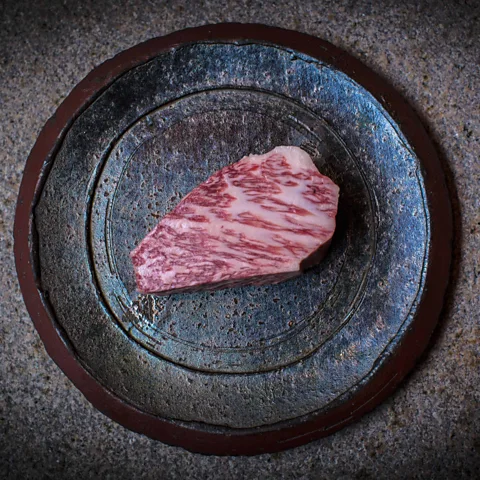
Beef only appeared in the Japanese diet after the 19th Century, when the Meiji government promoted eating meat in an effort to emulate the West, then took firm hold after World War Two. High-end steakhouses emerged, and Japanese farmers began creating their own cattle varieties. The resulting premium beef varieties like Kobe, Wagyu and Ōmi became emblems of quality in Japan and around the world.
"The beauty of marbling, the purity of the fat, and the precision of cooking are all highly valued," says Chef Haruka Katayanagi of Karyu Restaurant in Tokyo. "In that sense, steak in Japan has evolved into a cuisine that emphasises craftsmanship and the character of the ingredient itself."
At restaurants, steak is often prepared over charcoal, or on a flat iron grill in teppanyaki restaurants directly in front of diners.
Katayanagi says that home cooks typically prepare steak in a frying pan with salt and pepper, adding butter or soy sauce to finish. Steak is commonly accompanied by steamed white rice and miso soup, reflecting the Japanese structure of a complete meal.
 Alamy
AlamyItaly
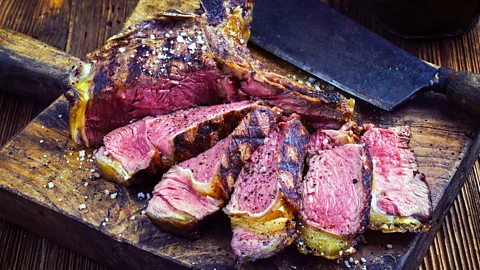
If one meat dish dominates Italy, it's bistecca alla Fiorentina, the traditional thick-cut Tuscan steak dating to the Renaissance.
Over the centuries, the massive cut has become a symbol of Tuscan cooking and conviviality, and a rite of culinary passage in a country whose cuisine is strongly defined by regional dishes. But "bistecca alla Fiorentina is not something for a dainty dinner for two, nor is it something for a simple family meal. It's cause for celebration", says eighth-generation butcher Dario Cecchini of Officina Cecchini in Chianti. "We're celebrating the life that has been sacrificed to nourish us."
That meat comes from Italy's Chianina cattle, known for their remarkable white coats. A true bistecca alla Fiorentina is cut from the loin in the T-bone shape. As for the size, "it's the most over-discussed subject in Tuscany," says Cecchini. "It should be no less than one-and-a-half kilos, but from there, it really depends on the size of the cow itself, and how many people are being served."
Cecchini uses a grill filled with noble oak wood and lets the steak come to full room temperature. "The best way to cook a bistecca alla fiorentina is the ancestral way," he says. "No rubs, no salt, no oil, nothing. On the table, the diner should find a good salt and a bottle of good extra-virgin olive oil. But the first bite should be without."
While Italian restaurant dinners unfold in a symphony of courses – including antipasti, primi (pasta) and contorni (side dishes) – a bistecca alla Fiorentina demands centre stage, and a restrained approach is recommended. "The side dish would be white cannellini beans cooked simply with garlic, sage and olive oil," says Cecchini. "This is truly the most classic – beans and bistecca."
 Alamy
AlamyBrazil
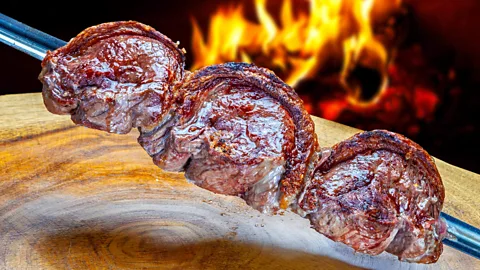
Brazil's steak culture is rooted in churrasco, the Portuguese word for grilled meat. The cooking style emerged in the 18th and 19th Centuries among the ranchers who developed a system of skewering beef on long metal rods, seasoning it with salt and roasting it over open fire. The setup, with skewers set over charcoal or live heat, still shapes the way churrasco is cooked today.
Originally a regional specialty, churrasco spread across Brazil and became a national dish as well as a cherished multi-generational event. In restaurants known as churrascarias, churrasco is often served rodízio style – an interactive format in which passadores (skilled servers who slice the meat) circulate through the dining room carving different cuts tableside.
The signature cut is picanha, taken from the top of the rump. The meat is typically sliced into thick steaks, folded, skewered and grilled with the fat facing the heat so it bastes the meat as it cooks.
At Brazilian homes, steak is served with a variety of different sides, like rice and black beans, farofa (toasted cassava flour mixture), a vinaigrette like chimichurri, tomato and onion salsa, and fried cassava or potato. In churrascarias, the spread might include a salad bar, hot sides, and hearts of palm and sliced vegetables.
 Getty Images
France
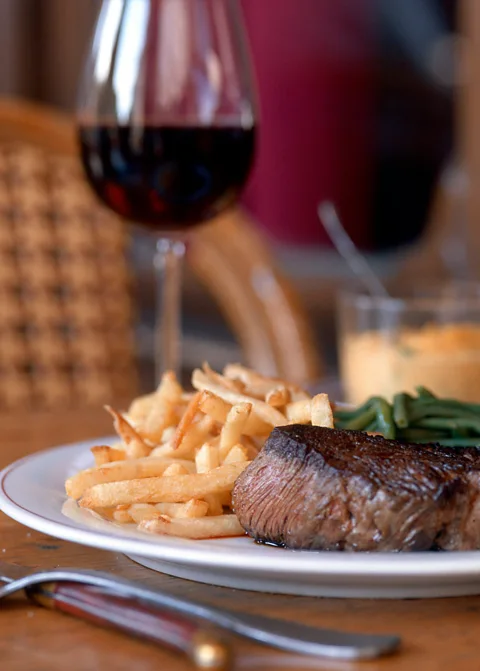
Think of French food and perhaps the first thing that comes to mind is the iconic steak frites: thinly slied entrecôte (a boneless cut from the rib) served alongside a pile of crispy chips. But look further and a whole range of beef dishes come into view, from steak tartare to boeuf Bourguignon.
Travel tip:
The French generally serve their steak rare, so master these terms: bleu (still raw inside), saignant (rare), à point (medium-rare), cuit (medium), bien cuit (well done).
Before the late 19th Century, however, most French people were not consuming beef regularly; cattle were primarily used to work the farms or to produce milk. Advances in agriculture, transport and urban dining converged to bring beef front and centre. With this shift came the rise of Parisian bistros and brasseries, where cuts like bavette and entrecôte (paired with potatoes) became commonplace.
Butchery, too, evolved into an art form, according to Ariane Daguin, founder of D'Artagnan Foods. The French emphasise using as much of the cow as possible. "We are the best in the art of using every piece, every part of the animal the best way possible," says Daguin.
Today, steak in France remains closely tied to the experience of the neighbourhood brasserie; the beating heart of French culture. Steak here is considered the ideal vehicle for the classic sauces like béarnaise, peppercorn or bordelaise. It's eaten with chips or a simple green salad, at leisurely lunch or dinner – with red wine, of course.
 Alamy
AlamyUnited States
In his 1973 book, Breakfast of Champions, Kurt Vonnegut wrote, "Being American is to eat a lot of beef steak, and boy, we've got a lot more beef steak than any other country."
Travel tip:
American steakhouses pride themselves on their vast selection of cuts; allow your server to guide you, but look for steak that's USDA Prime – the highest grade of beef.
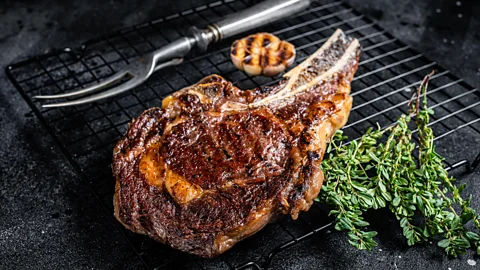
Tomahawk steaks look impressive, but you're paying for mostly bone: order the rib-eye instead.
Ironically, until the Civil War, most cattle in the US were kept mostly for dairy, or butchered for tallow and hides. Nonetheless, the image of cowboys herding cattle across the West became synonymous with American independence and power.
As steakhouses spread across the country in the 1800s, they adopted a format: dark dining rooms; oversized martinis; and decadent sides like creamed spinach, onion rings and mashed potatoes to accompany the boneless ribeyes and porterhouses that became de rigeur. The porterhouse – often called the "king of steaks" in the US – is actually two prized cuts: the filet mignon and New York strip, separated by the T-bone. Over-the-top, costly and luxurious, it epitomises American steak culture.
More like this:
After WW2, America's enthusiasm for beef surged, not just in steakhouses but at home. Backyard grilling became a way to gather with family and friends.
Yet, it could be argued that the most American "steak" is the hamburger, according to Chef Angie Mar of New York City's Le B restaurant. "Our cuisine is built on a beautiful melting pot of so many different cultures who have immigrated to this country," says Mar, "and the one very authentically American thing that we can say is ours is a burger."
--
If you liked this story, sign up for The Essential List newsletter – a handpicked selection of features, videos and can't-miss news, delivered to your inbox twice a week.
