Why every culture has a healing broth

 Alamy
AlamyAcross cultures, broths have soothed illness, marked celebration and stretched scarce ingredients, long before they became a wellness trend.
What do you eat when you need comfort? The answer varies depending on where you're from, but it's likely some form of broth, served steaming in a bowl.
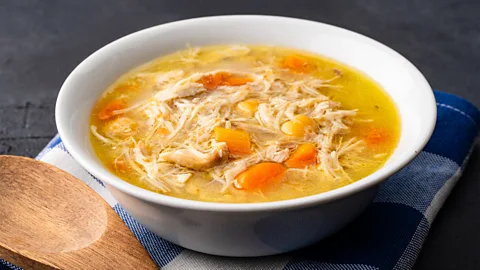
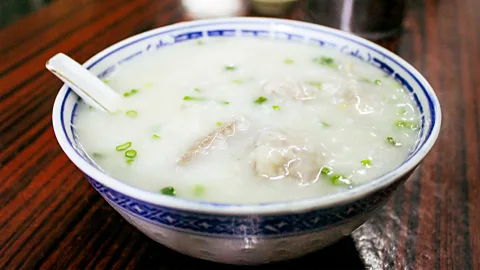
In the US, it may be chicken noodle soup, while Italians might crave nonna's homemade pastina in brodo, tiny pasta in a simple vegetable or bone broth. Across Asia, it's congee and other rice porridges simmered slowly in water or stock, cooked by Chinese, Vietnamese, Korean and Indonesian mothers for their children. In Eastern Europe, it's borscht, a sour beetroot soup often made with meat stock and sauteed vegetables that's widely associated with Ukraine cuisine.
Across continents, stocks and broths are woven into cultural and familial memory. They are what we reach for when we are ill, when we need to stretch ingredients or when we feel homesick, and in some traditions, what we serve at moments of celebration. They rarely command attention on their own – yet they form the backbone of countless cuisines.
And wherever they're eaten, they warm the soul as much as the body.
Stock versus broth: What's the difference?
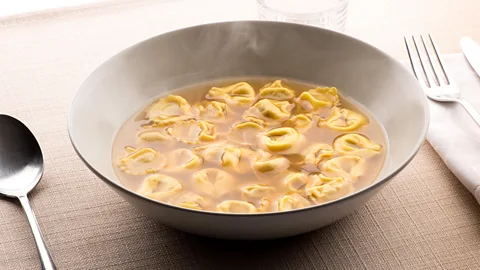
"[Broth] connects the threads between my very early childhood memories around food and also my life's work," says Dara Klein, head chef and founder of London's Tiella Trattoria. She spent her early years in Italy's Emilia-Romagna region – the birthplace of tortellini in brodo.
"In Emilia-Romagna, there is a long tradition of preparation of brodo. It's something that Italians are introduced to very early in life and that people very much connect to," Klein says.
The terms stock and broth are often used interchangeably, but they are not identical. Broths are typically made by simmering meat, vegetables and aromatics for a few hours, resulting in a lighter liquid. Stock is made primarily from bones, producing a richer, more gelatinous base.
"I have [had a brodo] on the menu at the restaurant since [we opened]," says Klein. "The recipe is similar to what my mum used to make, utilising beef shin, chicken legs and chicken wings. It's a blonde broth so you don't begin by roasting the bones, which you see in other broths from around the world. Its preparation is very low and slow. Ours cooks for two and a half days and extracts all the collagen out of the bones. But in colour, it's still very light."
 Getty Images
Broths and stocks can be prepared in numerous ways, with technique determined by their intended purpose. Bones may be roasted for depth and colour or simmered raw for clarity. Some preparations rely solely on meat, while others combine meat and bones to achieve a layer of flavours. Aromatics such as mirepoix may be included for complexity or omitted to produce a more neutral base.
Historically, broth-making was an exercise in thrift and nourishment. Boiling meat and bones rendered tough cuts edible and extracted maximum flavour and sustenance. The slow simmering of stock was also domestic labour; often overseen by women whose contributions rarely entered the written culinary canon.
In contrast, the refinement of stock into consommé – a clarified, crystal-clear soup – was documented within French haute cuisine. Chef Alexis Soyer described the technique in 1846, detailing how egg whites could clarify stock, transforming a rustic preparation into a transparent, formalised dish. However, much of the world's broth knowledge evolved quietly in home kitchens rather than royal courts.
"My grandma always made this chicken soup with goji berries and wood ear mushrooms," said Zoey Xinyi Gong, a Traditional Chinese Medicine food therapist based between Shanghai and Paris. "It's her go-to recipe, and there's always a soup for every meal. [A meal is] not complete without soup."
Soup as comfort
Feeding colds with steaming bowls of soup is no modern discovery. One of the earliest written references to broth appears in the Huangdi Neijing, a foundational Traditional Chinese Medicine (TCM) work dating to the 2nd Century BC.
The text advocates for the consumption of broth-based soups to maintain the body's yin and yang – a foundational Chinese philosophy in health depends on balancing the two opposing energies. Centuries later, many Chinese families worldwide still simmer bones with medicinal herbs such as goji berries and ginseng to produce nutrient-rich soups, served before or after dinner to help support overall health.
"Soup is a very good medium for herbs because [both broth and dried herbs] have to be boiled for a long time," Gong explains. "So it makes sense to consume those herbs in a very palatable way. Overall, the energetics of it are quite neutral to warming, which is ideal based on Chinese medicine."
 Alamy
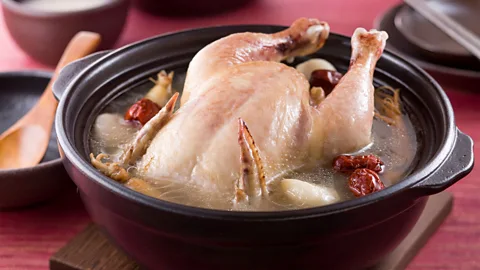
AlamyChicken soup in particular has long been associated with recovery. In Korean cuisine, samgye-tang –a whole young chicken stuffed with rice, jujubes and ginseng and served in a flavourful broth – is eaten during the hottest days of summer as a restorative meal. It may hardly be coincidence that in Greece, avgolemono combines chicken broth with egg, lemon, dill and rice or orzo, and is often eaten when you're unwell. In Mexico, caldo de pollo features whole chicken pieces simmered with roughly cut vegetables, potatoes and whole cabbage leaves to create a sustaining, everyday soup.
Scientific research into broth's benefits is ongoing. Some studies suggest broth-based soups may help reduce inflammation and ease cold symptoms, while bone broths contain collagen and amino acids. However, many sweeping health claims surrounding bone broth remain contested, and its benefits are often overstated in popular wellness culture.
More like this:
In recent years, bone broth has been rebranded as a premium health product. What was once a method of stretching scarce ingredients now appears in chilled cartons in high-end supermarkets. As demand has grown, so too have prices, with bones in some markets rivalling the cost of prime cuts. The trajectory mirrors that of oysters and lobster; foods once associated with necessity that later became markers of luxury.
"I was studying in New York when bone broth became really popular," says Gong. "I was slightly shocked because it was something I grew up with, and I never thought it would be a trend. They were selling it at coffee shops for $10 for little cups. But we've been drinking that for a very long time [in China]."
In sickness and in health
While stocks and broths are often associated with illness, they also anchor moments of celebration. In Emilia-Romagna, preparing and eating tortellini in brodo is a Christmas tradition. Families gather to shape the pasta by hand, while the brodo, traditionally made from capon, is a luxurious ingredient reserved for the celebratory meal.
Poland shares a similar festive spirit. On Christmas Eve, families gather for the main event of the season: Wigilia, a vegetarian 12-dish vigil supper. One of the key dishes, barszcz wigiljny, is a fermented beetroot broth served with tiny mushroom dumplings. Preparing the dish is a labour of love as the beetroots must be prepared several days in advance to ferment. The result is a ruby-red broth that is tangy, earthy and bright.
 Getty Images
In Hong Kong and parts of China, double-boiled soups are one of the most opulent courses in a banquet meal. Ingredients are first placed in a sealed ceramic vessel and then submerged in a larger pot of boiling water, much like sous vide or an enclosed bain-marie. This technique prevents evaporation and preserves the delicate flavours of prized ingredients such as bird's nest and fish maw.
In Japan, the new year is not complete without o-zōni, a soup made with mochi rice cakes and dashi broth – a fundamental Japanese stock created by simmering dried kombu and bonito flakes. Regional varieties of o-zōni differ widely, from broths seasoned with soy sauce, red miso or white miso to mochi that is grilled before being added to the stock.
There are endless variations of broth-based soups across the world, each shaped by climate, culture and history. But whether simmered for survival, wellness or celebration, there's one thing most cooks and home cooks would agree on: it's that in kitchens everywhere, someone is still tending the pot.
--
If you liked this story, sign up for The Essential List newsletter – a handpicked selection of features, videos and can't-miss news, delivered to your inbox twice a week.
