The world's happiest countries for 2026 - and what they get right

 Getty Images
From Nordic trust to Costa Rica's sense of community, residents explain what daily life looks like in the countries topping the 2026 World Happiness Report.
While the Nordic countries have long dominated the World Happiness Report, 2026 brought one surprise. For the first time in the report's 14-year history, a Latin American country made its way into the top five as Costa Rica continued its multi-year rise to fourth place, jumping from 23rd in 2023.
The rankings, produced annually by Gallup, the Oxford Wellbeing Research Centre, and the UN Sustainable Development Solutions Network, are based on a three-year average of how residents in 140 countries rate their own lives alongside factors such as GDP, social support, life expectancy, perceived freedom, generosity and corruption. For the second year in a row, no major English-speaking countries made the top 10, with Australia at 15th, the United States at 23rd, Canada at 25th and the UK at 29th.
This year, the countries in the top five each have unique aspects contributing to their happiness, though freedom to make life choices scores highly among all of them. We spoke to residents living in each country to find out what contributes to the daily and long-term sense of happiness – and how travellers can experience a taste of the local "happy life" when they visit.
1. Finland
For nine of the past 10 years, Finland has ranked number one. The country scores highly for social support and low perceived corruption, and residents often point to the social safety net – including education and healthcare – that creates a sense of security and wellbeing.
"I love the fact Finland is safe and I can trust the average person here," said Olli Salo, co-founder of the Helsinki-based company Skimle. "Kids walk to school from age seven, you don't feel threatened when walking home, and you can trust if someone makes a promise they will keep it."
While the country has high taxes, residents see a clear trade-off. Salo compares it to paying for a premium software subscription; while it may cost more, the quality is better. "The majority of the really important things in life like health, education and transportation are public services, so why not splurge a bit and get those in high quality?" he said. He also finds Finnish workplaces more collaborative than elsewhere in the world, with less hierarchy and less "corporate theatre".
 Getty Images
For Daniel Sazonov, the current mayor of Helsinki, happiness also comes from proximity to nature. "Being able to step outside, and in a few minutes, reach the sea, a park or a forest for an evening walk is something special," he said.
For visitors, experiencing Finland's sauna culture should be the first stop. With an estimated three million saunas for a population of just 5.5 million, the nation has no shortage of options. "I suggest trying out the different saunas in Helsinki – and maybe even a plunge into the cold Baltic Sea," said Sazonov. The Helsinki Central Library Oodi, opened in 2018, is a striking modern landmark and a popular gathering place for locals and travellers.
Beyond the capital, Salo suggests heading north in winter, renting a cabin and watching for the Northern Lights. But he advises against a packed itinerary. "I've never understood those who book four activities per day and rush from husky rides to Northern Lights tours," Salo said. "That is not the Finnish way."
2. Iceland
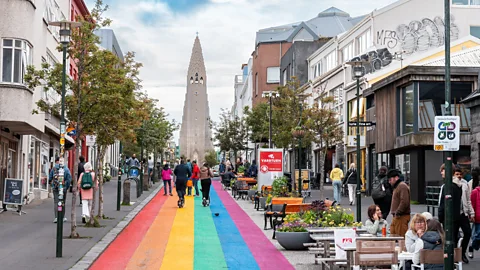
Edging past Denmark into second place for the first time since 2014, this island nation of just 400,000 people ranks first for social support – the degree to which residents feel they have someone to count on in times of trouble. It also places in the top 10 for GDP per capita, healthy life expectancy and generosity, making it one of the most well-rounded performers in the rankings.
 Getty Images
"Historically, our isolation meant that survival was a group effort. For centuries, there was no outside help. There was just us, and we had to stand together," said Ingibjörg Friðriksdóttir, a Reykjavík resident and digital marketing manager at Hotel Rangá. "That legacy has shaped a culture where helping one another is simply second nature."
Icelanders also have a strong adaptability forged from surviving harsh, dark winters. "We learn to appreciate the small moments: good coffee, warm pools and spending time with friends," said Bryndís Björnsdóttir, managing director of Laugará́s Lagoon in Reykjaví́k. "When summer arrives, we suddenly get daylight almost all night long, and everyone becomes more energetic and happier."
No matter the season, residents suggest visitors get outside regardless of conditions. "The fresh air, the open landscapes and the feeling of freedom are a big part of what makes this a great country," said Björnsdóttir. The food is worth slowing down for too, she adds, especially the fresh fish.
At Hotel Rangá, guests can enroll in the "Live like an Icelander" programme, where they learn to say the phrase "Þetta reddast" – translating one of the core Icelandic beliefs that contributes to the country's happiness: no matter the situation, it will all work out.
3. Denmark
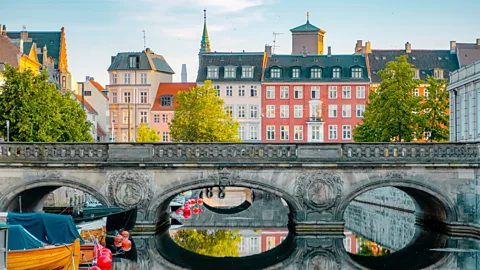
A perennial top performer, Denmark has never dropped below fourth in the report's history and has frequently taken the top spot. Ranking third overall this year, the country also places third globally for social support and low corruption, and seventh for GDP per capita. But the sense of happiness here isn't always visible in obvious ways.
"It's not about wearing a big smile and laughing," said Laura Hall, Copenhagen-based journalist and author of The Year I Lay My Head in the Water, a book about swimming in Scandinavia. "It's really about trust in society, trust in each other and the belief that everyone is working together for the common good."
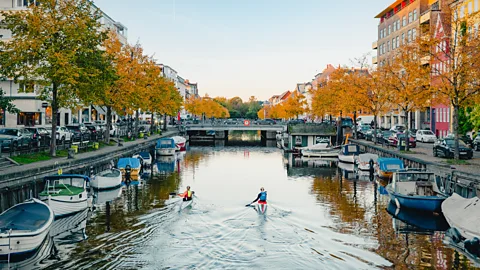
Hall is raising two daughters here and says the sense of security is constant. She also loves Copenhagen's clean harbour, which the city transformed from an industrial waterway in the 1990s into a place where residents now swim year-round.
 Getty Images
In Ribe, the country's oldest town, resident Lise Frederiksen sees happiness rooted in civic participation. "Each day I walk down the cobblestone streets, I'm grateful for my life here," she said. She values the Danish educational system, where children of all economic backgrounds attend the same public school for 10 years and parents are expected to arrange play groups across households. "It is very important that the kids visit each other's homes and see that people can live in many different ways," she said.
Top 10 happiest countries for 2026
1. Finland
2. Iceland
3. Denmark
4. Costa Rica
5. Sweden
6. Norway
7. Netherlands
8. Israel
9. Luxembourg
10. Switzerland
For travellers, Frederiksen recommends coming during one of Ribe's many festivals, which range from celebrations of oysters and tulips to metal music. Visitors who come in autumn can experience the "black sun" period, when millions of starlings migrate through the region in formations dense enough to briefly block out the sky.
In Copenhagen, visitors don't need to plan a perfect itinerary to pick up on the happy vibe. "Most of the time, visitors come away feeling a sense of calm and peace – and a little envy when they see people cycling about going about their day in a relaxed fashion," Hall said. "There's not really any hustle culture here."
4. Costa Rica
Climbing to fourth in this year's rankings, Costa Rica is the first Latin American country to make the top five, with its freedom score and social support measures nearly doubling since 2021. Costa Rica doesn't rank as highly for GDP or governmental support as the Nordic nations, but residents still report strong freedom to make their own life choices. They also rate their lives significantly higher than measured factors alone would predict, according to the report.
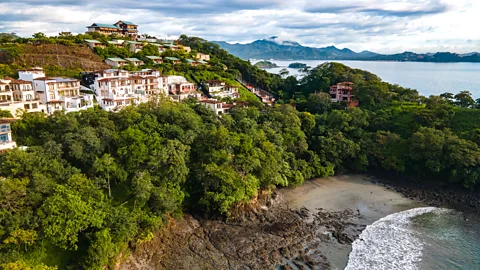
When asked what makes Costa Rica such a happy place, resident Adrian Hunt didn't hesitate. "Community, community, community," said the digital nomad who lives in Las Catalinas, a car-free town on the Guanacaste coast. "Having folks that share the same passion as you to live a healthy life, be outdoors and be neighbours."
 Getty Images
Nature is also a constant source of daily happiness. Hunt describes waking up in the mornings, walking the beach and watching howler monkeys move from tree to tree while fish chase each other in the bay. "I believe Costa Rica has the best quality of life of any country in Central America," Hunt said. "There is something about the energy of the people, both locals and expats, that makes this country pretty special."
To get a sense of the Costa Rica's happiness, he recommends sitting at a café and striking up a conversation or hiking the country's miles of trails. "We want folks to take away from this place how peaceful and tranquil it really is," he said.
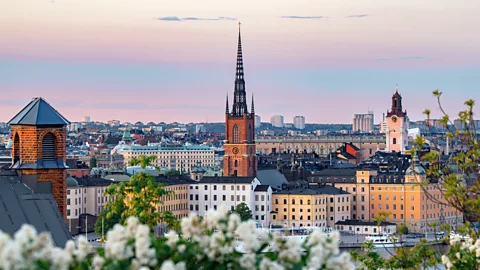
5. Sweden
Ranking fifth this year, Sweden has moved between fourth and 10th over the past decade. It ranks seventh in the world for healthy life expectancy and fifth for low perceived corruption. Its presence in the upper ranks reflects what residents describe as a balance between progressive urban life and easy access to nature.
"One major reason why Sweden consistently ranks so highly on happiness is that we are a small country," said Micael Dahlen, professor of wellbeing, welfare and happiness at the Stockholm School of Economics. "The distances are small – between people, between cities and nature. We have learned to trust and rely on each other, to share and cherish what we have, live with nature and be welcoming of new ideas and people."
 Getty Images
One cultural detail captures the egalitarian streak: the universal use of the informal "du" (you) regardless of status. "No matter who you are – a pop star, a Nobel laureate, the prime minister or a professor of happiness like myself, you're mainly you, du," Dahlen said. His centre recently partnered with the capital to launch the Stockholm Wellbeing Index, to ensure wellbeing is measured and developed alongside economic growth.
More like this:
"I love the people and their kindness, the slower pace of life, the beautiful nature and landscapes, and the feeling that I made a good choice for my future and for the future of my children," said Karolina Pikus, who moved here from Poland and blogs at LikeSweden.com. In Gothenburg, where she now lives, she especially likes that she can swim in the sea, visit a lake and walk in the forest, all in the same day thanks to the well-connected public transport.
Residents recommend visiting in summer, especially for first-timers. During Midsummer, visitors can dance to traditional songs, eat jordgubbstårta (strawberry cake) and soak up the long Scandinavian evenings. In Stockholm, Dahlen suggests simply taking a walk. "Everything in Stockholm and our cities is walking distance and you can bump into anyone," he said. The archipelago is a short boat ride away and is "really worth the while".
But the simplest entry point is fika, sitting down for coffee and a cinnamon bun and watching the rhythm of the street. "That, to me, is one of the best ways to understand Sweden," said Pikus. "To slow down, breathe deeply and let yourself enjoy the moment."
--
If you liked this story, sign up for The Essential List newsletter – a handpicked selection of features, videos and can't-miss news, delivered to your inbox twice a week.
