Going to Europe this summer? Prepare for a long queue

 Alamy
AlamyAs the continent completes its rollout of a new biometric entry system for non-EU residents, many destinations are bracing for long airport queues. Here's how to avoid the worst of it.
When travel expert and author Ash Bhardwaj flew to Oslo in February, he expected the typical minutes-long border experience Norway is known for. Instead, he spent a full hour waiting in queues at passport control – and that was on a less-busy weekday.
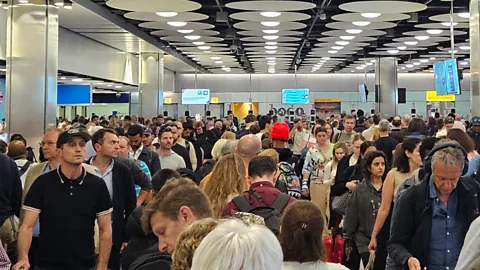
Bhardwaj was far from alone. This winter, many other non-EU nationals who have flown into Europe have been greeted with hours-long queues, missed connections and chaos on the ground.
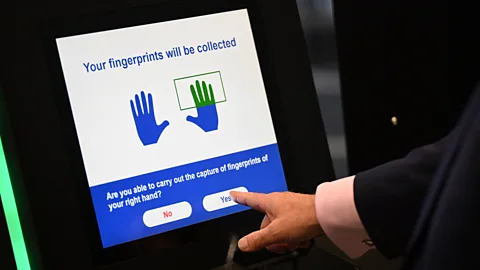
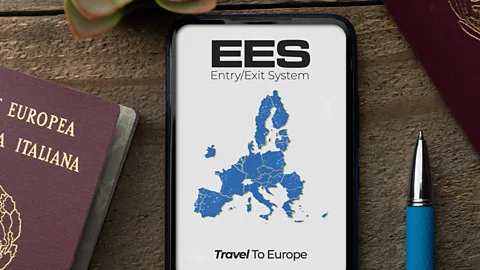
The culprit: Europe's new Entry/Exit System (EES), a biometric border programme that has been gradually rolling out across the 29-country Schengen Area since October 2025 and is set to be fully implemented by 10 April. The system is designed to track who is entering and leaving the border-free Schengen zone, and for how long. By recording biometric data and travel dates digitally, the EU aims to more easily identify travellers who overstay the 90-day limit that non-EU nationals are allowed within the Schengen Area within a 180-day period.
 Getty Images
But the rollout so far has been anything but smooth.
Because the system requires non-EU visitors to register their fingerprints and take a photo – and because this registration must currently be done in person at the border – the extra registration time is already causing massive backups for non-European passengers at airports across the region. EU passport holders have their own, typically faster-moving lines that remain unaffected by EES.
According to Airports Council International (ACI), which represents more than 600 airports and facilitates more than 95% of commercial air traffic in Europe, border processing times where EES checks are active have increased by up to 70%, with peak-period waits stretching to three hours in places like Geneva earlier this year. Lisbon Airport suspended the system entirely in December after wait times reached five or more hours at times, causing some passengers to miss their flights.
"Since the implementation of EES first began in October last year, we've already seen instances of significant delays at different airports and at different times," said Julia Lo Bue-Said, CEO of Advantage Travel Partnership, a network of travel businesses. "The impact has varied widely depending on the destination, time of day and passenger volumes."
 Getty Images
Experts warn that the impact is only expected to get worse as the 10 April rollout gets closer and summer travel ramps up. As a result, the typical advice to "give yourself extra time" may not be enough for non-EU passport holders coming to the continent this year.
EES expert tips:
• Give yourself more time – especially if you're flying into a major European hub
• Know the rules – even if you've already registered, you'll still be in the same EES line as those who haven't
• Choose long layovers – to avoid missing your connecting flight
• Stay updated – with your airline and airport for real-time info on queues and delays before arriving
• Off-season trip, shorter queue? – EES is expected to get smoother in the months after its April rollout, and by avoiding the peak of August travel and flying in September (when some EES rules may still be suspended), you may avoid the worst waits
• Use your EU passport – if you have an EU passport, use it to avoid the EES entirely
Instead, Lo Bue-Said recommends non-EU travellers add at least four hours of buffer time to their plans. If you are booking a connecting flight through a busy European hub, look for options with extra-long layovers to reduce the risk of missing your connection.
Once you've registered with EES at the border checkpoint, your biometric data remains on file for three years before it needs to be renewed. But even if you've already travelled through Europe during the rollout and completed registration, you'll still join the same non-EU passport-control queue as first-timers, Bhardwaj advises, so don't assume you're in the clear and cut things close.
More like this:
That said, the European Commission has suggested that border authorities may suspend the new system for up to six hours during peak travel times until September to help ease congestion. Even so, travellers have no way of knowing if that's the case at their arrival airport until they land.
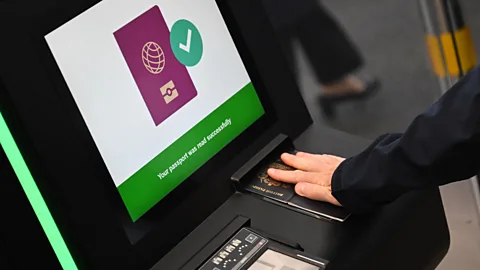
Bhardwaj warns of another potential issue: "Computers will go down," he said, referring to the technical issues that have already affected some of the kiosks where travellers scan their faces, fingerprints and passports. "If the computers go down, they'll go back to manual checking."
 Getty Images
That's not necessarily a boon either. ACI has cited acute border guard shortages across the continent, meaning a return to manual processing could compound delays. Bhardwaj said he encountered only a single border guard when exiting the Canary Islands earlier this year during one of its busiest times.
"Make sure you've got some refreshments and something to keep small children occupied," advised Lo Bue-Said. "Staying updated with your airline and airport for real-time information on queues and delays can make a big difference in managing your journey."
Schenegn Area
Ireland, Cyprus and many Balkan nations are not part of the Schengen Area and are exempt from the new EES programme.
One other casualty of the EES system is the passport stamp. The EES is designed to replace the traditional entry and exit stamps entirely, though most experts expect some mixture of manual stamping through this summer transitional period.
Lo Bue-Said notes that travellers should also keep an eye on what comes next. A successful EES rollout will enable the EU's new ETIAS visa waiver programme, expected to launch between October and December 2026. Citizens of more than 60 visa-exempt countries will need to apply for pre-travel authorisation.
"The cost is currently set to be €20 (£17), although this has already increased from when it was first announced," noted Lo Bue-Said. The waiver will be valid for three years, or until the associated passport expires.
 Getty Images
Until then, patience will be key at European border crossings, knowing that the delays should improve over time. "As the system gets better practised, they will get more efficient at it," said Bhardwaj.
He did offer one foolproof way to beat delays this summer. "If you're eligible for a European passport, just get one."
--
If you liked this story, sign up for The Essential List newsletter – a handpicked selection of features, videos and can't-miss news, delivered to your inbox twice a week.
