The island remembering Britain's 'worst disaster'

 Getty Images
Britain's surrender of Singapore has long been viewed as a "humiliation". Now, a series of exhibits and tours are revealing how this dark event shaped British and Singaporean identity.
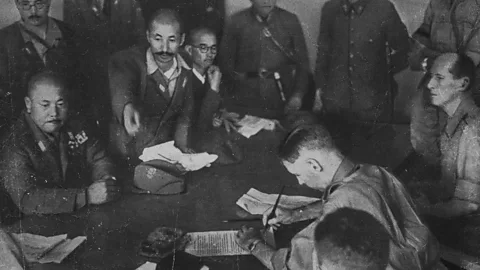
This year, millions of people around the world are commemorating the 80th anniversary of the end of World War Two. But 12 September marks a different milestone here in Singapore. Today isn't just the 80th anniversary of when the Imperial Japanese Army formally surrendered to Allied forces – it's also the end of one of the darkest chapters in Singaporean and British colonial history.
Five years after the British East India Company established a trading post on Singapore, the island became a British colony in 1824. Its strategic location at the crossroads of major shipping routes between Asia and the West made it a key economic and military outpost – so much so that Winston Churchill touted it as "the Gibraltar of the East".
"In Britain, [Singapore was] believed to be a fortress – the symbol of Britain's power and dominance in the region," says Stephen Walton, the senior curator at the Imperial War Museum in London.
 Alamy
AlamyBut starting in December 1941, Japanese forces took Malaya in two months before landing in neighbouring Singapore. Despite Allied forces far outnumbering the 35,000 Japanese troops, the British outpost fell after just eight days, partly due to Japan's superior air power and a "widespread racist stereotyping of the Japanese as being both physically and mentally inferior", explains Walton.
For generations, the fall of Singapore, in which roughly 85,000 British, Indian and Commonwealth troops – including many ethnic Chinese soldiers born in Singapore – were captured, has occupied an infamous place in the British psyche. In fact, Churchill declared it to be "the worst disaster and largest capitulation" in British military history. But while the island has since become most famous for ultra-modern attractions like its futuristic airport and the space age-esque Gardens by the Bay, visiting Singapore's well-preserved and often-overlooked World War Two sites reveals a lesser-known side of its story to travellers.
Britain's 'triple humiliation'
As Singapore-based historian Brian Farrell writes in his book The Defence and Fall of Singapore, Japan's conquest of the island was a "triple humiliation" for the British. "They lost a huge army after a short and apparently feeble defence, it surrendered the citadel they insisted would not be lost and – worst of all – it was thrashed by a non-European foe."
For the island's residents, Japan's three-and-a-half-year occupation from 1942 to 1945 was marked by privations and atrocities, such as the Sook Ching massacre – the systematic killings of those the Japanese army believed were "anti-Japanese elements". Ethnic Chinese, who had migrated to Singapore over the decades and comprised the majority of the population, were specifically targeted for their support of China. The Japanese later admitted to executing at least 6,000 ethnic Chinese men on the island, though some historians believe the actual figure is closer to 25,000.
 Alamy
AlamyThere were long-lasting consequences for the British Empire too. As Farrell writes: "The fall of Singapore reinforced [Britain's] intention to withdraw from India, [and while] the end of the Raj in India did not end the British Empire, [it] certainly marked the beginning of the end." Singapore would return under British control after WW2, but as its grip loosened, the island gained self-governance in 1959 – a first step towards the full independence it would eventually gain in 1965.
As Singapore's revered first premier, Lee Kuan Yew, who had lived under both British and Japanese rule, reflected: "The old mechanisms had gone and the old habits of obedience and respect [for the British] had also gone because people had seen them run away [from the Japanese]."
Singapore's WW2 sites
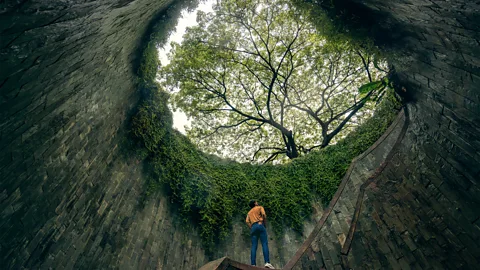
Today, visitors can explore a Heritage Trail containing more than 50 World War Two-era sites alongside guided historical walks. Popular attractions include Battlebox, an underground network of tunnels and bunkers in Fort Canning Park used by the British as a command centre. Life-size wax replicas of British soldiers and multimedia exhibits give key insights into the desperate days leading up to Britain's 1942 defeat, along with a recreation of the room where Lieutenant General Arthur Percival made the decision to surrender his forces on 15 February 1942.
A 20-minute drive from Battlebox, the Former Ford Factory is known for its Art Deco-style facade and preserves the boardroom where the British surrender took place, which marks the start of the occupation. Exhibits include oral accounts by Sook Ching survivors and stories from Singaporeans about what life was like under Japanese occupation.
 Alamy
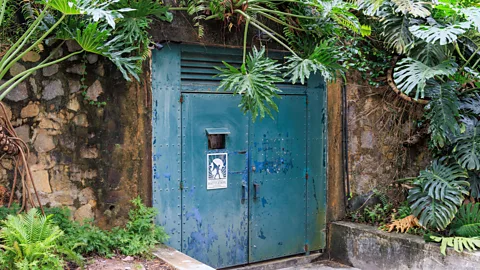
AlamyOn the island's eastern edge, the Changi Chapel and Museum is a memorial to the thousands of POWs and civilians imprisoned in the infamous Changi Prison. From 1942 until 1945, more than 90,000 Allied POWs and civilians – most of whom were from the UK, Australia and Singapore – endured grim conditions as they hoped for liberation, with many drawing religious murals on its walls. Replicas of these murals are on display today.
Despite Singapore's pivotal role in both British and WW2 history, many tourists seem to have little idea about the island's days as a strategic military battleground. "Both locals and foreign visitors are fascinated by the fact that an ultramodern city like Singapore was once a battlefield and occupied territory," Singaporean public policy analyst and heritage content creator Dhevarajan Devadas told the BBC. "Many prominent WW2 sites are well-maintained and curated, allowing visitors to easily tour and understand their historical significance."
A poignant day
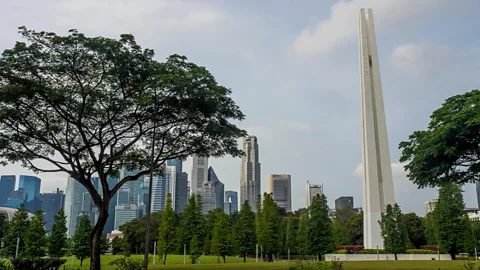
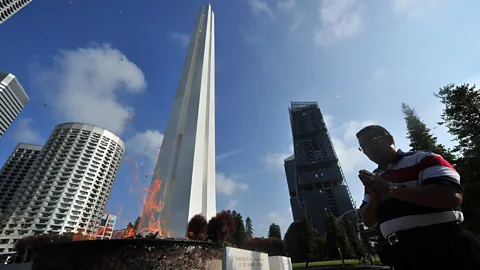
Today's 80th anniversary commemoration will be marked in Singapore by international remembrance ceremonies at Kranji War Cemetery. The site contains the remains of some 4,400 Allied servicemen and women, as well as a wall of remembrance inscribed with the names of more than 24,000 soldiers, sailors and airmen who died in the defence of Singapore and Malaya and whose remains were never found. The two-day Liberation of Singapore programme on 13-14 September will host presentations on Singapore's dramatic transformation following Britain's surrender and the shared experiences of prisoners of war and civilians during occupation.
Beyond the anniversary, companies such as Battlefield Tours Singapore, provide guided visits to World War Two-era sites. Owner Christopher Cher, who specialises in battlefield tours and military history, says the majority of his clients are "overwhelmingly" from the UK and Australia.
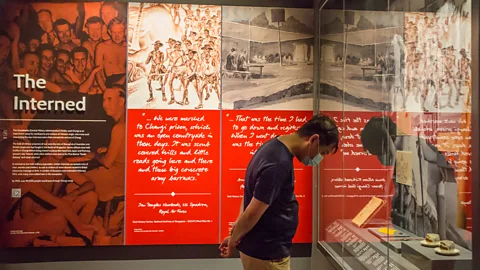 Changi Chapel and Museum
"Guests experience a side of Singapore which most tourists don't see and we talk about topics like how the fall of Singapore has shaped the psyche of the nation," said Cher. He said overseas visitors are invariably surprised by the speed with which Singapore fell, and often ask him about things like the city-state's mandatory military service and its "obsession" with water security – both of which stem from the island's days under Japanese occupation.
In August, two retired WW2 history buffs from Australia, Christopher and Kerrie Herde, took a tour with Cher to learn more about Singapore's role in the conflict. "[We went away with] a much clearer understanding of the role Singapore played in the war and much about its development from then to the present," the couple reported.
More like this:
Singapore resident Jodie Yates says she has visited multiple World War Two sites in the city-state since moving here one year ago. "It is important for me to understand what people's lives were like during the war, and the generations that have continued to be affected by it," she said. "In visiting these sites, I learned that compassion and community spirit endured in Singapore, even in the face of hardship."
Former journalist Claire Leow, who often leads historical tours through Singapore, has played a key role in the longstanding campaign to preserve the historic Bukit Brown Cemetery. In addition to being the largest Chinese cemetery outside China and the final resting place of Singapore's most prominent early settlers, Bukit Brown was also the site of the final battle between Japan's 5th Division and Britain's 18th Division in 1942.
 Alamy
AlamyLeow's own father and grandfather nearly perished in the Sook Ching massacre. "We mustn't forget the sacrifices of 18- and 19-year-old strangers who died fighting for us," Leow said, alluding to the thousands of troops who fell in the defence of the island. "It's important to tell these stories."
--
If you liked this story, sign up for The Essential List newsletter – a handpicked selection of features, videos and can't-miss news, delivered to your inbox twice a week.
