Naples’ beloved ‘third sex’ wedding

 Victoria Fiore
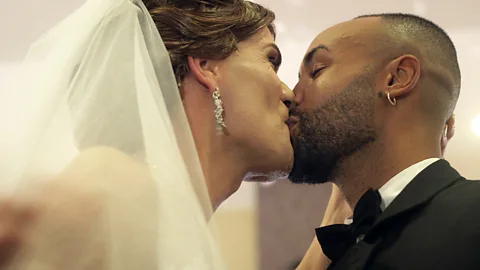
Once a year, the quiet Italian town of Pagani near Naples takes to the streets to celebrate the ancestral tradition of Zeza’s Wedding: a fake wedding between two men.
 Victoria Fiore
In a long-held and beloved local ritual, the whole community of the quiet town of Pagani, around 40km south-east of Naples in Italy’s Salerno province, comes to the streets every year to celebrate a wedding like no other: The Wedding of Zeza.
To outsiders, the occasion looks like a real nuptial; after all, there is the exchange of rings, attending family members, a huge buffet and wedding gifts, and a ‘fake child’ is even born nine months later – but it is all a farce.
 Victoria Fiore
Zeza’s Wedding is a 16th-Century carnivalesque scene from Commedia dell’arte (an Italian comedy tradition that was popular in the Renaissance period). There are various versions of the story, including the tale of Neapolitan stock character Lucrezia, Pulcinella’s wife, nicknamed Zeza, who tries to find a husband for their daughter because she is already pregnant.
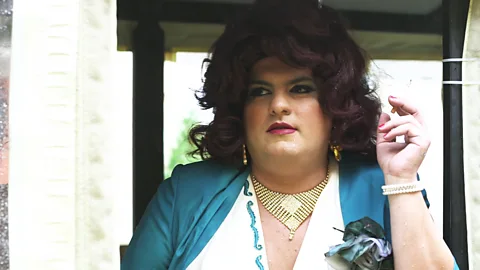
Back then, women were not allowed to act, so female roles were performed by men. These men are known as femminielli (femminiello when singular) – a word that refers to a ‘third gender’ of homosexual males who dress and behave as women – and are deeply rooted in Neapolitan culture.
 Victoria Fiore
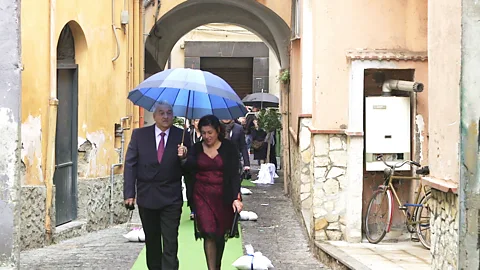
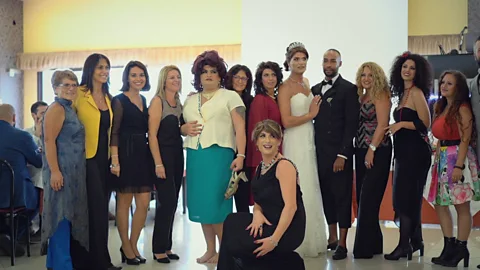
Maintaining this tradition, the principal roles at the wedding – the mother-of-the-bride and the sisters of the bride and groom – are played by men from the gay community. However, everyone from the wider community, male or female, is encouraged to take part and choose a role to perform.
 Lorenzo Ambrosino
The beauty of this is that it has no sense. We are females who are not females, virile men who are not virile. There is an element of play, and it is a way to laugh about conventions and roles, and raise awareness at the same time," said Ciro ‘Ciretta’, a local femminiello who is playing the groom’s mother.
 Lorenzo Ambrosino
The femminiello is a symbolic character whose roots in Neapolitan culture can be traced to Ancient Greek Italy, known as Magna Graecia. In this region of southern Italy, stretching from Sicily in the south through to present day Campania, the hermaphrodite, also known as Rebis, was a sacred character. The half male, half female god was revered for its double, androgynous nature and for being the only creature that contains both elements of creation.
This marked the beginning of Naples’ unusually tolerant and accepting past with regards to the LGBTQI community. Locals claim that in the Middle Ages, while notions were being spread that homosexuality was an evil sin that needed to be exorcised, Naples remained one of the only cities in Europe to have never persecuted homosexuals (or witches, for that matter).
While there are various theories for this, the most commonly accepted is that the femminiello was a figure of such importance for the locals, so openly accepted and intertwined with the city’s daily and religious life, that the multiple foreign powers who reigned over the city realised that attacking this custom would cause more problems than it could solve.
 Victoria Fiore
Even upon the unification of Italy in 1861, when the harsh laws of the Kingdom of Sardinia were extended to the whole country – including severe punishments for homosexuality that included life-long forced labour – the territories of the south were given special treatment with regards to the laws on ‘reati contro il buon costume’ (roughly translated as ‘crimes against morality’). This meant that these regions, which included Naples and the surrounding areas, were implicitly allowed to do what elsewhere was banned.
In this way, homosexuality – and therefore the femminiello – was able to be celebrated freely in Campania, with homosexuals saved from the humiliation of ghettos and violence of the moral inquisitions.
 Victoria Fiore
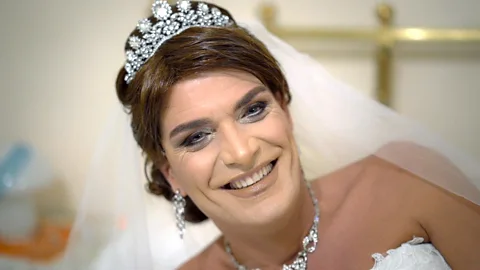
Wedding preparations start the year before, when brides are nominated by their community at the previous wedding and the search for the groom begins.
“The groom must be a straight man! The femminielli, they are nothing less than women and want to be loved by a straight man – [but] even for this, they can at times be difficult to find!” said Rosa, a wedding guest.
Many owe it to the fact that men don’t not want it to be public knowledge that they took part in the marriage, even though it’s all a show. But, despite the difficulty in finding the groom, the event is attended by all members of the community, gay and straight, young and elderly. The bride usually does not meet her ‘husband’ until the day of the ceremony, which helps them stay in character.
 Lorenzo Ambrosino
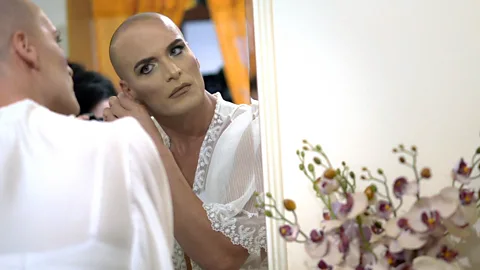
The show begins the moment we put the dress on. From that moment on, the magic is over – and everything is real. Then, the real magic is when you share this moment with your friends,” said Massimo, this year’s bride.
 Lorenzo Ambrosino
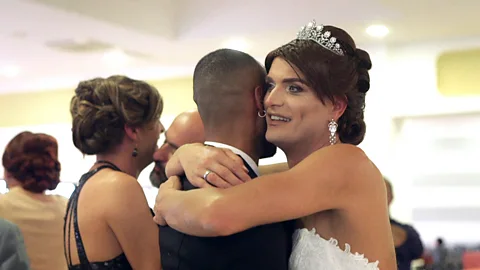
On the day of the wedding, the entire town comes onto the streets to congratulate the bride and groom, who are saluting passers-by from their horse and carriage. Then a small street party takes place before leading a few hundred locals back to the reception, who pay a small fee to contribute to the food.
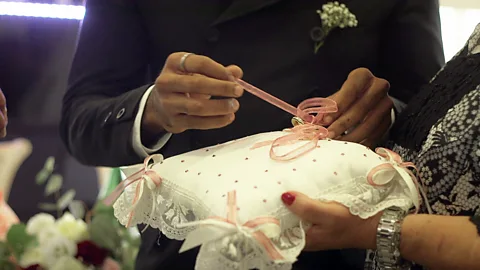
At the reception, the couple exchange rings and a kiss, followed by a 10-course meal that is interspersed with the main characters acting out famous Commedia dell’arte masked scenes while the traditional tammorra drum is played.
 Victoria Fiore
In recent years, this re-enacting of Zeza’s Wedding has been timed to take place nine months before another important traditional, symbolic and even older rite – the figliata dei femminielli (the femminielli’s birthing).
This ritual, which dates to Ancient Greek times and is still practiced today in towns at the foot of Vesuvius, including Pagani, sees a femminiello ‘giving birth’. It is a magical moment played with such strength that all those present believe that it is the real thing. The rite culminates with a doll or piece of wood being born from between the legs of the femminiello: a powerful symbol of new life being born.
 Lorenzo Ambrosino
At the wedding, after the wedding cake has been cut, the musicians have finished their performance and the final dances complete, the most crucial moment of the evening takes place.
The characters take off their wigs, eyelashes and make up and change into their everyday clothes to reveal what was underneath all along: the man they have inside.
At this moment, everyone realises the strength of the magic spell they’ve been put under and reality sinks in. The femminiello, gay, transexual or other gender-identifying person is no different from anyone else. They come from all walks of society, a variety of jobs, and are as diverse as we all are. We walk together side by side.
 Victoria Fiore
The wedding is a symbol to remind ourselves to accept and be accepted for who we are. It is a kind of social construct, where you can laugh about the earnestness of conventions and institutions like marriage. But at the same time, it also confirms their importance.
However, beneath the farce and the comedy, the wedding also highlights how even the femminielli might like to get married and have a family. Although same-sex unions have been legalised in Italy since 2016, they do not share all the advantages of a legal marriage. Zeza’s Wedding is a demand for the gay community’s rights today, while also an ancestral tradition, kept alive for thousands of years to create a more equal future.
Why We Celebrateis a BBC Travel series that revels in how a festival or event is intertwined with a place’s culture.
