Colombia’s indomitable ‘horse whisperer’

 Gena Steffens
Colombia has long been home to one of the most rugged and machista cowboy cultures on Earth. Today, Natalia Salazar is breaking barriers from the backs of horses.
 Gena Steffens
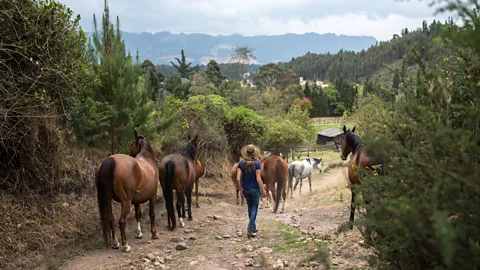
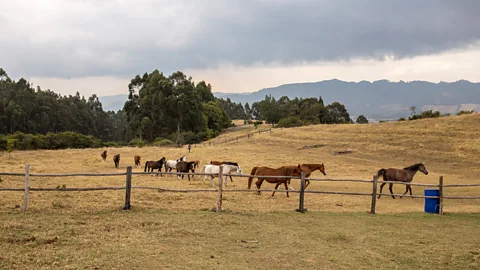
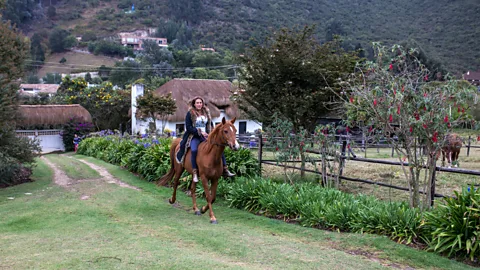
A little more than an hour outside the sprawling city of Bogotá, Colombia, graffiti-scrawled buildings give way to farms nestled among lush pastures and scenic Andean views in the village of Sopó. As cool winds rustle down the surrounding mountainsides, Natalia Salazar slowly slipped her foot into the stirrup of an apprehensive, unbroken horse named Aries.
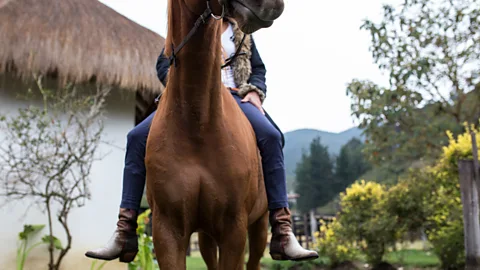
As she murmured softly to the animal under her breath, he began to visibly relax, allowing her to gently swing her leg over his back. Looking around as he adjusted to the sensation of carrying a rider for the first time in his life, Aries shifted his weight and began to walk. Without so much as an untimely prance or an agitated kick, Aries – the same horse who was saddled for the first time in his life just minutes before – was being ridden with the easy-going composure of a much more seasoned mount.
 Gena Steffens
For centuries, we’ve collectively clung to the notion that the business of taming horses falls squarely within the realm of ‘macho’ men. Around the world, from Argentina to Mongolia to the American West, the archetypal image of a horse tamer seems to be that of a big man thrashing around on top of a bucking horse until the animal is strong-armed into submission.
The culture of ‘machismo’ – a form of strong, aggressive, masculine pride – has long been central to the practice of taming horses. The term dates to Spanish traditions involving horsemanship, swordsmanship and the idea that challenges must be surmounted by force. Even in English, the word we typically use – to ‘break’ a horse – implies subjugation, dominance and even violence.
 Gena Steffens
Over the past centuries, as horses became less necessary for conquering empires and farm labour, many societies began to re-brand horsemanship – the art of riding, handling and training horses – as a leisure activity practiced by men and women alike.
But in Colombia, taming horses is still often seen as a task suitable only for the most rugged and macho alpha males – women need not apply.
 Gena Steffens
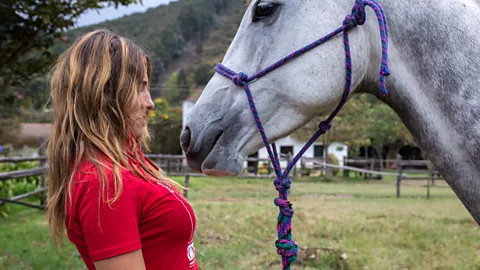
Salazar was born on a farm outside Cali, Colombia. For as long as she can remember, she has been transfixed by horses. Her early interactions with the animals allowed her to discover and nurture a streak of fierce independence. As a little girl, she would defy her family by riding off into the wilderness, alone, on the back of a horse.
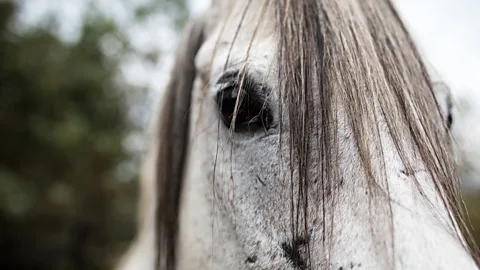
In a world where human interaction was sometimes too intense or stressful for the quiet girl, she always found a kind of solace among horses – an ability to communicate without words.
 Gena Steffens
Horses were the ones who began to make me feel at peace. I felt relaxed, like myself, like I didn’t have to talk to anyone,” said Salazar.
 Gena Steffens
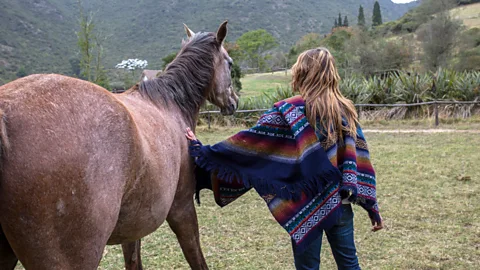
By age 12, Salazar was spending all her free time shadowing an older, more experienced horse trainer in hopes of learning how to train horses herself. Eventually, after taking note of the young girl’s innate ability to work with horses and retain her sense of calm even on the back of a high-strung, half-ton animal, the trainer offered her a job on a nearby horse farm.
The more Salazar worked with horses, the more she began to realise that, contrary to popular belief, the animals responded much better to training methods based upon kindness and trust than they did to those that relied on exhaustion, brute force and fear.
“Just like humans, when we exercise violence against each other, we generate traumas,” she explained. “Horses act out of and respond to respect, not to fear. When violence is used while training a horse, it can unleash a number of very real threats against the animal’s physical integrity and emotional life.”
 Gena Steffens
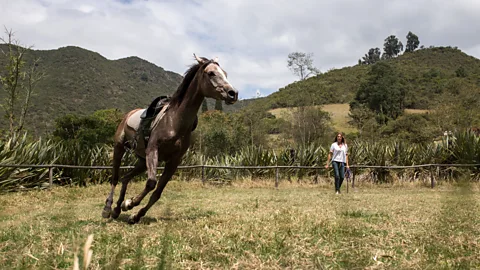
When others would hit, kick or otherwise punish an uncooperative horse into submission, Salazar would use a confident yet gentle touch to shape the animal’s behaviour. Compared to the violent bucking and flailing often associated with the process of breaking an untamed horse, Salazar’s process seemed effortless.
As she honed her skills working with horses of all shapes, sizes, breeds and dispositions, she earned respect from horse enthusiasts throughout the country. But while some congratulated her for her work, others responded with disdain and even hostility.
 Gena Steffens
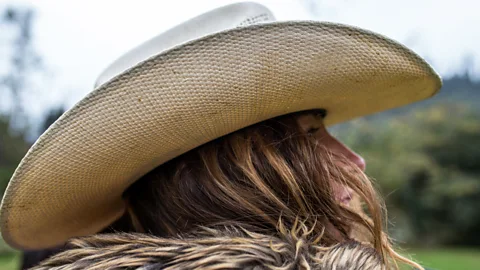
In Colombia, there is a very strong culture of machismo. As a woman in the field of training horses, this is something that has often come in the way of my work,” Salazar said.
 Gena Steffens
While some horse trainers admire an approach that produces quick results and poses little risk of injury to either the horse or rider, others appear deeply bothered by what, to them, amounts to a blatant smack in the face to a centuries-old trade and way of life.
According to Oxfam, Colombia is often considered to be one of the most machista societies in the world, reflected in rates of violence against women and marked levels of gender inequality, among other indicators. The country is even home to the ‘Movimiento Machista Colombiano’, a politically inclined group steeped in toxic masculinity that is led by Edilberto Barreto Vargas, a cattle rancher who has spent much of his life on the backs of horses broken in by brute force by hardened cowboys in Colombia’s eastern plains.
To Barreto, and many men like him, there are few lines of work as profoundly and inalienably ‘macho’ as breaking a horse. In a 2016 VICE interview, Barreto likened the task to that of seducing a woman: “Seducing a woman is like preparing a horse to ride... One must walk up to the horse and make it understand that you’re about to get on it, that you’re in charge, that you’re the one that’s going to be on top.”
 Gena Steffens
This concept of ‘being in charge’ and using force to overcome challenges is something that has long shaped the ways horses are trained around the world. In Colombia, especially in areas like Casanare, home to Barreto and the Movimiento Machista, this traditional form of breaking horses is still a large part of the regional culture.
“In rural areas, away from the larger cities, you still have the traditional ways of ‘breaking’ horses,” said Diego Arboleda, owner of Altos de Sagamasa farm and the young horse Aries. “These do require force and staying on a bucking horse and are done by men. In these areas, the old style situation in which the man rides off to work the cattle during the day and the wife stays home, also applies.”
 Gena Steffens
Salazar, along with Arboleda and a growing body of natural horsemanship experts around the world, believes these methods to be inefficient, cruel and risky for both horse and rider.
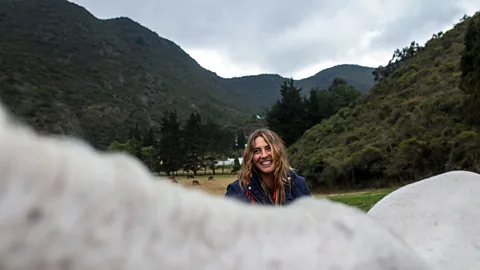
Over the years, Salazar estimates she has trained more than 300 horses using her own brand of natural horsemanship, called ‘free training’. Her method focuses on discovering the essence of the horse’s physical, mental and emotional state, familiarising herself with the horse’s movements and moods, and understanding its fears and difficulties.
Instead of using dominance, whips and sharpened spurs, Salazar’s training process is built upon ample amounts of love, respect and patience. “If you don’t treat them this way, they’ll never give you the results you want from them,” she said.
 Gena Steffens
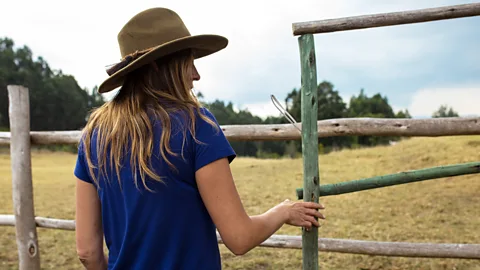
Despite the fact that entire regions of Colombia continue to champion the use of force in the process of breaking horses, natural horsemanship is gaining traction across much of the country, and Salazar is now considered to be one of the most effective and talented horse trainers in Colombia, male or female. Her reputation has even lead her to be hired as a double in major TV shows featuring horse-related scenes.
But today, she’s realising that her most important task isn’t training horses, but training people. “I see such a huge therapeutic benefit in helping people develop relationships with horses,” she said.
 Gena Steffens
After a 2016 peace agreement between the Colombian government and the leftist guerrillas of the Revolutionary Armed Forces of Colombia (Farc) led to the formal conclusion of more than half a century of civil war, Salazar’s career took on a much more practical use than she ever could have imagined. Today, she dedicates a portion or her time to teach horsemanship to an unlikely group of pupils: de-mining technicians tasked with clearing the Colombian countryside of antipersonnel mines left over from the war.
“So many parts of Colombia, especially those that were hit hardest by the conflict, are only reachable on foot or by horseback,” she explained. “This skill will allow technicians to carry out their dangerous work in the most isolated regions of the country.”
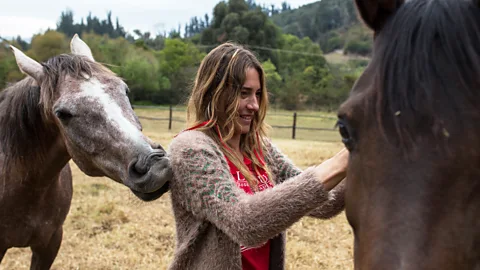
As she contemplates the prospect, she smiles, as if realising how working with horses has, in effect, brought her full circle: “I spent years working with these amazing animals in order to escape society,” she said. “But now, I’m starting to use horses as a way to reach out and help other people.”
 Gena Steffens
Salazar also hopes that this new chapter in her country’s history will allow her to show people – tourists in particular – the beauty of Colombia from the backs of horses. One of her biggest long-term goals is to partner with farm owners like Arboleda to offer special guided tours and experiences for horse-lovers throughout the Andean countryside.
 Gena Steffens
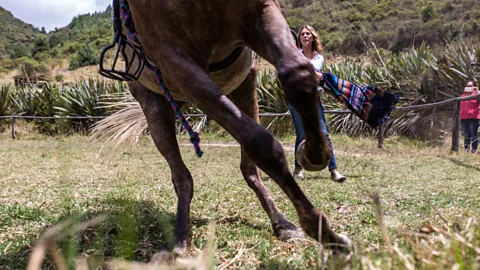
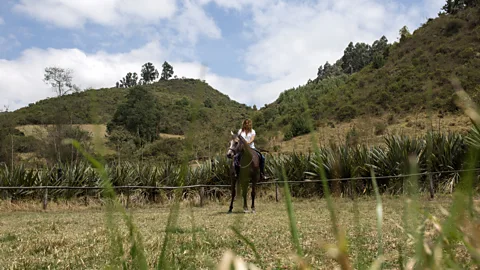
Over the course of an hour in a large, round pen flanked by giant agave plants where horses at the Altos de Sagamasa farm are trained, Aries slowly transformed from a spirited, hot-blooded colt to a tender, receptive student. As he circled around Salazar, the two seem oblivious to the world around them.
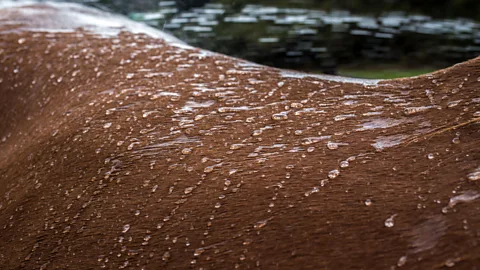
Earlier, when the time came to place a saddle on his back for the first time, Aries huffed, his muscles shimmering under sweat-slicked hair. Sensing his apprehension, Salazar gave him a gentle, calming touch of encouragement before slowly tightening the girth below his belly.
As she prepared to mount, his ears swivelled back, keenly attuned to her instructions. Over the course of just that hour, he had learned the lesson that will prove fundamental to the rest of his career under saddle: that his rider is meant to be trusted, not feared.
(Text and photos by Gena Steffens; video by Monica Wise)
Why We Rule is a series that follows powerful women who have pioneered the path to female sovereignty and are truly rulers of their worlds.
