Exhibition uses items broken in Spode Museum crash

 Spode Museum Trust
Art made from Spode ceramics broken when a car crashed through the brand's museum is featured in a new exhibition.
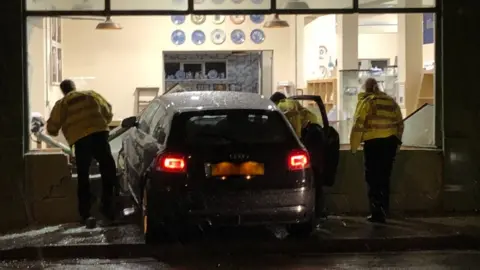
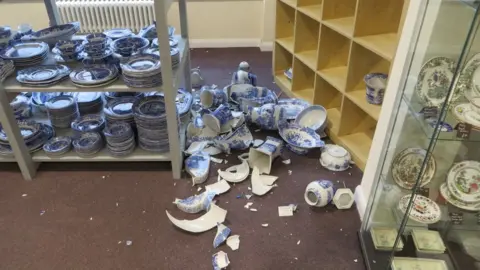
The vehicle went through the windows of Spode Museum in Stoke-on-Trent four years ago on Tuesday, damaging a large amount of vintage and antique items on sale in the venue's shop.
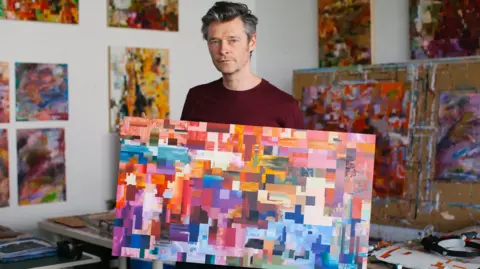
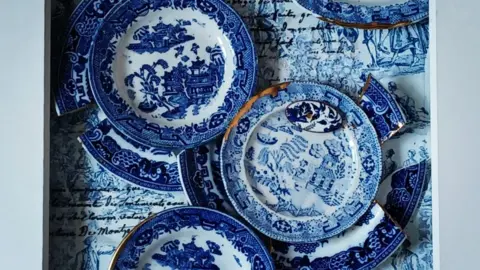
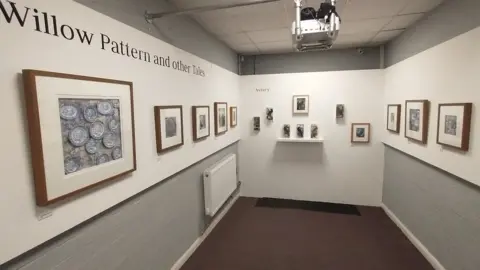
Artist Steve Talbot has used the broken pieces to make new works which will be on display until 28 April.
He said he wanted to continue the life of the ceramics.
 Spode Museum Trust
Mr Talbot, who worked as a set designer for BBC productions featuring animated character Morph, now creates works combining ceramics with printed material and found objects.
He said he had a "particular interest in Spode with its history of design continuity over hundreds of years".
He said of his project "it seemed the ideal opportunity to continue telling the story".
The firm was founded in 1770 by Josiah Spode who is often credited with developing the formula for fine bone china.
 Spode Museum Trust
Mr Talbot's work is on display at the museum, which is within the former Spode Works on Elenora Street.
The factory closed in 2008 when the holding company Royal Worcester went into administration but both brand names were bought by the Portmeirion Group, which still produces ceramics in Stoke-on-Trent.
 Spode Museum Trust
Michael Escolme, the museum's manager, said the site had been left "devastated" by the crash damage but it was "some consolation to know that the shattered pieces have found a new life as works of art".
He added: "Most of the damaged pieces were blue and white transferware patterns, made using a technique devised by Josiah Spode at his factory in Stoke in the 1780s.
"They include the iconic Willow and Blue Italian patterns which are known throughout the world."

Follow BBC West Midlands on Facebook, Twitter and Instagram. Send your story ideas to: newsonline.westmidlands@bbc.co.uk