The new ways families are keeping loved ones close

 BBC
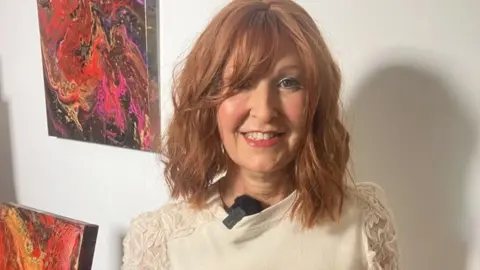
BBCWhen Maria Bailey lost her mother in 2020, she did not know what to do with her ashes - six years on, a painting created with them means she is "always with her".
She is not alone, grief experts said more families were choosing personal and creative ways to remember their loved ones.
From jewellery to artwork, people's ashes can be turned into different ways of immortalising them forever.
Jacqui Stedmon, from Plymouth bereavement charity Jeremiah's Journey, said the choices showed a "growing comfort with staying connected to someone after they die".
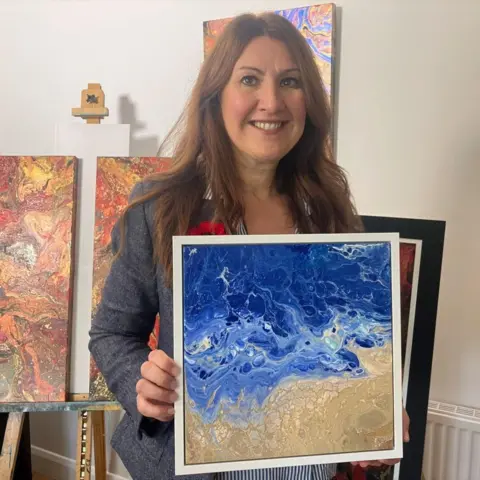
Bailey, 49, said she could only part with some of her mother's ashes by scattering them - she did not know what to do with the rest.
She contacted artist Elaine Murray, 55, from Axminster, who was able to immortalise her mother's ashes in a painting.
Bailey said it was "incredibly special" to be able to take her mother with her "wherever she went".
She scattered some of her mother's ashes at Preston Beach, in Paignton, and her painting represents the shoreline there.
Bailey said: "A bit of me didn't want to let go of that last bit, it was like another goodbye."
She added: "[The painting is] incredibly special and it's a conversation starter with my children especially, we're always talking about grandma."
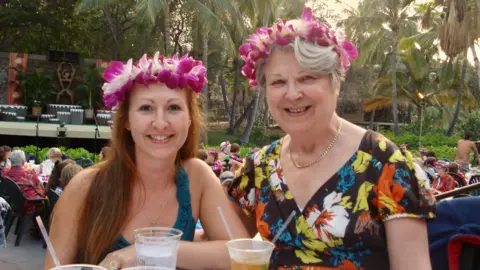 Elaine Murray
Murray said the original idea of ashes being used to paint "really appealed to her".
"I've lost my mum and I had her ashes upstairs in my wardrobe. I really didn't want to scatter her and part with all of her but it didn't feel comfortable that she was just sitting there uncelebrated.
"My mum loved art and so I thought 'I really love this idea'.
"It was certainly a very special moment to immortalise mum in a painting. It's a beautiful thing because she's in our kitchen on display."
Richard Martin, from the business Scattering Ashes, said the different ways of preserving ashes "break down the stereotypes and taboos of funerals".
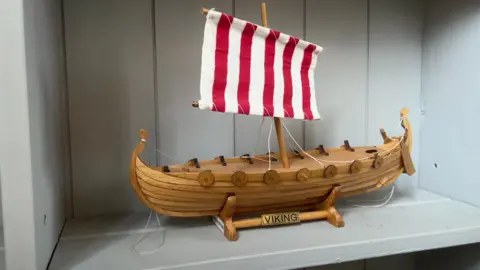
He offers unconventional items such as ashes placed in soil or put in small "viking-style" boats, put out to sea and then set on fire.
He said: "I think that black veil Victoriana type thing is starting to disappear and people are becoming more expressive about how they memorialise.
"It's brilliant. There's far more creative ways of doing it. It's far more of a celebration of life. "
Prof Stedmon said she believed there was "more of an emphasis on finding ways of staying connected to a deceased loved one than there has been in the past".
She said: "I think in modern times we benefit from developing a continuing bond with someone after they've died.
"Having things like ashes made into jewellery, it's an example of what we call a linking object."
Stedmon added she believed people were "more open about how they grieve".
"There isn't a sense of letting go, especially if the person is a mum or dad for a child, it's going to be important to remember that person and mark that person during their lives."
Follow BBC Devon on X, Facebook and Instagram. Send your story ideas to spotlight@bbc.co.uk.
