Birmingham bus that survived the Blitz restored for £500,000

John BrayBBC News, West Midlands
News imageBBC Restored busBBC
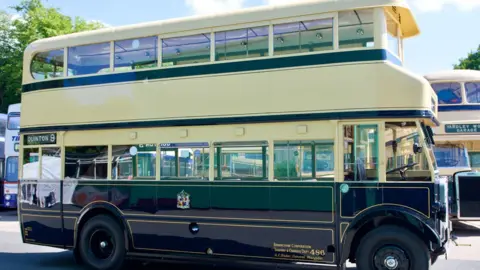
The 486 is one of the first examples of a metal-framed body built by Metro Cammell, at Washwood Heath in Birmingham

It's a double decker bus with a remarkable history spanning more than 90 years - and now AEC Regent 486 has a new lease of life after a painstaking restoration that's cost £500,000.

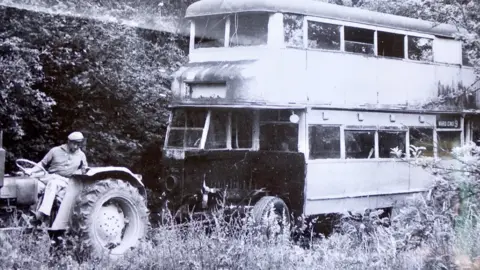
The bus started life on the roads of Birmingham in 1931; was sent to work in London during World War Two; returned to Birmingham after the city lost 145 buses in an air raid at Hockley; sold for scrap in 1946; discovered in a Herefordshire field in 1970; and is now a gleaming reminder of a bygone era of transport at a museum in north Worcestershire.

Its restoration at Transport Museum Wythall, which began in 2013, was beset by technical problems, with more than 160 faults identified during the work.

The engine caught fire ahead of an unveiling in 2019, and then of course there was a global pandemic.
News imageTransport Museum Wythall Derelict busTransport Museum Wythall
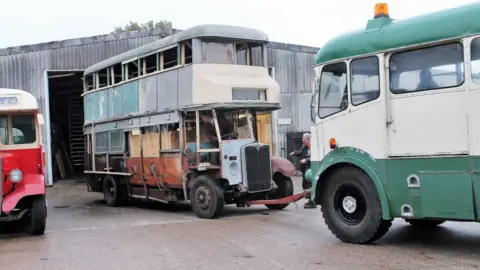
The abandoned bus was discovered by enthusiasts in a field at Sollers Hope, Herefordshire
News imageTransport Museum Wythall Derelict busTransport Museum Wythall
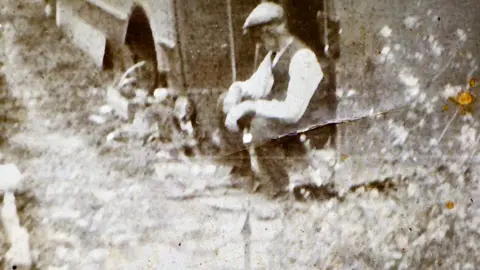
The bus had been used as a home by a retired Welsh miner called Mr Preece
News imageTransport Museum Wythall The bus before restoration beganTransport Museum Wythall
It was 40 years before full restoration work began in Dorking, Surrey, in 2013
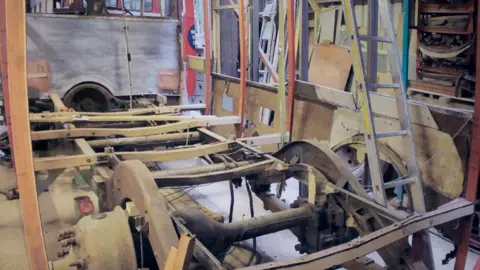
News imageTransport Museum Wythall Bus part-way through its restorationTransport Museum Wythall
Work was left in the hands of Ian Barrett, who Transport Museum Wythall had identified as a "proven and well respected professional restoration expert"

"It's been a hell of a lot of pressure and stress until we got it out on the road again," admitted Rob Handford, who's spearheaded the restoration project.

"I'm just about beginning to enjoy it now, and there is huge satisfaction and relief. The satisfaction is people saying 'this is fantastic - this is an incredible vehicle'.

"It shows the standard of vehicles that were turned out, and this is what people are amazed by."

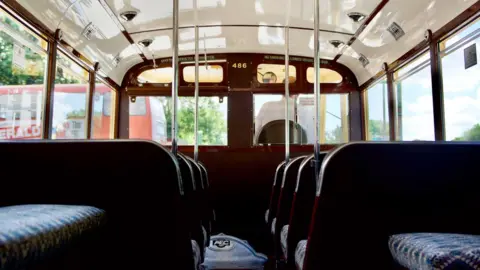
Museum colleague Denis Chick added: "The whole thing is exquisite. You can't believe it's a bus. It just shows that pride in engineering.

"It must have been like going to work in a Rolls Royce."
News imageBBC Restored busBBC
The original estimate for the restoration work on the bus was £300,000
News imageBBC Restored busBBC
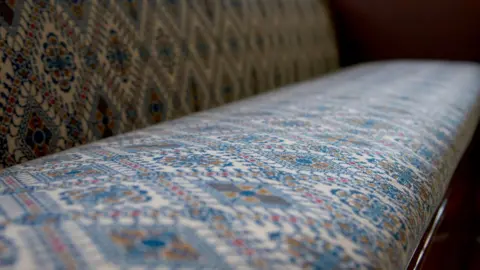
"The material is the same pattern," said Rob Handford. "We were lucky to have a good set of photographs to work from."
News imageBBC Restored busBBC
Mr Handford admitted some people thought the project should be scrapped. "But the bodywork was so fantastic, we couldn't not finish the job."
News imageBBC Restored busBBC
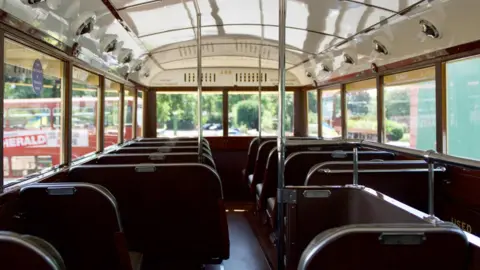
The roof of 486 is completely original, as is the upper deck floor and "quite a substantial amount" of the interior wood trim
News imageBBC Restored busBBC
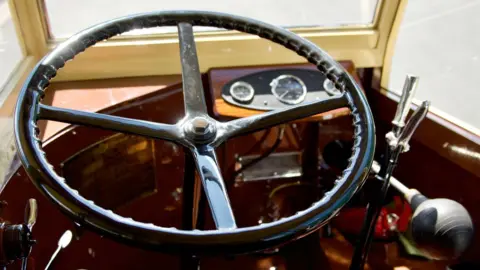
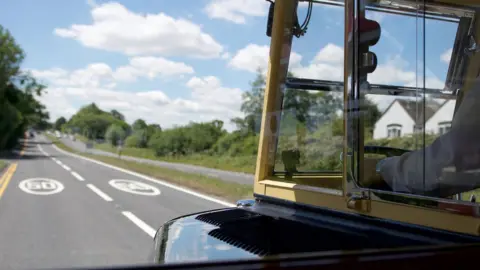
Behind the wheel - 486 is a bus that doesn't have indicators
News imageBBC Rob HandfordBBC
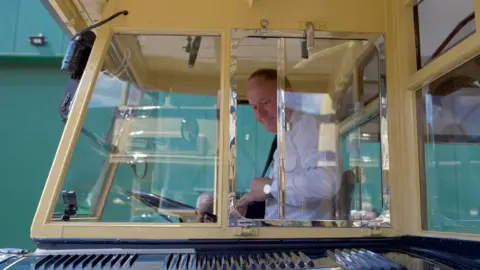
Rob Handford preparing for another trip from Transport Museum Wythall
News imageBBC Restored busBBC
During its working life, 486 covered 306,000 miles. It doesn't have a speedometer and its mileage was recorded daily by bus company clerks
News imageBBC Restored busBBC
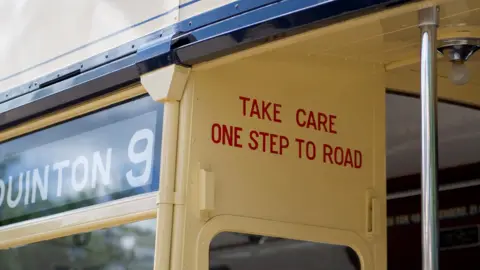
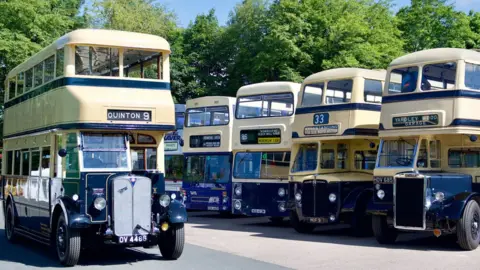
The bus would have been in regular use on routes to Queen's Park/West Boulevard (3), Harborne (4), Perry Common (5), Sandon Road, Bearwood (6), Portland Road (7) Quinton (9) and Bartley Green (12). It would also have been a regular vehicle on the legendary Outer Circle (11) route
News imageTransport Museum Wythall Restored busTransport Museum Wythall
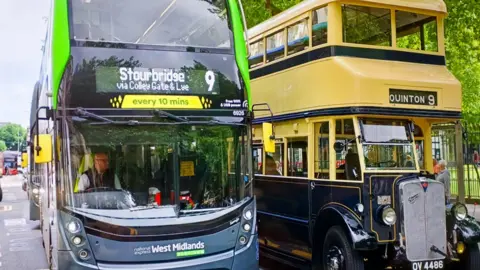
Volunteers from Transport Museum Wythall took 486 back to Birmingham last week, where it met a modern-day equivalent
News imageBBC Presentational grey line

Follow BBC West Midlands on Facebook, Twitter and Instagram. Send your story ideas to: newsonline.westmidlands@bbc.co.uk


More from the BBC