Experts have 'hope' for plague-hit Gloucestershire crayfish

 Jenny Parsons/GWT
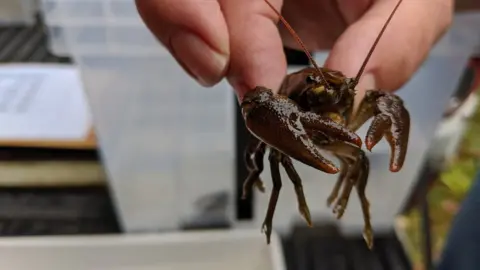
Wildlife experts have said "it is not the end" for indigenous crayfish that have been hit by crayfish plague.
The endangered white-clawed crayfish's numbers have been affected by the disease since American crayfish were introduced to England in the 1970s.
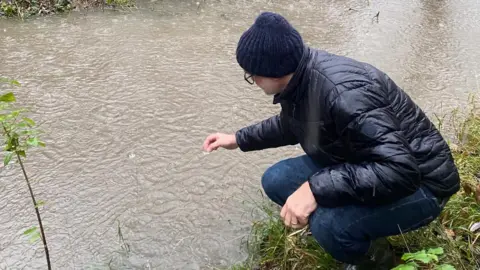
Repopulation work has been underway since many native crayfish were found dead in the Forest of Dean's waterways.
Gloucestershire Wildlife Trust (GWT) said "only time will tell" if the animals are to escape the plague.
 Ruth Davey
The white-clawed crayfish is a UK protected species as it is in decline.
Biodiversity Officer at the Environment Agency Jude Ward said: "It is highly unlikely that we will be able to safely repopulate the area of Forest of Dean with white-clawed crayfish for a number years.
"But it will not be the end for our native crayfish.
"To help limit the risk of further spread, we're working with Natural England, the Forestry Commission and other partners to share warning and informing messages," she added.
Research into methods to control the expanding range of American signal crayfish populations throughout the UK's rivers is ongoing.
A spokesperson from Natural England said despite the amount of "tragic fatalities" from the current plague outbreak they remain "hopeful".
"Since the first report of a number of dead crayfish on brooks within the Forest of Dean in mid-August, sadly many hundred more white-clawed crayfish fatalities have been recorded," they said.
"We are hopeful that these remaining populations will persist for decades to come and may even act as reserves from which lost populations can be restored in the future."
People are being asked not to touch dead crayfish and report them to the Environment Agency instead.
Crayfish plague is not harmful to other animals or humans.

Follow BBC West on Facebook, Twitter and Instagram. Send your story ideas to: bristol@bbc.co.uk