Letter about Byron's lost memoirs discovered in Cambridge

 Trinity College, University of Cambridge
A letter describing the contents of Lord Byron's lost memoirs revealing how he "set his mind to evil" has been discovered in a university library.
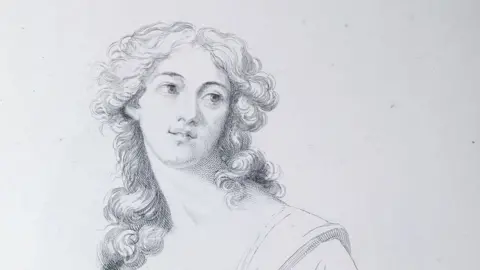
It was written by Elizabeth Palgrave, from Great Yarmouth, Norfolk, in 1823 after a visit to a publishing house.
The "bad boy" poet gave his memoirs to a friend in 1819 with instructions to publish them after his death. They destroyed them when he died in 1824.
The letter was found in the Wren Library at Trinity College, Cambridge.
 Trinity College, University of Cambridge
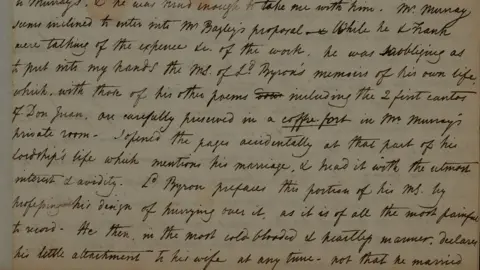
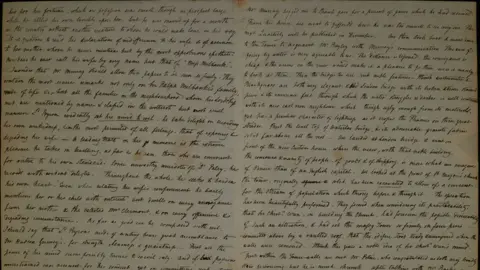
Mrs Palgrave was visiting the publishing house of John Murray with her husband Francis when she "opened the pages accidentally at that part of his Lordship's life which mentions his marriage".
The traveller and diarist wrote to her father Dawson Turner, saying: "I read it with the utmost interest & avidity. It is grievous to read his declaration of indifference to his wife & of aversion to her mother, whom he never mentions but by the most opprobrious epithets."
She continued: "All the families in the neighbourhood whom his Lordship met, are mentioned by name & classed in the wittiest but most cruel manner.
"Ld (sic) Byron evidently set his mind to evil - he takes delight in recording his own wickedness, & in the most perverted of all feelings - that of exposing & degrading his wife."
 Trinity College, University of Cambridge
 Trinity College, University of Cambridge
The letter was discovered in the college library, which is part of the University of Cambridge, by archivist Adam Green while cataloguing Dawson Turner's archive.
He said: "This fascinating detail is typical of Elizabeth Palgrave's letters, which burst with intelligence and information."
The poet (1788-1824) was vain, unkind, cruel and prone to excess.
He also fought for the oppressed - he died while supporting the Greek struggle for independence from the Ottoman Empire - and "magnetized myriads with his beauty, brilliance, charisma and wit", said Trinity College.
In 1815, he married fellow aristocrat Anne Isabella Milbanke, but the marriage collapsed amid rumours of incest and homosexuality the next year.
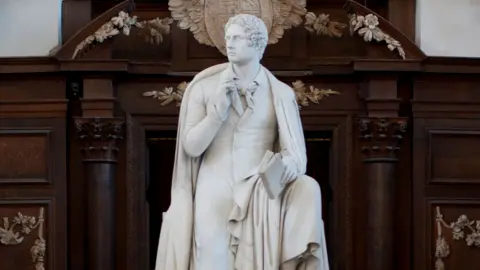 Trinity College, University of Cambridge
Cambridge scholar Dr Corin Throsby said: "For centuries people have wondered what Byron's lost memoirs might have contained, so it is truly exciting to have another first-hand account from someone who read them.
"Byron was always out to shock, and he would have been unsurprised and possibly delighted by Elizabeth's extreme reaction to his work.
"Her letter shows the success of Byron's 'bad boy' persona as she is not only disturbed but also clearly fascinated by him."
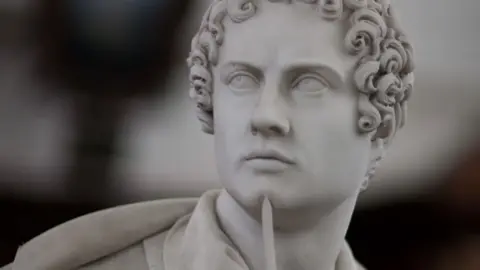
The poet studied at Trinity College and it is marking the bicentenary of his death with a two-day festival.

Follow East of England news on Facebook, Instagram and X. Got a story? Email eastofenglandnews@bbc.co.uk or WhatsApp 0800 169 1830
