Public confidence in South Central Ambulance Service 'stretched', boss admits

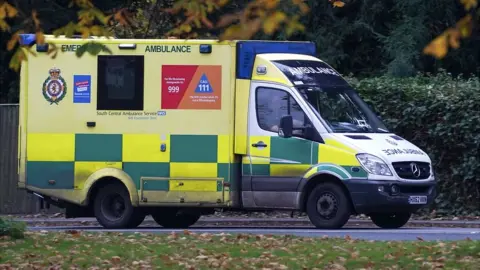 PA Media
Public confidence in a region's ambulance service is being "stretched", an NHS boss has admitted.
It follows a critical incident being declared by South Central Ambulance Service (SCAS) on Tuesday.
About 70% of 999 callers were assessed as having serious conditions, causing delays and putting the service under severe pressure.
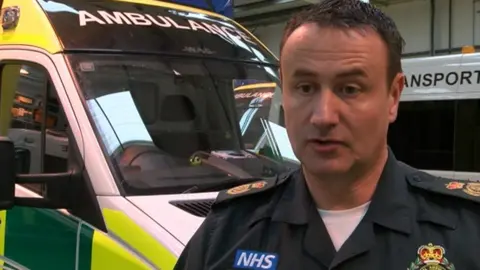
Mark Ainsworth, executive director of operations at SCAS, told BBC News people's trust needed "rebuilding".
The service covers emergencies in Berkshire, Buckinghamshire, Hampshire and Oxfordshire.
The surge in category 1 and 2 calls - the most serious cases - followed a recent bout of cold weather, with patients showing signs of respiratory and cardiac problems.
It is SCAS's first critical incident in more than a year, a decision Mr Ainsworth said was not taken lightly.
"...we're seeing a lot more sicker patients, requiring an ambulance, so we're able to deal with fewer patients over the phone with clinical advice."
He said when patients do see an ambulance, they report the care as "amazing".
"But the main issue for us is the time we're taking to get some of these patients... I think we've got work to do with public confidence," he added.
Allow X content?
Hospitals in the region are also experiencing high demand, causing a knock-on effect on ambulances, which can end up stuck in queues rather than attending calls.
During the critical incident, those calling the emergency service with less serious problems, like non-severe burns, diarrhoea and vomiting, are likely to be advised to seek alternative care, the trust said.

Follow BBC South on Facebook, X, or Instagram. Send your story ideas to south.newsonline@bbc.co.uk.
