Did a town's anti-vaccine protest help change the law?
Vaccine mistrust may seem to be a new movement but more than 170 years ago an Oxfordshire town found itself at the centre of a national debate raging around vaccinations.
A new vaccine had been developed to tackle the deadly and infectious smallpox disease and, in 1853, it became mandatory in the UK for all children under the age of three to be immunised.
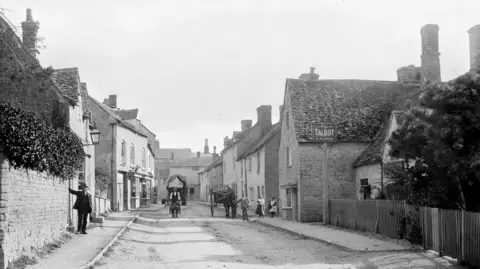
In 1897, amid growing resistance across the UK, angry residents took to the streets of Charlbury in a protest that turned so chaotic it was said to have helped bring about a change in the law.
Radio Oxford's Emma Evans has been investigating how it marked the beginning of the end of compulsory vaccination in the UK.

 Getty Images
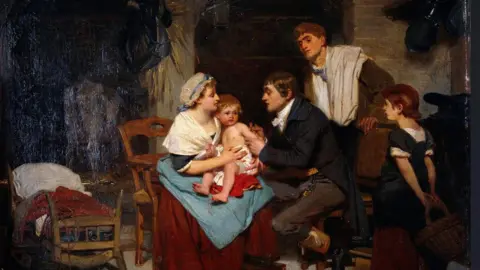
In 1796, UK doctor Edward Jenner developed the first version of the smallpox vaccine, changing the way it would be treated for the next few hundred years.
A series of Vaccination Acts in the UK first made immunisation for children free, then compulsory.
"Even though there were suspicions about vaccines before, when it was made mandatory, that's when things really ramped up," said Dr Sally Frampton, a history and humanities fellow at the University of Oxford.
People did not like "being legally compelled to vaccinate their children".
One angry resident wrote to a local vaccination officer in Charlbury, protesting against fines handed out to parents who refused to comply.
"I understand you have taken proceedings against those parents who object to have their children ruined by this diabolical vaccination," they wrote.
"I will assist any poor persons... to the best of my ability... to fight the matter to the bitter end in order to save the bairns."
In the 1880s and 1890s, anti-vaccine magazines were published, including one in Cheltenham, Gloucestershire, 30 miles from Charlbury.
 Getty Images
"A lot of that [anti-vaccine sentiment] tied in with wider concerns about the medical profession," said Dr Frampton.
"They didn't trust doctors - and that people were getting paid to give the vaccine."
Dr Frampton said anti-vaccination groups or "leagues" were also being created across the country.
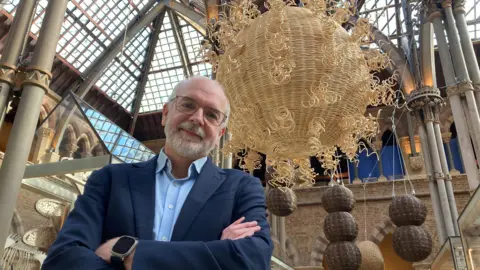
Prof Sir Andrew Pollard, who oversaw the development of AstraZeneca's Covid-19 vaccine, said: "It's always the case that some people are hesitant about vaccines and I think that's appropriate.
"We should be questioning all health interventions and want to understand them. That's rational and normal."
But he said it was a "small proportion of the population who are anti-science or anti-vaccine who have unshakeable beliefs in whether a vaccine is a good thing or not" and "who don't want to protect their children against life-threatening diseases".
He added: "What's difficult to understand is the conspiracy theory around vaccines and science in general and where that really comes from, but it is something that does seem to be hard wired into humans generally."
A year after the Charlbury protest, a conscientious objector clause was introduced to the Vaccination Act.
It legally enshrined people's right to choose not to have their children vaccinated - a moment Dr Frampton said she believes marked the "beginning of the end for compulsory vaccination in the UK".
But can Charlbury's ancestors really be credited with a change in the law?
At the very least, the town took the opportunity to celebrate.
An article published in the Oxford Chronicle at the time said news of the conscientious objector clause was received with "enthusiasm" by the town's residents.
It read: "The Battle of Charlbury, as it is now called, will doubtless be fresh in the minds of many.
'It's rumoured that when the new bill is finally passed, the event will be celebrated with free tea to the children."
Dr Frampton said the celebration showed "they saw themselves as part of that struggle".
The smallpox vaccine was the last mandatory vaccine the UK has seen.
During the global Covid pandemic, people could choose to be vaccinated or not but opposition to vaccines continues to be widespread.
"If the conspiracy theory is something around health then it is a risk both to you, if you're not vaccinated, [and] potentially to people around you," Prof Sir Andrew Pollard said.
"I can tell you, it saves millions of lives of children around the world every year."
You can follow BBC Oxfordshire on Facebook, X (Twitter), or Instagram.
