Wet winter has left crops waterlogged, says farmer

 BBC
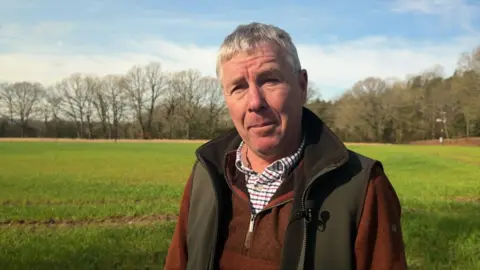
BBCA farmer has said he fears the wet winter could halve his crop yield this year.
Peter Knight, who farms between Haslemere and Leatherhead in Surrey, said the crops he planted in autumn were now too waterlogged to work on.
"It started raining on the sixth of January and we've had 330mm of rain in that period," he said.
The Met Office has released its provisional statistics for the winter of 2025/26, showing it has been one of the wettest, dullest and warmest on record for Southern England.
Knight said the fields were too wet to get machinery out to spread fertiliser.
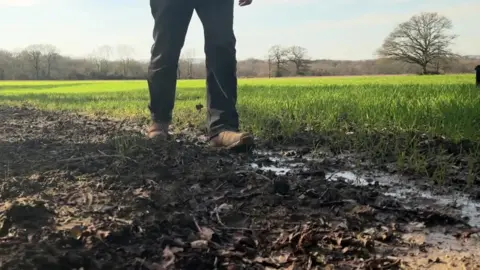
He told the BBC: "The crop is lying with its roots in water, because the field is waterlogged, it can't grow.
"The risk is that we're in a scenario like last year, when it stops raining and we go two to three months very dry.
"In that scenario it could halve our yields."
The Met Office said Southern England saw its fourth wettest winter since records began in 1836, and its wettest in over a decade.
It was also its eighth warmest on record.
Across the UK rainfall was 9% up for the winter, up to the end of February.
Karam Ruparell, a flooding researcher at the University of Reading, said as well as more rain, weather events were also becoming more intense because of climate change.
"A warmer atmosphere can hold more water.. then when it all goes, all of that water is going in a shorter period.
"Over time, it will become even more important to be able to predict and warn people of these really big rainfall events, to give people as much of a head start to protect their crops and build protection."
Follow BBC Surrey on Facebook, on X, and on Instagram. Send your story ideas to southeasttoday@bbc.co.uk or WhatsApp us on 08081 002250.
