Hosepipe ban remains despite wettest January

 PA Media
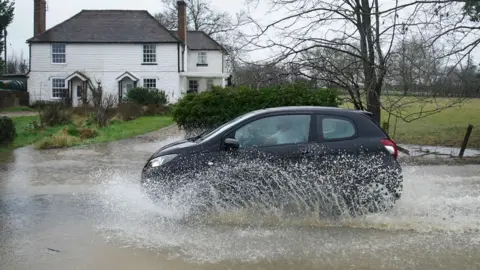
Parts of Sussex and Kent remain under a hosepipe ban despite one of the wettest Januarys since records began.
South East Water (SEW) announced a temporary use or hosepipe ban for its Sussex and Kent customers in July last year after the driest spring since 1893 .
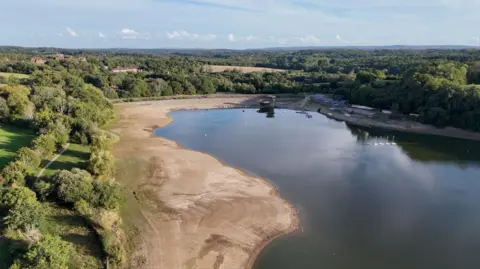
In October Ardingly reservoir, in West Sussex, dropped to under a quarter full and some exemptions from the hosepipe ban were withdrawn in areas around Haywards Heath and Eastbourne.
After January's rainfall Ardingly reservoir is now full but Nick Price, SEW's head of water resources, says the company will only remove restrictions when it is "confident" that "water resources will recover".
As levels at Ardingly reservoir dropped further, a drought was declared in October by the Environment Agency (EA) for parts of Sussex around Haywards Heath and Eastbourne.
 South East Water
The start to 2026 saw parts of the South East receive nearly 200% of the average rainfall for the month, with Surrey, Kent and Sussex all breaking into the top 10 list of wettest Januarys in 190 years.
Last month, as Ardingly reservoir filled, the EA moved the area out of "drought" and into "recovery" status.
Kieran Mullan, MP for Bexhill and Battle, has now written to South East Water asking the water company to "take immediate steps" to review the hosepipe ban and Mid Sussex MP, Alison Bennett, has launched a petition calling for the ban to be lifted.
Price from SEW says whilst it may seem "strange" for hosepipe restrictions to still be in place "when it's grey, cold and wet outside", during the winter groundwater reserves take longer to recover than surface reservoirs.
Groundwater makes up nearly 80% of the water resources in the South East and data from the EA from last week shows one chalk aquifer in north Kent is below "normal" levels.
South East Water says it will be providing an update this week on its hosepipe ban and it says the winter rainfall has been "welcome".
Follow BBC Sussex on Facebook, on X, and on Instagram. Send your story ideas to southeasttoday@bbc.co.uk or WhatsApp us on 08081 002250.
