Phone mast plotter's bid for release denied

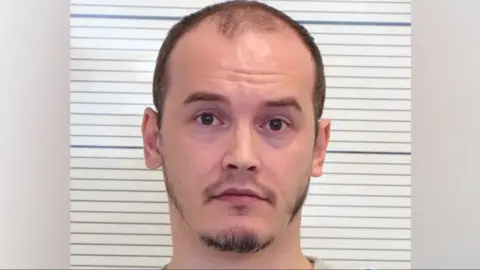 Leicestershire Police
A conspiracy theorist who plotted an attack on phone masts as part of a plan to bring down the government has been refused parole.
Oliver Lewin was sentenced in January 2023 to six and a half years in prison after being found guilty of preparing terrorist acts.
The 42-year-old former telecoms engineer, from Coalville in Leicestershire, spread ideas online that the UK government was complicit in a high-level conspiracy originating from Israel.
Following a parole hearing in December, it was ruled that Lewin would still pose a risk to the public if released.
A spokesperson for the Parole Board said: "Protecting the public is our number one priority."
At his trial in 2023, Judge Paul Farrer KC heard Lewin was "deeply opposed" to the UK government.
He looked into targeting a number of masts in Leicestershire and Sutton Coldfield in the West Midlands and a culvert under the M1, the court heard.
Annabel Darlow KC, prosecuting, told the court Lewin believed the government was "dominated by a Jewish elite who took orders from Israel".
He was also sceptical about the Covid pandemic and believed the vaccine was being used to kill white people across Europe.
Sentencing Lewin in 2023, the judge concluded he had "expressed hostility towards Jewish people" in messages he had sent.
Lewin was questioned by a panel at the hearing, which he requested was held in public, where he said he felt "a healthy amount of respect" for Jewish people.
Lewin, who is autistic, told the panel he suffered discrimination in prison because of his autism "all the time".
"Exploitation in this place is rife," he said.
'Opportunity to engage'
A second hearing was held in private to discuss Lewin's parole.
In a redacted report following Lewin's hearings, the Parole Board said he had shown no behaviour "of concern" in custody.
It said he had opposed a programme designed to address "extremist offending" at first, although he had become "more open" to taking the course.
If released, the report said Lewin posed a risk to the public outside of prison as he would have access to the internet and could engage with people "of a similar mindset".
The panel said that while "at first glance" the risk of reoffending may be reduced given the circumstances of the pandemic, "Lewin is yet to have an opportunity to engage in constructive work that might challenge his thinking and attitudes".
It added: "It remains necessary for the protection of the public that he be confined."
Follow BBC Leicester on Facebook, on X, or on Instagram. Send your story ideas to [email protected] or via WhatsApp on 0808 100 2210.
