'It was like buying groceries' - Woman calls for tighter weight-loss jabs checks

 BBC
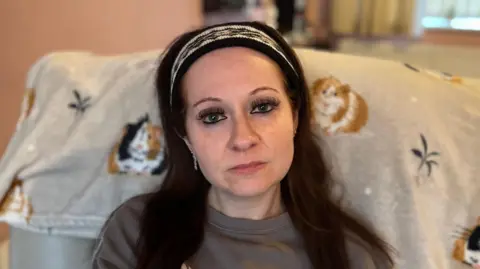
BBCEmma Dyer remembers the moment she clicked "buy now" on a set of weight‑loss jabs she found online.
She had no medical consultation, no ID checks, and no questions about her history of anorexia and bulimia.
"It was just so easy - too easy," she says. "They never asked for my medical history or what medication I was taking. It was like buying groceries."
Within days of taking the injections, Emma collapsed on her bathroom floor and thought she was going to die.
Emma had a history of eating disorders. She says she had reached a healthy weight, felt stable, and was working in a job she enjoyed.
But a single comment from a customer who she said told her "you looked a lot better when you were skinnier", sent her spiralling.
"I came home one night and rushed into it," she says. "I typed in 'weight-loss injections'. I just wanted to lose weight as quickly as I could. I thought if I was skinny again, people would accept me - and I'd accept myself."
Emma paid £115 for what she thought were Saxenda injections.
The 40-year-old, from Carlton in Nottinghamshire, said the website she used offered no safeguards. She says it only asked for her body mass index (BMI), which she was able to lie about.
"If they'd checked my medical history with my GP, I don't think I would've been eligible," she says. "My BMI was normal. I just wasn't in the right headspace to make a logical decision."
'I was hallucinating'
When the injections arrived back in March 2024, the instructions were "poorly printed", Emma says. Not realising she needed to start on a low dose, she injected a medium one.
"The first day I had no appetite. I thought, 'this is great, this is what I want'. Then the second day, it all kicked off," she says.
She collapsed on the bathroom floor.
"I couldn't move, I couldn't speak, I couldn't open my eyes," Emma says. "I was hallucinating and throwing up so much I started vomiting blood. I literally thought, 'this is it - this is how I'm going to die'."
Ashamed and frightened, she told no-one.
She says: "I know people would've said, 'Emma, you don't need to take them'. But in my head, I didn't think I was fine. So I dealt with it all by myself."
She has now decided to share her story in the hope others will think twice before ordering weight-loss jabs online.
 Getty Images
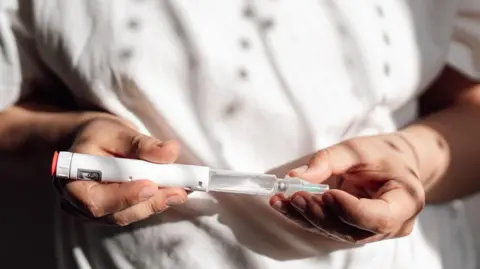
According to some recent figures, estimated by external researchers from University College London, about 1.6 million UK adults have used weight-loss injections in the past year.
Some people are able to get the injections - called Mounjaro and Wegovy - through the NHS but most buy them privately.
Both drugs work as an appetite suppressant by mimicking a hormone called GLP-1, which makes people feel fuller.
The jabs are highly effective, but experts say users should be aware of the risk of weight gain once they stop taking the drugs.
Dr Claire Fuller, NHS England's national medical director, says the organisation is concerned about reports of unverified sellers and the promotion of weight-loss jabs without "clinical oversight, medical checks or follow-up care".
"The lack of supervision can put people's health at serious risk, and there may also be concerns about the quality or authenticity of the products on offer," she says.
"Weight-loss drugs are powerful medicines and can have serious side effects, which is why they must only be prescribed by an appropriately trained healthcare professional."
The NHS added access to such medication goes hand in hand with "behavioural support and wraparound care".
"The structured wraparound care support focuses on good nutrition to support health and increasing physical activity," a spokesperson added.
'Buying from hairdressers'
The Medicines and Healthcare products Regulatory Agency (MHRA) has also published guidance on how to obtain weight-loss jabs safely and the risks to be aware of.
Daniel Magson, CEO of Derby-based eating disorder charity First Steps ED, says Emma's experience reflects a trend it is increasingly alarmed by.
"At the moment, we're seeing a huge rise in people accessing weight‑loss injections - some through pharmacies, some online, and in some cases even from their hairdressers," he says. "And they're not getting the right support alongside them."
The 33-year-old says the charity is witnessing a pattern:
- People becoming physically unwell after resisting food
- Individuals being hospitalised with heart issues
- Worsening depression linked to restricted eating
- Relapses among those long recovered from eating disorders
Daniel says referrals to the charity have risen sharply. In2024-25, it says it received 1,339 adult referrals, representing a 57% increase compared to 852 referrals the previous year.
"We're now training staff not just on weight‑loss injections, but on how shifting body ideals caused by them are re‑triggering people - including those who recovered decades ago," he says.
His fear is that support services are being left to "pick up the pieces".
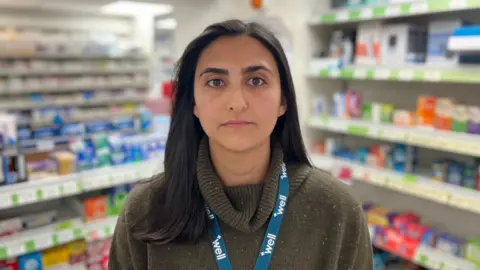
Pharmacist Grace Pickering, who works at Well Pharmacy in Alfreton, Derbyshire, says Emma's experience is far from isolated.
"We've had some quite worrying situations where people have shown me things that have not come from medical professionals," the 29-year-old says. "If you get it from a non‑reputable source, the medication might not be what it says it is."
Grace says her pharmacy follows guidelines set by the General Pharmaceutical Council when offering its weight-loss service, which includes an initial face‑to‑face consultation before prescribing medication, and then monthly check‑ins afterwards.
She believes all providers should meet these same minimum standards.
"All we want is for the service to be led by a medical professional," she says. "Face‑to‑face consultations, regular check‑ins, and instant support if patients need to talk about side effects."
Emma agrees, and says her experience shows why tighter regulation is needed.
"They should ask for photographic evidence, see the person, check their BMI, know what medication they're on, ask for medical notes," she says.
"It's not just about the checks - it's before, during and after. You need that ongoing support."
Emma says she hopes talking about her experience will encourage others to think twice.
"It was the biggest mistake I've ever made," she says. "I spiralled back into my eating disorder. I nearly died. I wouldn't wish it on anyone."
- If you have been affected by any of the issues raised in this article, support is available via theBBC Action Line
Follow BBC Nottingham on Facebook, on X, or on Instagram. Send your story ideas to eastmidsnews@bbc.co.uk or via WhatsApp on 0808 100 2210.

Get our flagship newsletter with all the headlines you need to start the day. Sign up here.
