'We want you to recycle but we're not the bin police'

 BBC
BBCDespite increasing recycling rates by 20%, to an overall figure of 51%, since Cornwall's rubbish collection system was changed two years ago, the council has said there is still a long way to go.
Random sampling of black bag household waste has shown 45% of what was thrown away could actually have been recycled.
Loic Rich, Cornwall Council's waste portfolio holder, said they wanted to educate people about recycling, rather than punish them for not following rules." We don't want to be the bin police, we want to support people and encourage people to recycle," he said.
The government has set a target for all councils to achieve a 65% recycling rate by 2035.
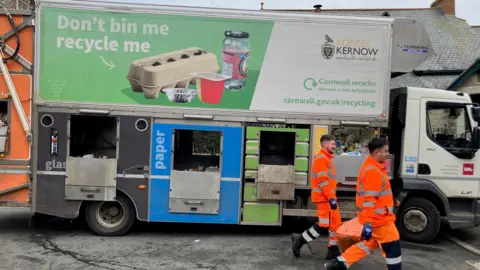
Cornwall's rubbish revolution began in January 2024, with people in mid-Cornwall the first to move to the new collection regime.
Food waste is taken away every week in a small green bin and household "black bag" waste and recycling are now collected on alternate weeks. By March 2025 the whole county had moved to the new regime.
Since weekly food waste collections were introduced, 31,000 tonnes of food waste have been steered away from landfill and into anaerobic digestion, the council said.
How much is recycled?
The front line in Cornwall's recycling effort is an enormous industrial building in Bodmin, run by Suez.
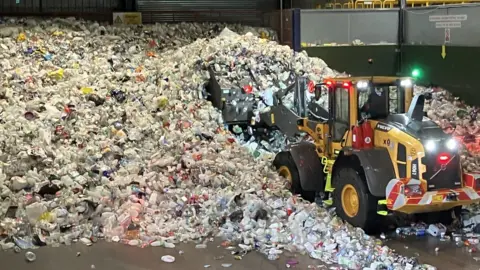
Massive piles of cans, bottles and cardboard are loaded on to conveyor belts and shovelled into hoppers by bulldozers.
Bosses said 99% of the items that comes through the Material Recycling Facility at Bodmin were recycled.
Mark Hillson, contract manager for Suez, said: "The recycling rollout has been really successful."
But he said there was still more households could do to help the recycling effort, with Suez staff periodically checking what was thrown out in black bins.
"A compositional analysis check of what is going out shows 45% could have been recycled," he said.
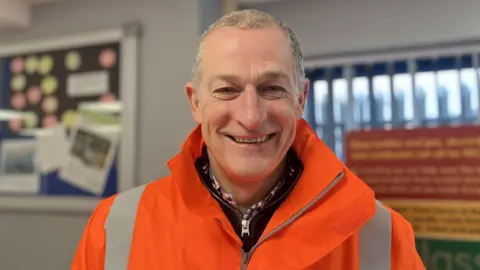
Rich said the rubbish bags were checked to glean information, not with the intention of punishing householders who did not recycle.
"We check black bags just to get data, we're not pinpointing addresses, we're not sifting through trying to find out who it is.
"Basically it's just to give us an idea how much recyclable stuff is going into black bags.
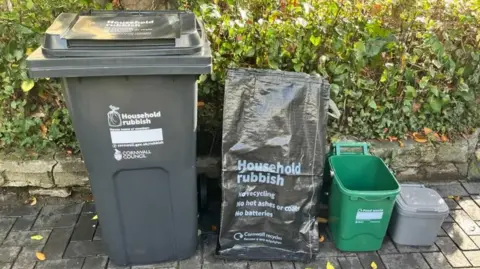
Rich added: "I would just say to people please consider it because it makes a huge difference. The more we can save on recycling, the more money we can spend on other services on the council. It really does make a massive difference."
"Most recycling is worth money so it's really important it goes into recycling bags every two weeks," he said.
Follow BBC Cornwall on X, Facebook and Instagram. Send your story ideas to spotlight@bbc.co.uk.
