'Intertwined histories' to be celebrated in USA's 250th birthday year

 Getty Images
When you think of the 250th birthday of America, it might not be Cullybackey or Strabane that first comes to mind.
But Ulster-Scots enthusiasts and American history buffs are hoping to cement some links in the public's minds throughout 2026.
More than 20 organisations across Northern Ireland have been awarded a share of £250,000 to commemorate the contributions made by people of Ulster-Scots heritage to the Declaration and bonds that endure between the US and Northern Ireland today.
Projects will include a conference on the ideas that shaped American democracy, educational schemes for American and NI schoolchildren, the making of a 30-panel narrative quilt, and a US Independence Day concert at Belfast City Hall, with American artists joining by videolink.
One beneficiary told BBC News NI: "Learning how intertwined our histories are feels especially important now. It connects local families to a global story."
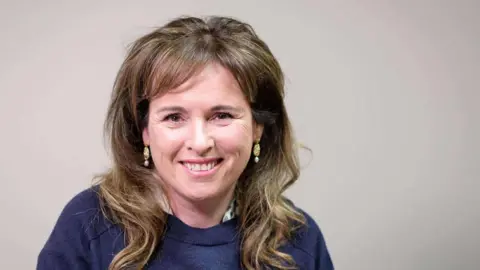
Speaking to BBC NI, Mary MacGinty from Donaghmore Historical Society said the group intended to use the money to build on existing evidence of the ties between Tyrone and Philadelphia in the 18th century, and to teach people about "our own intertwined histories".
She believes there are "hundreds of letters" at the Public Record Office of Northern Ireland that could deepen knowledge of Thomas Greer, a Dungannon linen merchant who traded with the colonies and the fledgling USA.
His business papers show Ulster had already established transatlantic trade routes by 1776.
"A century later, the same channels first charted by Ulster merchants were used by millions fleeing the Great Hunger," she said.
But the most prominent historical figures of the time are those who signed the Declaration of Independence 250 years ago.
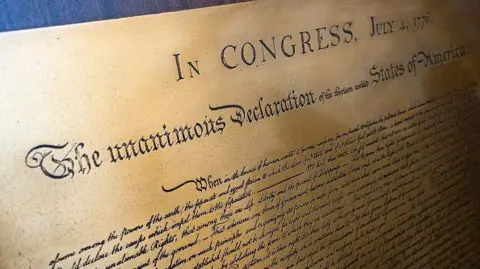
On 4 July 1776, 13 states declared their independence from Britain, saying King George III had established "an absolute tyranny" over the British North American colonies.
Of the document's 56 signatories, three were Ulster born.
Matthew Thornton left the Bann Valley as a four-year-old and grew up to practice as a doctor in Londonderry, New Hampshire - a Scots-Irish township.
George Taylor left Antrim aged 20 and became known as an iron producer who represented the Scots-Irish in south-east Pennsylvania.
And James Smith, who left Ireland as a 10-year-old in 1719, went on to become a formidable lawyer who in 1774 published a polemic questioning the constitutional power of Great Britain over the colonies, calling for a boycott of British goods.
 Getty Images
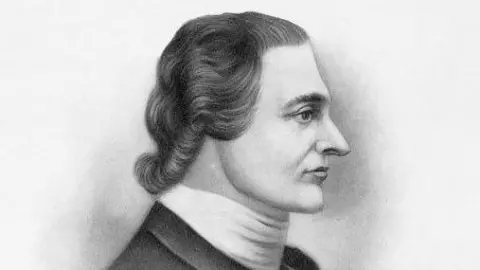
Another important figure in 1770s US history came from Maghera, County Londonderry - Charles Thomson.
Though Thomson, who emigrated 1729, aged 10, was not a signatory to the final document, his name was one of only two etched on the original printing of the Declaration of Independence, where he was listed as a witness.
It was Thomson, too, who designed the first Great Seal of America - the official emblem that is still used today.
 Getty Images
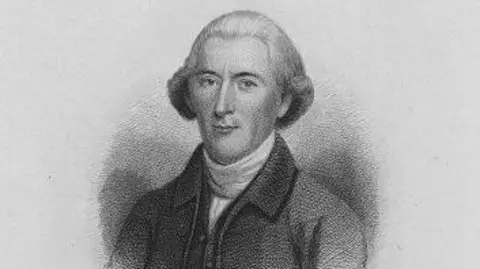
And the many copies that were brought around the states to show the public were 29-year-old from Strabane.
His name was John Dunlap, and went on to fight alongside George Washington in the American Revolutionary War and to print the new country's constitution.
Assessing the printer's legacy, SDLP MLA for West Tyrone, Daniel McCrossan, said: "Strabane has every reason to be proud of John Dunlap. It is time we said so, clearly and permanently."
McCrossan has called for a statue to be erected to Dunlap in the town.
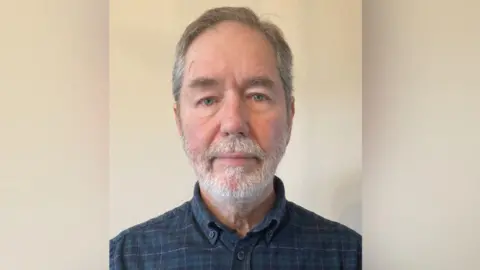
Another history buff delighted when the successful USNI250 applicants were announced earlier this week was Martyn Todd of Saintfield Community Association - which received £7,650 to run a programme of events looking at the influence Scots-Irish philosopher Francis Hutcheson had on the founding fathers.
"American academics now widely believe that Hutcheson was Thomas Jefferson's main inspiration when he was drafting the Declaration," Todd said.
Hutcheson, who was born in Drumalig, located between Saintfield and Carryduff in County Down, was the son of a Presbyterian minister of Scots descent, and a tenured professor of moral philosophy at the University of Glasgow.
Todd say: "His ideas that people possess an innate goodness, that everyone is created equal, and that we all should be protected by a set of inalienable rights forms the bedrock of the American constitution.
"There may be nobody that had a bigger impact on the political thought of the leaders of the American Revolution than Hutcheson."
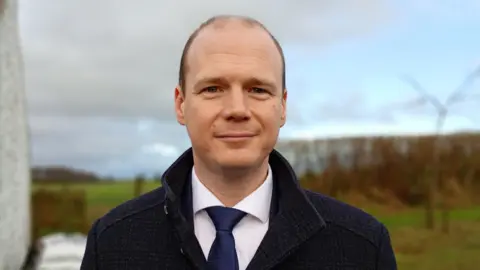
Communities Minister Gordon Lyons, who announced the funding, said it was "important that we maintain those links" with the USA.
"I think its important we keep good relations whoever is in the White House and whatever administration is there," he said.
"There have been many presidents that have been in office that we have established relationships and that should continue regardless of the occupant of the White House."
Other organisations that received funding as part of USA-NI250 can be found here.
