Five years on: Why the SNP is still the party to beat in Scotland

 PA Media
Queen Elizabeth was on the throne, Boris Johnson was in Number Ten and we were still living two metres apart with pandemic restrictions.
That is how it was at the time of the last Scottish Parliament election in 2021 and, for all that has changed, the SNP remains the party to beat at Holyrood on 7 May.
After a major setback two years ago when Labour heavily defeated them in the UK general election, the SNP's political luck seems to have turned.
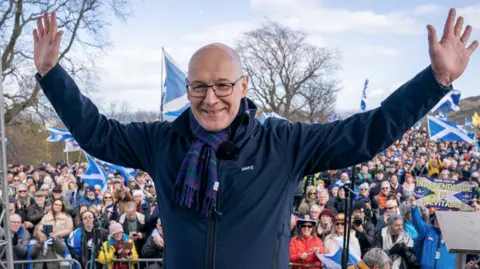
They are not experiencing a surge in popularity under the leadership of John Swinney.
Instead, it is a sharp decline in support for Sir Keir Starmer and the UK Labour government that is helping them stay in front according to opinion polls.
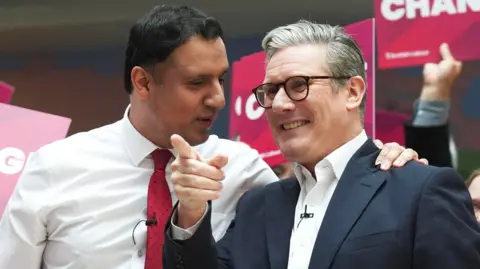
Scottish Labour leader Anas Sarwar decided that Starmer was such a drag on his efforts to challenge the SNP for power that he called on the prime minister to quit.
 PA Media
The SNP is also benefitting from the apparent rise of Reform UK which is fragmenting the pro-UK vote in Scotland.
That may make it easier for the SNP to win constituency seats with a lower vote share than they once enjoyed.
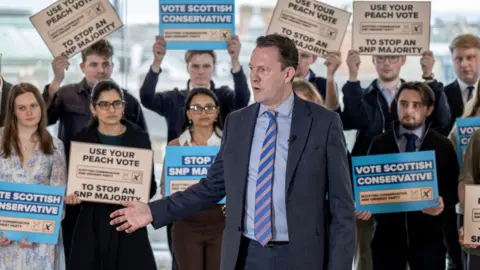
This dynamic is a source of frustration for parties like the Conservatives, led by Russell Findlay, and Sarwar's Labour who desperately want to deny the SNP a fifth term in office.
Both these opposition leaders catalogued SNP shortcomings during the last Holyrood question time before the election.
The housing shortage, overcrowded prisons, high drug deaths, delayed ferry and road building projects and the backlog of cases in the NHS were among their complaints.
In response, Swinney accused them of pedalling a "doom loop of despair".
He pointed to a reduction in the longest NHS waits, the expansion of free childcare and the abolition of peak rail fares as examples of delivery by his government.
Having been in power for much of the last two decades, Swinney's strength and vulnerability are flip sides of the same coin.
His vast experience in government may be an asset but it comes with shared responsibility for all the problems there have been on his party's watch.
 PA Media
As the election draws nearer, Swinney has renewed the case for Scottish independence which remains the SNP's ultimate objective.
By prioritising this, he is seeking to motivate the party's core support and win back independence minded voters who have drifted away.
He is aiming to win a majority of seats at Holyrood which he believes is the best way to persuade the UK government to agree to another referendum.
That is a very high electoral bar to clear in a system designed to prevent any one party achieving such domination.
The Conservatives hope that Swinney's focus on what they regard as the "obsession" of independence can help them rally unionist voters to their cause.
A recent Sevanta survey for BBC Scotland suggested that the constitutional question was a priority for only one in eight voters.
Instead, it identified the public's key concerns as the cost of living and the wider economy, the NHS and migration.
It is little wonder that financial pressures appear to be of primary importance.
The wars in Ukraine and now Iran have caused energy price rises that have in turn pushed up what we pay for other goods and services.
Holyrood has some tax and welfare powers that could be used to help address these problems but Westminster has much greater financial clout.
The Scottish Liberal Democrat leader Alex Cole-Hamilton has called for an emergency insulation programme to protect people from rising energy costs.
The Scottish Greens - jointly led by Ross Greer and Gillian Mackay - want higher taxes for wealthier people to generate cash that could lower household bills.
Key policy clashes have yet to develop with most manifestoes not due to be released until after Easter.
 Getty Images
The early days of this campaign have instead been dominated by conduct issues.
The conviction of the former SNP council leader Jordan Linden for sexual offences has raised questions about the party's handling of complaints, prompting a review.
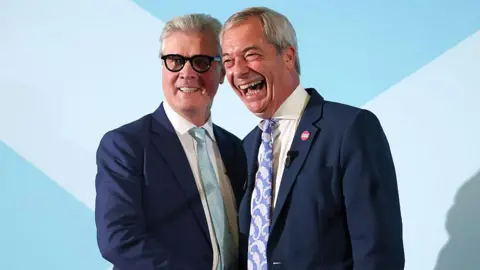
Reform UK has created headlines for losing five candidates and for a homophobic joke made by their Scottish party leader Malcolm Offord some years ago for which he has apologised.
Reform UK got a tiny number of votes and no seats at the last Holyrood election.
This time, they were attacked in the opening campaign addresses of the SNP, Labour and Conservative leaders.
There is a new political force in this election and perhaps that is one of the biggest changes in Scottish politics over the last five years.

