Metal detectorists give £40k for hospital scanner

 RCMR
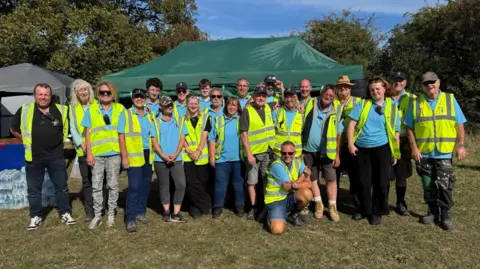
RCMRThe team behind the largest metal detecting event in Europe have raised £40,000 towards a hospital's new state-of-the-art Scanner.
The £4million new PET-CT scanner at the Royal United Hospital (RUH) in Bath will help with early diagnosis, treatment planning and monitoring a range of diseases including cancer, Alzheimer's, cardiac or neurological disease.
The Rodney Cook Memorial Rally (RCMR), founded by Gary Cook in 2018 after his father died of cancer, has so far raised more than £280,000 for the hospital.
Cook, from Westbury in Wiltshire, said the care his father received at the RUH was "quite simply incredible".
He added he felt "compelled to try and do something to repay that kindness".
Laura Snell from RUHX, the fundraising charity for the hospital, said the dedication of Cook and his team is "inspiring".
Snell added, the metal detectorists' fundraising efforts are "living proof that when ordinary hard-working people come together, they can achieve extraordinary things".
In memory of his father, Cook ensures that proceeds from the metal detecting events including ticket sales, raffles and other event activities go towards helping others who are cared for at the RUH.
Since the rally began, it has raised hundreds of thousands of pounds for patients, families and staff at the RUH, including some funding for the Dyson Cancer Centre.
In 2025 the team of volunteers organised three metal detector weekends in Wiltshire with participants from all over the world taking part.
The new PET-CT machine will allow hospital staff to carry out up to 5,000 scans per year.
Follow BBC Bristol on Facebook, X and Instagram. Send your story ideas to us on email or via WhatsApp on 0800 313 4630.
