'I've happily married thousands of people'

 BBC
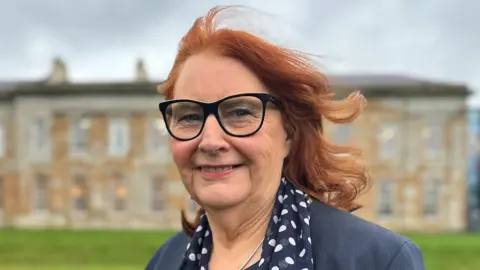
BBCFor the past 40 years, Anne Robson has shared in the best and worst moments of people's lives. Armed with her special pen, County Durham's superintendent registrar is the area's official record-keeper.
The young couple fidget nervously at the front of the room as Anne asks the question they all hope nobody will answer.
Does anyone know of any lawful impediment to their getting married?
"I've only had people object twice," Anne says, casting her mind back over the last four decades.
One was a friend of the groom's who thought it would be funny to speak up - he was given short shrift by Anne and the rest of the guests.
The other was a jealous ex-girlfriend determined to ruin her former lover's day.
"It was a classic 'it should have been me'," Anne says.
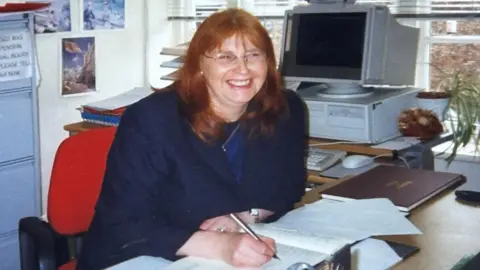 Anne Robson
In both instances the ceremony had to be stopped and a hasty investigation carried out, quick interrogations of those involved before Anne could be satisfied the objections had no merit.
Her job is important; the onus is on her to make sure everything is shipshape, that all parties are there freely and willingly.
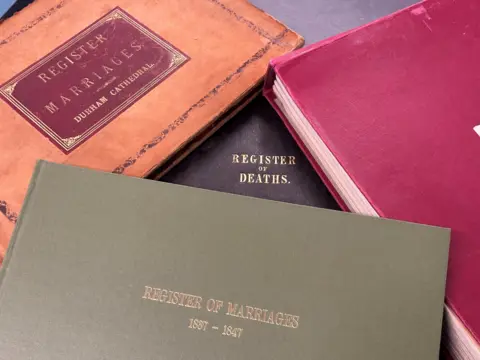
The role of the registrar was created in 1837, with the responsibility for keeping the legal record of the hatched, matched and dispatched in their area in their hands.
Neat handwriting is vital.
The paperwork Anne and her fellow registrars fill out will become the records held in archive storing rooms that researchers use to trace the past, the documents scoured by ancestry hunters, the official history of landmark life events.
Anne had to pass a handwriting test to be offered the job in Crook, County Durham, on 27 December 1985.
Since then she has registered thousands of births, deaths and marriages, and for the past 30 years has often been the one at the front conducting the wedding ceremony.
She has married thousands of people, with County Durham hosting about 2,000 weddings a year, 2,500 births and 5,000 deaths.
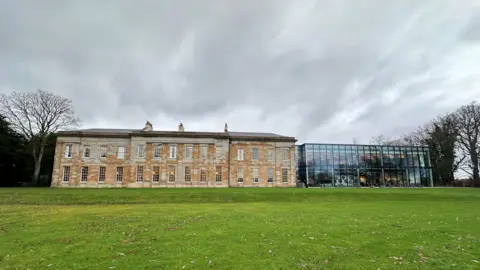
The table in the corner of her office at The Story on the outskirts of Durham groans beneath the weight of several large folders bulging with thank you cards and letters.
Anne flicks through, reminiscing about the moments that elicited each correspondence.
From rounding up nervous grooms from nearby pubs to watching brides arrive in hearses, Anne has seen it all.
"Oh yes, the themed weddings," she says with a laugh.
"As long as the ceremony is solemn and dignified, I don't say no to anything."
There was the pirate one, when the groom and his gang all dressed as Jack Sparrow and the vows were exchanged in seafarers' speech - "aha me hearty I've found my wench".
Halloween-themed weddings are also a regular occurrence, brides dressed in black, while she has also seen a whole menagerie of animals act as ring bearers.
She conducted the first civil partnership in County Durham hours after it became legal in 1995, the newspaper article featuring a photo of two beaming men one of the mementos Anne keeps in her ring-binders.
In many ways, the civil partnerships were the most emotional, Anne says.
Often they were people who had been together for years, decades of not being able to officially announce their partnership.
Anne even performed a civil partnership ceremony for two serving inmates in a prison, something she reckons was a first at the time.
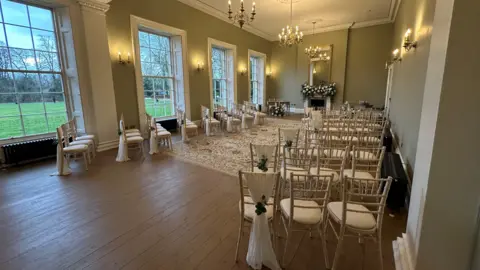
Two or three times a year, Anne and her team also have to put on a very special ceremony, sometimes with barely half an hour's notice - the deathbed wedding.
Anne will drop everything to literally fulfil someone's dying wish.
They are always highly emotionally charged, the usual declarations of lifelong love and the wishing of happy and healthy lives rendered hollow.
"I sometimes come out with a sore mouth because I'm chewing the side of my mouth to not cry," Anne says.
On one occasion, the terminally ill bride died moments after the ceremony was completed.
"It's the most privileged time in my career," Anne says. "Somebody wants to be married before they die and I can do that.
"It's a humongous thing for me."
Every document is filled in with a fountain pen loaded with special registrar-grade ink that properly "stains" the paper.
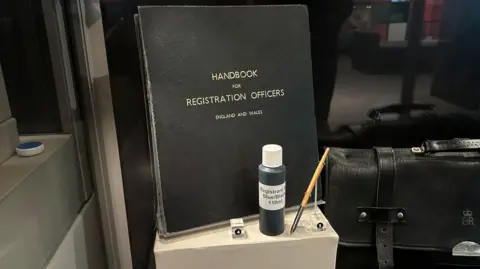
If a registrar makes a mistake and the document is signed before it is spotted, the record has to go to the General Register Office to be corrected.
The use of Tipp-Ex is a "sacking offence", Anne says, and even an inadvertent ink blot is a big no-no.
"The question could be asked 'what are you trying to hide beneath the blot?'" Anne says.
She has had only two "yellow perils", the warning given to registrars for errors, in her 40 years.
"I'm thinking I didn't do too badly really," the miner's daughter says.
One was for an ink blot, the other for misspelling the County Durham town of Annfield Plain as Anfield Plane.
"It is mortifying to make a mistake," Anne says.
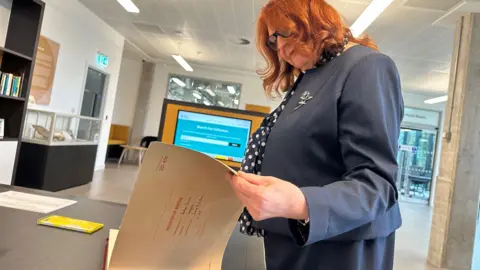
Anne's first pen and bag are now on display at The Story, the former Mount Oswald manor house and golf club which Durham County Council has repurposed into a register office and wedding venue, archives and exhibition space.
They are mementos for a career Anne has loved - and has no intent to end anytime soon.
"I love the fact that every single day is different," Anne says.
"It's about having an empathetic personality whilst making sure you're getting accurate information, but not being cold and clinical.
"The day I have a couple standing in front of me and I don't think it is special or important is the day I will retire."
