'I was a slave girl but now I can say I'm an MBE'

 Jon Wright/BBC
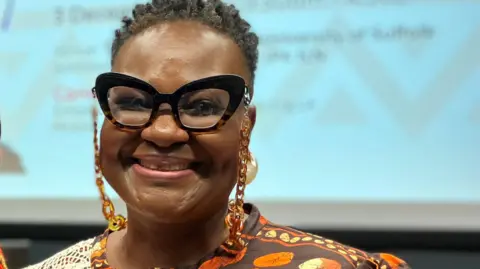
A woman who survived female genital mutilation (FGM) as a teenager and has helped hundreds of other victims has been appointed a Member of the Order of the British Empire (MBE).
Valerie Lolomari, who lives in Takeley, Essex, but grew up in Nigeria, was mutilated without warning at the age of 16.
The 54-year-old still lives with the emotional and physical trauma and has dedicated her life to eradicating FGM.
"When I opened the letter, I could not move. My hands were shaking," she said, describing the moment she found out she had been awarded the honour.
 Valerie Lolomari
"I read it again to be sure, and I burst out crying. 'Valerie, how did you get here?' I thought.
"I was a little slave girl but now I can say I'm an MBE."
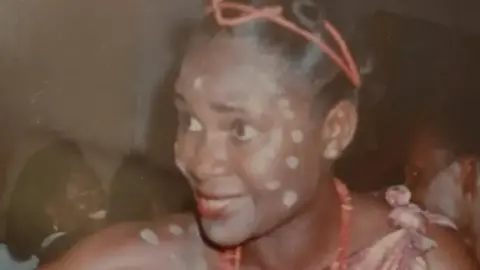
From the age of 11, she became a slave and was passed around to different families.
When she was older, she managed to escape and went to university in Nigeria, where she met her husband, who was visiting from England.
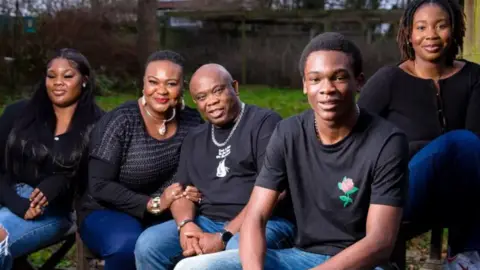
The couple went on to have three children, after multiple miscarriages and complications due to the mutilation she suffered as a teenager.
 Valerie Lolomari
Eleven years ago, Ms Lolomari founded the charity Women of Grace to support FGM survivors, originally in Cambridgeshire, Essex, Hertfordshire and London, but now across the country.
So far, she has helped more than 650 women.
"The day I found out, I was feeling low. This journey feels lonely; you feel discouraged," she said.
"I was thinking 'How can I juggle this and carry on?' but now everything has changed.
"The voices of the women and girls I have walked alongside, who survived like me, they are not lost."
 Valerie Lolomari
Women of Grace hosts peer support groups and sends women for counselling. The volunteers educate families and speak in schools about the dangers of FGM.
Ms Lolomari also works with police officers at airports, talking to passengers and training staff to recognise signs of FGM: for example, if a child is withdrawn or going to the toilet frequently.
She said the MBE had taken away some of her pain and was helping her to further heal.
"A lot of things were taken away from me and I lived in pain, shame and loneliness for a very long time," she added.
"But now we have finally been heard in a space where silence has taken hold. This is not my honour; it belongs to every survivor."
Follow Essex news on BBC Sounds, Facebook, Instagram and X.
