Live facial recognition vans rolled out in region

 BBC
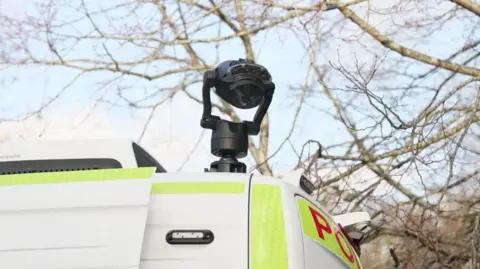
BBCA police force has begun rolling out live facial recognition (LFR) vans.
The two new Thames Valley Police (TVP) vehicles made their debut in Oxford city centre on Cornmarket Street.
The technology, which has been criticised by some civil liberty groups, compares the digital image taken of a human face against a database of facial images.
Det Ch Supt Craig Kirby, head of crime and intelligence, said it would give the force an "additional tactic to quickly locate people of interest, arrest outstanding suspects and safeguard high-risk missing people".
In August, the government said LFR had been used in London to make 580 arrests in 12 months, including 52 registered sex offenders who breached their conditions.
The Home Office announced funding for 10 more vans, including for police in Hampshire and the Thames Valley jointly.
Hampshire and Isle of Wight Constabulary began its own first full deployment over the weekend.
LFR identifies people by taking measurements of facial features including the distance between the eyes and the length of the jawline.
TVP said it can "scan crowds to identify suspects, people of interest and people reported missing at a speed and level of accuracy that cannot be achieved by a person".
It said following the first deployment the technology would be used across the Thames Valley "frequently".
Officers will create a bespoke "watchlist" before each deployment, including people wanted on warrants and evading court proceedings. Faces not on the lists will not be able to be matched.
Each van is operated by officers who will verify each match and then trigger an alert.
Police said any biometric templates that do not trigger alerts will be automatically deleted within seconds, meaning no personal data is stored.
Campaign groups have said they are worried about how intrusive LFR could prove to be. There are also cases of people being wrongly identified by the technology.
But Det Ch Supt Kirby said his force was looking to replicate the success of LFR seen elsewhere in the country.
He added: "This also forms part of our commitment to ensure that our officers are equipped with the latest technological advances that policing has to offer, giving them the very best opportunity to keep the public safe, protect vulnerable people and bring offenders to justice in order to protect our communities."
You can follow BBC Oxfordshire on Facebook, X (Twitter), or Instagram.
