Row over police concern for child welfare at farm

 BBC
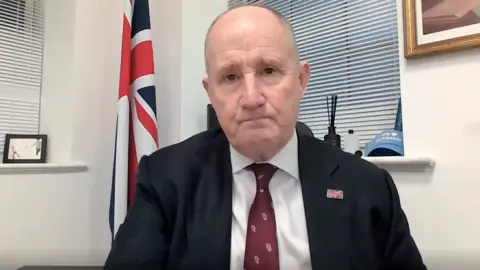
BBCAn MP has criticised a police force for raising "invalid" concerns about the welfare of children living on a farm while investigating a burglary.
Kevin Hollinrake (Thirsk and Malton) said a safeguarding report was triggered by the officer who was called out to the family's home.
They allegedly checked there was enough food in the fridge for the teenage children, asked to speak to them when they were in bed and commented on hygiene in the farmhouse.
Hollinrake said the parents were a "good local family" but North Yorkshire Police said that the constable acted in line with their training by highlighting "living conditions with possible health implications for the children".
The MP added that the force should "stick to its day job" and should have concentrated on investigating the crime the family had reported.
He said: "They're a good local family, and yet the police seem to be more interested in safeguarding concerns - which I don't think were valid concerns - than the attempted burglary."
Catherine Clarke, assistant chief constable for local policing and safeguarding, said the officer "displayed appropriate professional curiosity" and "did the right thing in this circumstance".
She added: "We fully appreciate that police officers asking questions about the welfare of children may feel intrusive, however we would never apologise for taking a child-centred approach and for being proactive in ensuring that the wellbeing of children is protected."
She said police, as a statutory safeguarding partner, had a responsibility to "identify when a child's welfare may be at risk and when they may need protection from harm".
Hollinrake said that the children's mother had allowed the officer to speak to them despite it being "late at night" when they attended.
He added: "And then [the officer] even checked the fridge and the pantry to see if there was enough food in the house to feed the children."
Clarke said the officer's actions meant "a possible concern" was correctly identified, so it could be reviewed by the force's specialist safeguarding team.
"We have engaged with the family to support the understanding of why our officer took this action," she said.
Hollinrake called on police officers to "show better judgement" and "stick to their day job, which is catching real criminals".
"There will be occasions when they walk in through a door in a house and there's something obviously gone wrong," he said.
"Of course, they should act in those circumstances, but this is not one of those situations. This is a typical farmhouse, a working farmhouse."
He added that the switch from investigating a burglary to a potential safeguarding concern should "only be used when the evidence is compelling, and it really wasn't on this occasion".
Clarke argued that all officers and the public "should be able to raise a welfare concern where appropriate for it to be properly assessed by qualified professionals".
"We would encourage this to ensure the most vulnerable in society remain protected from harm."
The process triggered by the officer was a public protection notice, or PPN, which can be shared with partner agencies.
Clarke said that in North Yorkshire Police, a PPN would be completed by an officer and shared with the force safeguarding team.
The team's role includes "checking any previous police reports or PPNs relating to children or family and whether the family has any known involvement with social care", she said.
"A PPN itself is not a social services referral."
She clarified that the PPN in this instance had stated that the children were well cared-for despite the other concerns flagged.
She added: "Any officer submitting a PPN would not be aware if children were already known to social care.
"The PPN process exists so that such concerns can be logged and reviewed by those with access to wider information."
Listen to highlights from North Yorkshire on BBC Sounds, catch up with the latest episode of Look North.
