The service 'bridging the gap' amid winter pressures

 BBC
BBCAs pressure mounts on Nottinghamshire's hospitals during the winter period, other services seek to plug any gaps and offer support in response to what is historically the NHS's busiest time of year.
That is where Nottingham Emergency Medical Services (NEMS) comes in.
NEMS, bosses say, forms a "crucial piece in the jigsaw" that helps to deal with winter pressures, with urgent care centres for non-emergency patients and a 24-hour call centre.
As the wider healthcare service feels the strain, NEMS aims to help to bridge the gap between primary and secondary care, so patients do not get lost in the system.
The service looks out for patients who require attention but are not in critical condition.
And, over this winter period, NEMS says it has already seen twice as many patients as it did last year.
What is NEMS and what does it do?

NEMS was established more than 25 years ago as a not-for-profit social enterprise based in Nottingham, providing out-of-hours care for patients across the wider county when their surgeries were shut.
Over time it has adapted to the changing healthcare landscape, introducing additional services.
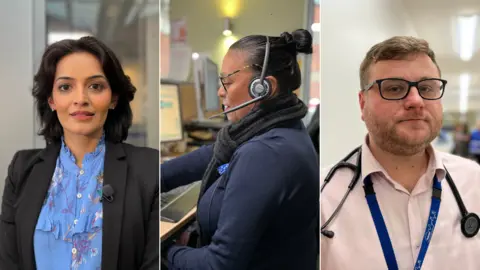
Medical director Dr Nita Mandhar said: "We are a really crucial piece in the jigsaw that helps to combine the system together."
Currently, it runs primary and urgent care services at Nottingham's Queen's Medical Centre (QMC) - run by the Nottingham University Hospitals (NUH) NHS Trust - and at King's Mill Hospital in Sutton-in-Ashfield, run by Sherwood Forest Hospitals NHS Foundation Trust.
NEMS also has a call centre, which provides clinical assessments and helps direct patients to the most appropriate care.
How do you access NEMS services?
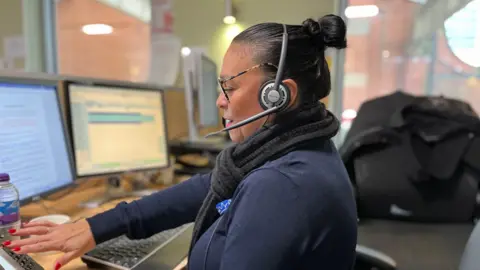
NEMS services are primarily accessed through the NHS non-emergency number, 111.
If you call NHS 111 and require urgent care, but you do not need emergency care, you can be forwarded to the NEMS call centre.
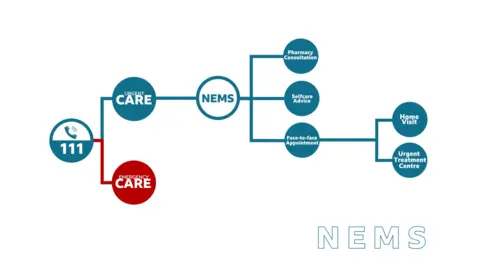
You would then be assessed by NEMS so it can determine the next best steps, which could be advice on self-care, a pharmacy consultation or a face-to-face appointment.
Those in-person appointments could be home visits - for the most frail or vulnerable patients - or at one of the service's treatment centres.
Sometimes, patients who attend A&E can be diverted to urgent treatment centres, like the one at the QMC, and occasionally, patients are diverted to NEMS after calling 999.
Mitigating winter pressures
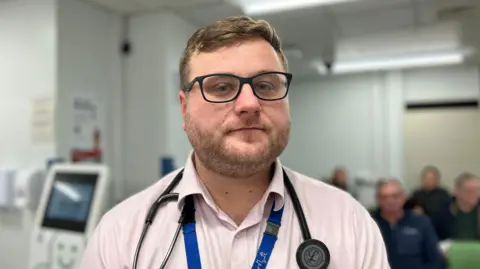
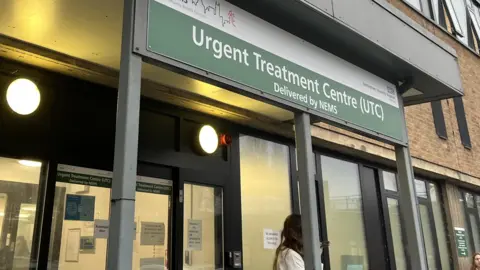
The NEMS urgent treatment centre at the QMC has seen an "unprecedented level of patients" walk through its doors, according to Dr Shane Green, the centre's medical lead.
"This year in particular, we have seen twice and many patients as we did compared with this time last year.
"That's an enormous strain on our service and the wider system, and it's our job to mitigate those pressures with our partners," he said.
The main goal of the urgent treatment centre is to take patients off the emergency department who are not critical but still need same-day care.
Located next door to A&E, at certain times, the centre will cover the front doors of the emergency department, so patients coming through are first assessed by a GP. If necessary, they will then be sent to the urgent treatment centre next door.
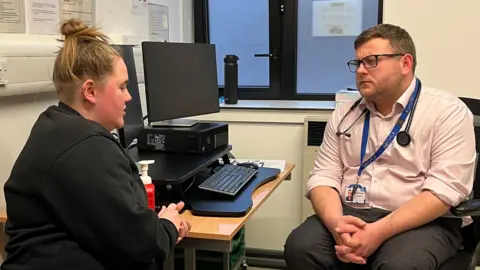
Ashleigh Benson is one of those patients.
The 22-year-old, from Langley Mill near the Nottinghamshire border, said she was initially advised by a GP to visit A&E due to a cyst on her back.
Benson was born with scoliosis and was awaiting surgery, but a scar from a previous surgery had formed an "open wound" after she said she developed a blackhead on it.
Although it was not an emergency, Benson needed to be seen to urgently.
"I first spoke to doctors and they advised me to go to A&E. They saw me quite quickly and sent me to UTC [urgent treatment centre].
"It's more helpful. It's a quicker way to see someone," she said.
"That bridge between those services are really needed especially in a time when people struggle to get GP appointments due to the pressures on the wider healthcare system," Green added.
Challenges facing urgent care
Increased demand is not a new challenge for NEMS but when hospitals are under pressure, other services can also feel the strain.
NUH has declared two critical incidents this winter so far - a level of escalation that allows the NHS trusts to focus on critical services - the most recent being earlier this month.
Green told the BBC during the critical incident, NEMS took "extraordinary action" to support demand on the wider system.
That included seeing extra patients in the urgent treatment centre and allowing ambulances to bring patients directly to the centre where appropriate.
Typically, the call centre handles an average of 266 calls a day but during the winter, it can deal with up to an average of 425 calls each day.
The usual 90 GP home visits a week also increased by 65% during the busiest time of the year, according to NEMS.
Mandhar said each service within the healthcare system had different pressure points, and "close communication" was important to keeping the cogs turning.
Part of NEMS's role is working with East Midlands Ambulance Service.
"We want to try and keep ambulances on the road and do what we can to so avoid the unnecessary conveyance of ambulances to patients that may well not need them," she said.
Last year, the deaths of two young men from Nottingham highlighted what could happen when the system does not work as it should.
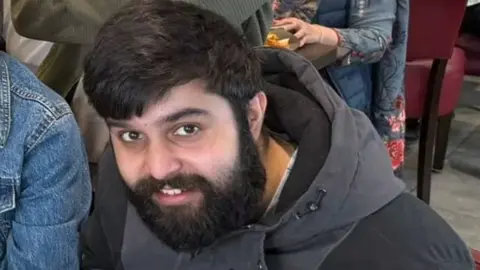
Adam Hussain had called 999 and 111 repeatedly over a number of days while suffering from appendicitis, before he developed sepsis and died.
 Supplied
An inquest into his death heard there was a lack of information sharing between healthcare services, and the severity of the 23-year-old's condition was not recognised.
The death of another young man from Nottingham saw a similar chain of events, and both prompted a coroner to issue a prevention of future deaths report - which is sent when a coroner thinks action is needed to protect lives.
Both services apologised and NEMS promised change.
Mandhar, who has been at the heart of those changes at NEMS, cried in the coroner's court as she apologised to the families on behalf of the service, and was praised by families for her candour.
The coroner welcomed the "detailed review" by NEMS following the men's deaths and its "robust internal action plan" to address the issues raised.
"We play a pivotal role in ensuring we work really closely with our primary care as well as our secondary care colleagues," Mandhar said.
"We understand their pressures, we understand what they can facilitate and what they can't and we look as to how we can mould our services to fit the changing landscape."
Follow BBC Nottingham on Facebook, on X, or on Instagram. Send your story ideas to eastmidsnews@bbc.co.uk or via WhatsApp on 0808 100 2210.
