How Co-op Live went from falling air con units to hosting the Brits

 Reuters
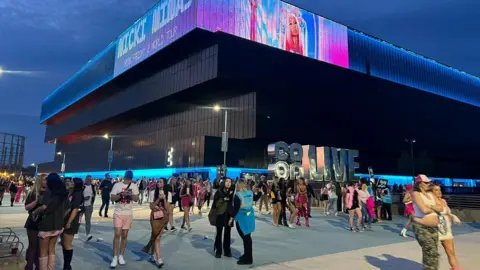
On a cold February afternoon in Manchester, queues of concert-goers are braving the elements outside Co-op Live, the UK's largest indoor arena.
Some are wrapped up in scarves and woolly hats, while others are sitting in deckchairs, eating picnic lunches and playing music as they get ready to watch the chart-topping singer Raye in action.
Away from the crowds, work is underway to install a red carpet walkway to the venue for the Brit Awards next weekend, the first time the prestigious UK awards ceremony will be held outside of London.
But just under two years ago, there were doubts about whether the Co-op Live would ever successfully open at all.
 Getty Images
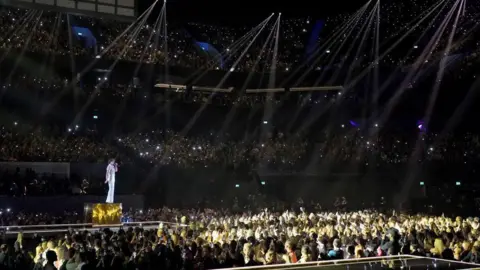
It is fair to say that the opening of the 23,500 capacity arena was far from perfect.
Approved for construction in 2019, it was billed as a state-of-the-art venue worthy of Manchester's rich musical legacy.
But what followed after spades hit the ground was a string of delays and last-minute cancellations.
Co-op Live was set to be opened by Bolton comedian Peter Kay on 23 April 2024 to great fanfare, but the shows were rescheduled twice because the venue was not ready.
A gig by rock band The Black Keys was then postponed, followed by a concert by US rapper A Boogie Wit Da Hoodie, which was called off when part of the ventilation system fell to the floor shortly before doors were due to open.
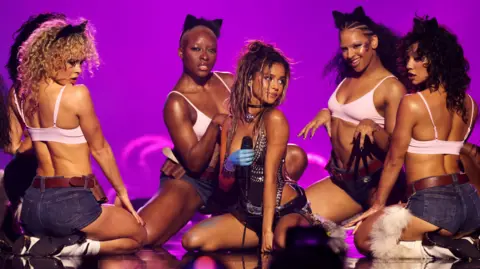
The infamous air-con unit was later used as an idea for Halloween outfit.
And delays did not stop there. Olivia Rodrigo fans were also let down when her Co-op Live shows were cancelled. And a run of shows from Take That were also rearranged, with the band moving their shows to the nearby Manchester Arena instead.
The arena finally had its opening night on 14 May 2024, with a show by the band Elbow.
But by that point, Co-op Live had suffered reputational damage. Customers had been angry and upset at the cancellations.
The venue's general manager resigned on the planned opening night after the troubled opening.
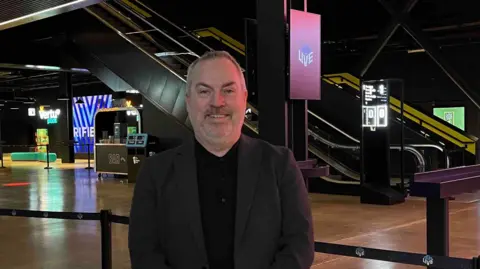
Guy Dunstan, general manager at Co-op Live since October 2024, spoke to the BBC this week about building up the arena's reputation after a rocky beginning.
"There's no denying it was a challenging start," Dunstan said.
For concert-goer, Rhia, 27, from London, the initial issues with the arena had given her reservations about watching a concert there.
"There was a lot of controversy about when it first opened, so I was really nervous at first," she said.
"But when I came for the first time in 2025 - I didn't really have that much of an issue," she said.
Dunstan said the venue has managed to do more than just shake off its troubled opening, and was getting plaudits from those who perform there.
"We had Stevie Wonder last year. He absolutely loved playing here because of the acoustics and played a couple of songs he hasn't played in years because he wanted to play them in this venue.
"The artists' accolades really set us apart," he said.
"And that's driving artists to look at Co-op Live now as a must-play venue when they come into the European market.
"The reputation we've built means that artists who wouldn't have seen the North West as a market where they could play one-off shows are now coming and bringing those exclusives to us."

For some UK concert-goers, the arena has given them opportunities for live music away in the north of England, instead of London.
Nicole, 17, from Preston, in Lancashire, said: "It's just really cool to have a venue this close and accessible".
She said for her, travelling to London is not an option.
"It's too far away and train prices are expensive. But with somewhere this local, it's really accessible and I think that's important with the music industry at the moment."
 PA Media
Chance, 20, from Wigan, said: "It's very convenient to have the Co-op Live here - because now loads more artists are coming to Manchester compared instead before going to like Wembley Stadium.
"I feel proud to have a venue like it in Greater Manchester."

But despite Co-op Live's success in attracting big names, some say the regional gap in major artists choosing London over the North has still not been closed.
Elise, 21, from Chester, has been to two concerts at Co-op Live, and is going to a third later this year.
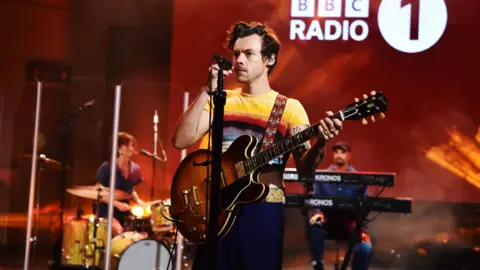
But the one artist she will not be able to see here is Harry Styles, whose 2026 tour consists of 12 UK shows, all at Wembley Stadium.
Styles later announced a £20 ticket bid would take place for an exclusive one-off performance at Manchester's Co-op Live, where is he a shareholder, before his stadium shows.
But many fans were left disappointed after about 670,000 ticket requests were submitted for the Manchester show, with only 23,500 places available.
"All the bigger artists seem to go for London," Elise said.
"And even if they go elsewhere, it's always the most shows, or the best shows in London. So if you're Northern, it's not great."
When asked about this, specifically in relation to Styles, Dunstan said, "we are so honoured that out of any venue in the world that Harry and his team have chosen Co-op Live".
He said the venue is offering solid competition to its stadium counterparts, but added, "the economics of going into a stadium are always going to be greater for an artist than in an arena".

On the Co-op Live experience itself, some concert-goers have raised concerns about parking and queuing.
Music-lover Adam, 27, from the Wirral said he has been to more than 200 concerts and estimates he goes to just under 30 every year.
He claims to have been to Co-op Live a handful of times since it opened, and said he thinks the venue is still suffering from "teething problems".
"One time I missed half the warm-up because of the queue to get in," he said.
Adam posted a video about his experience queuing to see Deftones at the venue last week, which received a lot of engagement, with people sharing both similar and opposing experiences.
Allow TikTok content?
"There are lots of different entrances but it seems everyone with a standing ticket is directed to the same one rather than spreading the crowds out," Adam said.
"It's a state-of-the-art venue, you've got the infrastructure there to host that many people.
"But the queuing system to get in, the management of the crowds and the parking makes me feel like there are still teething problems to be sorted out."
'Definitely busier'
In the Co-op Live's first year, from June 2024 -June 2025, the arena said it had hosted 162 headline events and provided 12,360 jobs to people in Manchester.
"We've brought inward tourism - people staying and spending time in Manchester restaurants, bars, transportation, a lot of jobs," Dunstan told the BBC.
And since it opened in May 2024, more than half a million trips have been made to Co-op Live by public transport, according to Transport for Greater Manchester.
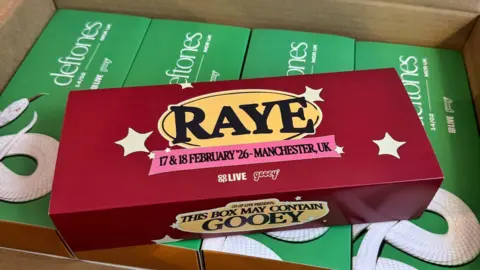
The venue also said it provided a £200,000 donation to the East Manchester Advisory Committee for local charities in Greater Manchester, as well as providing other opportunities to external local businesses, like Gooey, an independent bakery founded in Manchester.
Gooey founder, Jake Ansbro said: "On gig days town is definitely busier - and we, along with many other hospitality businesses, are feeling the positive impact it's having on the city."
 Jake Ansbro
The troubled opening of the venue dominated headlines.
But after a year and a half of major acts, queues and economic successes, the arena's redemption is well underway.
And with the arrival of the Brit Awards on the horizon, Co-op Live appears to have flourished after its rocky start.
