French coin found near Culloden may have been used to pay Jacobite

 Ian Deveney
A metal detectorist has uncovered a coin that may have been used to pay a soldier who fought at the Battle of Culloden, 280 years ago.
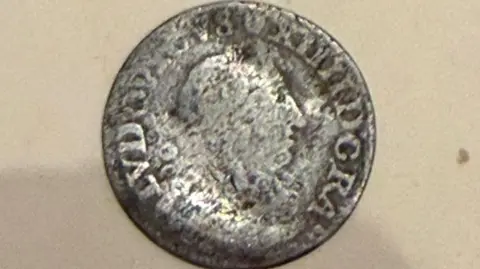
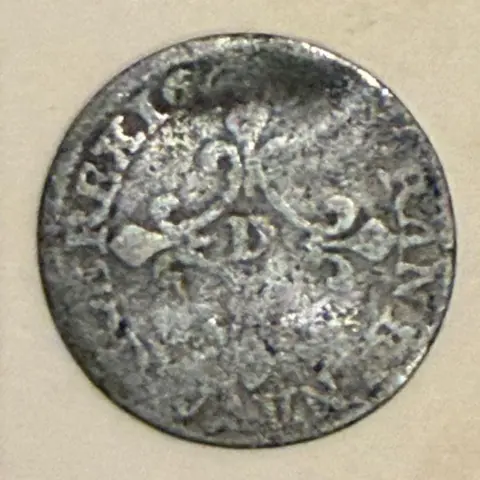
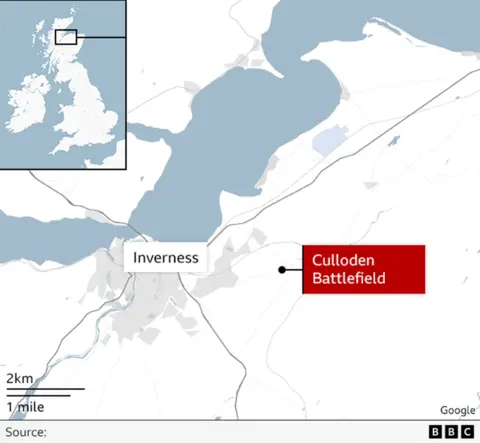
Ian Deveney uncovered the French 4 sols coin earlier this month on land between Inverness and the battlefield on the outskirts of the city.
Deveney, a tour guide who specialises in Scottish history, researched the find and discovered that fighters among Bonnie Prince Charlie's army at Culloden were paid in French currency.
Treasure Trove Scotland, which helps determine whether finds should go to a museum, has been notified of the discovery.
Charles Edward Stuart, better known as Bonnie Prince Charlie, led a rising in 1745 to win the British throne. He was the son of the previous claimant, James Edward Stuart.
The Battle of Culloden on 16 April 1746 saw the prince and his forces - known as Jacobites - face King George II's government army, led by the king's son, the Duke of Cumberland.
The prince was defeated and about 1,600 men were killed - 1,500 of them Jacobites.
It was the last pitched battle fought on British soil.
 Prof Tony Pollard
 Ian Deveney
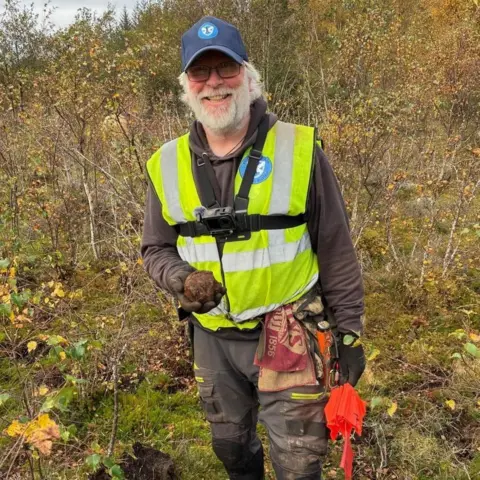
Deveney is a member of North Detectorists, a group that seeks out artefacts connected to the Highlands' past.
"It was near the end of the day and I was quite tired but got this great signal, dug down and out popped this silver coin," he said.
"I was quite excited and I thought I had found a hammered coin going back to the medieval period."
After cleaning it at home, Deveney was intrigued to find it was a French coin from the 1670s.
He said: "What was a French coin from the 17th Century doing in Inverness?
"It was turbulent times. Britain was at war with France."
Deveney said France backed the Jacobites for a number of reasons, including as a way of diverting British military resources away from fighting French forces in continental Europe.
He added: "Jacobites did get paid in French currency, particular the Irish Piquets, Royal Ecossais and FitzJames's."
Other recent discoveries made at Culloden Battlefield have included musket balls found last October.
Archaeologists believe some of the lead shot was related to one of the last actions of the battle.
It saw about 150 Irish troops block the way of charging government horsemen, allowing retreating Jacobite fighters to escape.
