'Oldest northerner' cave remains are of young girl

 University of Central Lancashire
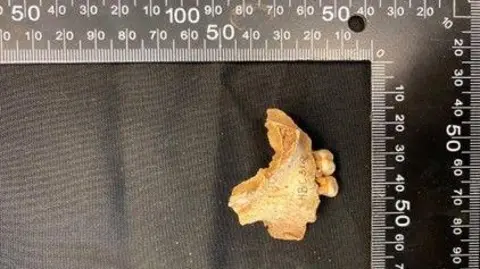
Bones dating back 11,000 years and dubbed "the oldest northerner" have been confirmed as being the remains of a little girl.
The discovery was made at an archaeological dig at a cave near Great Urswick, Cumbria, in 2023.
Initial studies suggested the remains belonged to a man, but further analysis by the University of Lancashire revealed the bones belonged to a female child aged between two and a half and three and a half years old.
Archeologists name the girl "Ossick Lass", meaning Urswick girl in the local dialect.
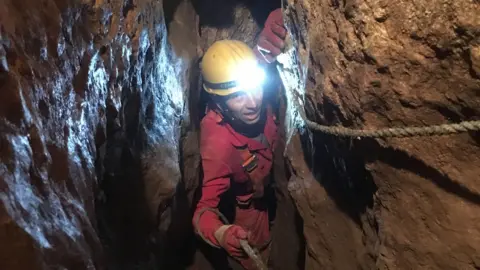
Local archaeologist Martin Stables began excavations at Heaning Wood Bone Cave in 2016, finding several other bodies and artefacts such as a shell bead and a pendant made from a deer tooth.
"It's nearly 10 years since I started the excavations and I couldn't have envisaged the journey I have undertaken," Stables said.
"It's as if I went back in time to 9,000 BC.
"Ultimately, reaching the Mesolithic Period has obviously become the highlight of the excavation and something that's particularly poignant to myself.
"Effectively, I was the first to bear witness to the obviously caring burial of someone's child that occurred over 11,000 years ago."
Stables was keen the Mesolithic girl's remains were named to bind her and her resting place together.
 University of Central Lancashire
The discovery of the "Ossick Lass" was of great significance owing to the age of the remains.
While earlier human remains have been discovered in southern England and Wales, the destructive effect of past glaciations means such finds are rare in northern Britain.
Before this discovery, the earliest northerner was from a 10,000-year-old burial at the nearby Kent's Bank Cavern discovered in 2013.
The 11,000-year-old bones provide clear evidence of Mesolithic burials in the North.
Lead researcher Dr Rick Peterson said: "It is the first time we have been able to be so specific about the age of a child whose remains are so old and be certain that they are from a female."
The team established that along with the young girl, at least eight different people were buried in the cave with evidence showing they were all deliberate burials.
A research paper about the discovery and DNA analysis has been published in the Proceedings of the Prehistoric Society journal.
Stables, who is from Great Urswick originally, said publishing the research is "an important stage that in due course, allows us to reveal further information about this unique site of national importance."
"My journey continues," he said.
"This is just the beginning and there is much more we plan to tell."
