CPS loses bid to overturn Quran-burner's acquittal

 PA Media
The Crown Prosecution Service (CPS) has lost a High Court bid to challenge the acquittal of a man who burned a Quran outside the Turkish consulate in London.
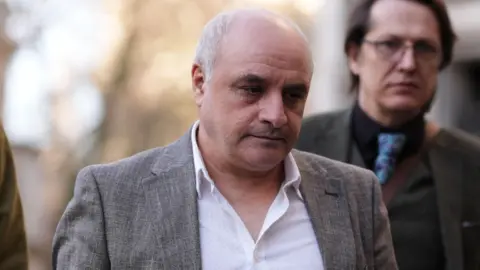
Hamit Coskun was initially convicted last June of a religiously aggravated public order offence after he held a flaming copy of the Islamic text aloft and shouted an expletive about Islam outside the Turkish embassy in February last year.
The 51-year-old successfully appealed against his conviction, having it overturned by Mr Justice Bennathan at Southwark Crown Court in October.
The CPS brought an appeal against that decision at the High Court and asked for it to be reconsidered.
Knife attack
Dismissing the appeal in a decision on Friday, Lord Justice Warby and Ms Justice Obi said: "We are not persuaded that the court left any material factor out of account or relied on any immaterial factor."
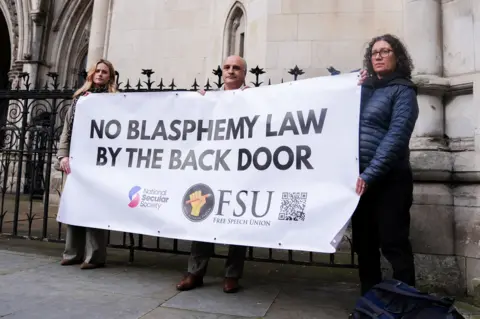
Reacting to the dismissal of the appeal, the Free Speech Union described it as a "humiliating defeat" for the CPS and called on the Director of Public Prosecutions to resign.
Lawyers for the CPS told a hearing earlier in February that Mr Justice Bennathan had been wrong to find that Coskun's behaviour was not "disorderly" and, if it was, was unlikely to cause harassment, alarm or distress.
Coskun, who has been provided accommodation by the Home Office since his protest because of threats made to him, resisted the legal challenge and attended the hearing in London.
After the ruling, Coskun said: "In England, I hoped that I would be free to speak about the damage of sectarian politics and Islamism.
"I am relieved that after a year, the courts have ruled that I am free to do so."
 CPS
CPSDuring his protest in Rutland Gardens in Knightsbridge, Coskun, who is an atheist, shouted "Islam is religion of terrorism" and "Quran is burning".
A man emerged from a nearby building and slashed at him with a large knife, later telling police he was protecting his religion.
The attacker, Moussa Kadri, was given a suspended jail sentence in September.
'Via the back door'
Stephen Evans, chief executive of the National Secular Society, said after the decision: "The High Court has rightly rejected this wrongheaded attempt to introduce a blasphemy law by the back door.
"However offensive some may have found the Quran-burning protest, it was lawful.
"Criminal law protects people from harm, not from being offended.
"This judgment makes clear that it is not the state's job to police religious sensibilities. A hostile – even violent – reaction to speech cannot be allowed to determine whether that speech is criminal.
"There must now be a serious review of how and why the CPS originally came to charge a man with causing harassment, alarm and distress to the religion of Islam, and why it chose to pursue this case to the High Court.
"Public confidence demands answers."
 PA Media
Following the High Court's decision, Lord Young of Acton, general secretary of the Free Speech Union, said: "This appeal should never have been brought by the Crown Prosecution Service, just as Hamit should never have been prosecuted.
"We have not had blasphemy laws in this country for 18 years and, for that reason, this prosecution was bound to fail.
"Yet the CPS has spent hundreds of thousands of pounds trying to bring one back via the back door – and one that just enforces Muslim blasphemy codes, not Christian ones.
"In light of this humiliating defeat, I think the Director of Public Prosecutions has no choice but to resign."
Shadow justice secretary Nick Timothy said he had written to the head of the CPS about the case to say it was not a public order issue: "It is about what can or cannot be said about a specific religion.
"Freedom of expression includes the right to say things that can cause offence."
A Crown Prosecution Service spokesperson said: "There is no law to prosecute people for 'blasphemy', and burning a religious text on its own is not a criminal act – our case was always that Hamit Coskun's words, choice of location and burning of the Quran amounted to disorderly behaviour, and that at the time he demonstrated hostility towards a religious group.
"The High Court has made a ruling we will review its decision carefully."
Listen to the best of BBC Radio London on Sounds and follow BBC London on Facebook, X and Instagram. Send your story ideas to hello.bbclondon@bbc.co.uk
