Barge life and the joys of post-industrial canals

 John Sadler
The eyes of the world have been on the West Midlands canal network after an embankment collapsed, dragging boats into a giant hole and leaving boaters stranded, but what is the appeal of life on the post-industrial waterways, many of which date back to the 19th Century?
While many are rushing to the January sales or holidaying abroad, one couple have told how the best experience in winter is a simple one - travelling along a canal at just three miles an hour.
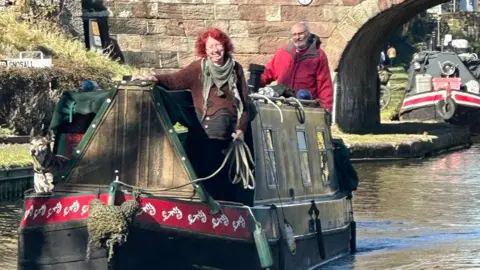
Narrowboat owner John Sadler and his wife Sharon Wells love spending time cruising along a part of the West Midlands' waterways, embracing the slow pace of life and nature around them.
"There's no way of describing it," Mr Sadler explained. "It won't really do it justice, you've got to experience it, it's lovely.
"How far you go depends on how long you have got. You go at two or three miles an hour, not much more than walking pace. That enables you to really take in the countryside around you."
"It's a very much slower pace of life."
 John Sadler
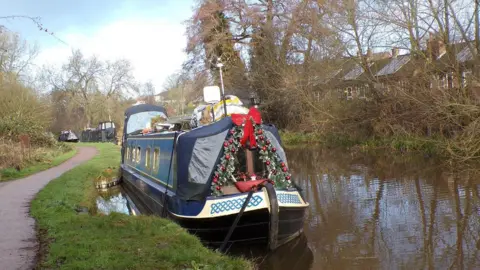
For Mr Sadler, a trip on the boat is a break from it all, a time for walks, reading and enjoying nature.
The classical musician plays cello in an orchestra, so it is also a time to write music.
But the boat has its own demands.
"We are thinking have we got enough power?" he said. "Have we got enough coal, diesel, water, food?
"The fridge runs off batteries. It takes a lot of power and there's not a lot of solar power at this time of the year.
"You need to run the engine every day."
When he lights the fire, the boat reaches a cosy 24C, he said, which is good in the winter - but less good for the wood on his electric cello, in the heat.
 John Sadler
Both Mr Sadler and Ms Wells are on the council of the National Association of Boat Owners (NABO).
When the canal in Whitchurch collapsed, their immediate thoughts were for the boat owners, who they said had "narrowly escaped with their lives" and gone on to lose their homes and boats.
Their next thoughts were for the canals and future maintenance.
Mr Sadler said the embankment collapse was "not a common event, but it is one that has happened before and will happen again".
He said the association had previously highlighted the need for adequate government funds to maintain the infrastructure and was also behind a Fund Britain's Waterways campaign to increase awareness of the potential for such accidents.
One way to minimise the risk could be the use of cameras to check the condition of culverts, Ms Sadler said.
Culverts are covered channels or pipes carrying water below ground.
Ms Sadler said there were 2,000 miles of canal and "an unknown number of culverts".
But he also said there were about 35,000 boaters and many of them were willing to give time and effort to help, and cameras were "relatively cheap".
The government said canals and rivers provided a wide range of benefits, including connecting people to nature, which was why it was investing more than £480m in grant funding in the Canal & River Trust "to support the essential infrastructure maintenance of our much-valued waterways".
 John Sadler
The Canal & River Trust has documented how canal companies built the waterways in the 1800s, but they ended up abandoned and forgotten by the 1900s.
It described "a new burst of life" in the 1990s and 2000s, with restoration, development, and nature and wildlife helping to turn canals into the heart of the community.
'Home is on the canal'
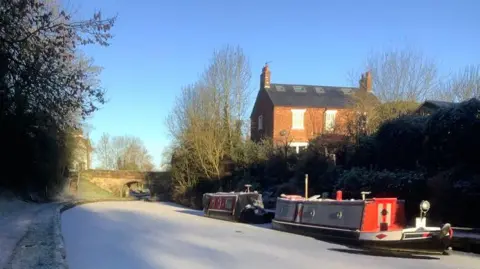
Mr Sadler likes to take their boat into a town for just a short time and then escape into the country.
"Birmingham is great with the culture that's available. I love going there," he said.
"It's great to go by boat. You can go for a drink and not really worry about how you're getting there. Home is on the canal."
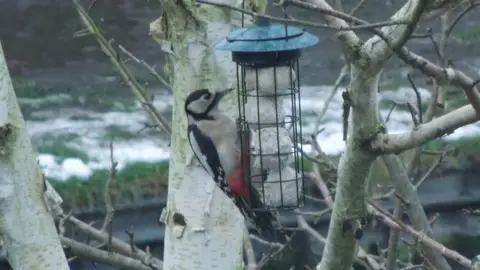
Out in the country, depending on the time of the year, Mr Sadler has seen kingfishers, buzzards and rooks along the waterway.
"Quite often you see herons, even in Birmingham," he said. "Sometimes they position themselves in front of the boat, and the boat gets the fish moving, and the herons dive in after the fish.
"Some fishermen like us but others think we get in the way."
 John Sadler
A report published by the Canal & River Trust in November highlighted how the former industrial canal network – described as the longest, most connected corridor of freshwater habitat – was one of the country's greatest and not fully recognised assets for wildlife and connecting people with nature.
Campbell Robb, chief executive at Canal & River Trust, said the waterways, now a legacy of an industrial past, had become a blueprint for Britain's environmental future.
"These human-made waterways are now one of the nation's most valuable ecological systems, home to rich biodiversity," he said.
"You don't have to go to a national park to feel nature's benefits. Our canals bring wildlife right into people's daily lives."
He said the canals were a powerful network for nature recovery and wellbeing and could reconnect millions with "the living world on their doorstep".
 John Sadler
Mr Sadler loves wildlife but can be less keen on the weather.
"You're very close to nature, but that means we are always aware of everything that goes with it – which can mean the rain, the hail, the snow," he said.
"I'm not a great lover of cruising in the wet, standing on the back using a tiller. There's no cover on a narrowboat," he said.
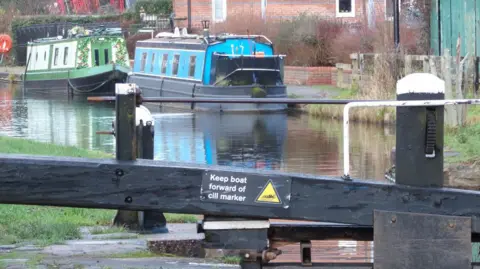
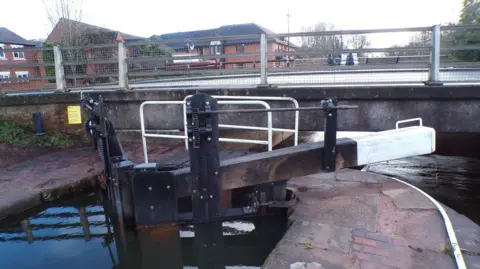
There's also much walking involved to get the boat through the many locks.
One of the more well-known examples of a challenging set of locks is the 21 gateways at Hatton in Warwickshire, once known as the "Stairway to Heaven", because of the hard work involved in the ascent of 146ft over a couple of miles.
According to the Canal & River Trust, the name reflected the relief felt by boaters reaching the top of the flight.
Mr Sadler remembers arriving at Hatton Locks one morning to meet friends in another boat, before they were unexpectedly joined by a cruiser.
It could have been a challenge, but he said: "All of us knew exactly what to do, and if you get on with it, it's fine."
 John Sadler
Living close to the Shropshire Union Canal, he does not expect to get as far as Hatton this winter.
He will either follow the waterway north to Norbury Junction or south to Wheaton Aston, not far from Wolverhampton.
The Shropshire Union Canal runs from Autherley Junction near Wolverhampton on the Staffordshire & Worcestershire Canal to the Manchester Ship Canal at Ellesmere Port.
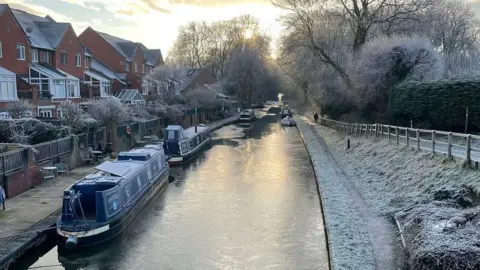
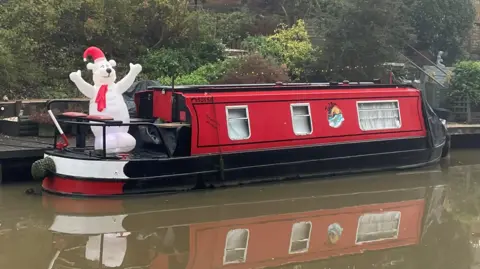
"It depends on the weather," Mr Sadler said. "If it's really cold, the canals can freeze and the blacking on the bottom of the boat scrapes off."
 John Sadler
As boaters reeled from the events in Whitchurch, Mr Sadler said: "We are probably all searching for answers. Why and how did this occur?"
The Llangollen canal provides water from the River Dee to Hurleston reservoir, which apart from providing water for navigation, also kept a large part of Cheshire supplied with water, he said, adding: "There will be pressure to repair this breach but it is likely to take many months."
Mr Sadler said he was "not going to be an armchair engineer", and would wait for reports to be issued.
Defra said the Canal & River Trust was the custodian of the majority of the network and currently had a grant of £52.6m a year up to 2027.
It said the trust would receive more than £480m grant funding between now and 2037.
The department said the trust was set up as a private sector charity in 2012 with an understanding that it would move towards greater self-sufficiency and reduced reliance on public funding.
It said the original agreement was clear there was no obligation to fund the trust beyond 2027, but a review found the trust was good value for money and a further 10-year package was agreed with funding of £401m from 2027.
Defra said the new long-term settlement, plus other funding opportunities, "allows the trust to plan for the future to provide a thriving sustainable network".
Follow BBC Shropshire on BBC Sounds, Facebook, X and Instagram.
