Salmon seen spawning after river restoration

 Michel Roggo/REUTERS
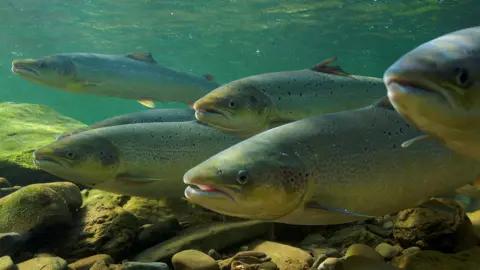
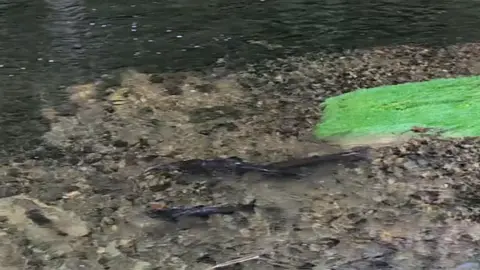
Atlantic salmon have been filmed spawning in a river for the first time since it underwent a restoration project.
West Cumbria Rivers Trust said it could not reveal the exact location of where the three fish were seen to protect them, but said they had migrated up to 5,000km (3,106 miles) to "make it home".
The charity said Atlantic salmon were "facing a multifaceted crisis" with numbers declining globally due to factors including habitat loss, climate change, poor ocean survival and fish farming.
The trust described the fish spawning as "something special", adding "nature wins again" after the group worked on restoring the area in West Cumbria over the summer.
A project officer said the trust had worked with farmers and other groups to restore the rivers.
He said Atlantic salmon had one of the "most remarkable and complex life cycles of any fish" because they "hatch in freshwater, grow up in rivers, migrate to the ocean, then return to freshwater to spawn".
The project officer continued: "Once hatched, juvenile salmon will spend one to four years in the river.
"They then begin their migration to the North Atlantic, where they will again spend one to four years feeding and growing rapidly before carefully navigating their way back to the exact river where they hatched in order to spawn."
 West Cumbria Rivers Trust
He added for West Cumbrian salmon, that could be a round trip from 4,000 to 8,000km (2,500 – 5,000 miles).
The project officer added: "River restoration projects like this remove or soften river modifications.
"What we've seen already is that natural river processes have created new juvenile fish habitats, and allowed salmon to expand their spawning areas... this could help support greater juvenile salmon survival for this river."
