Buckie ice cream maker's bitter taste of the energy market

 BBC
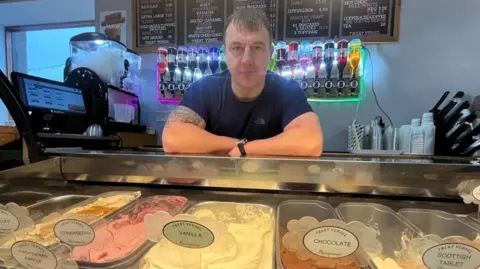
BBCWhen Richard Simpson decided to leave offshore work and run an ice cream business in Buckie, he thought he was trading his old job for something sweeter.
He bought a local ice cream parlour and production unit, making tubs for sale across the north east. Eight people work there year-round, a number that can double during the summer months.
But on his first day in charge, a phone call turned what should have been a fresh start into an ordeal that nearly froze his plans.
An energy broker was on the line. They said they could get him a good deal, he recalls.
Richard told BBC Scotland News: "That phone call ended up taking almost 20 minutes. It was difficult to understand the person on the phone.
"They were using a lot of jargon. I wasn't sure but they were insistent we were getting a fantastic deal at the best price possible.
"And they were able to tell me how less we were going to be paying than the current rate. So I agreed to that and asked them to send it over and I'd review it later in writing. "
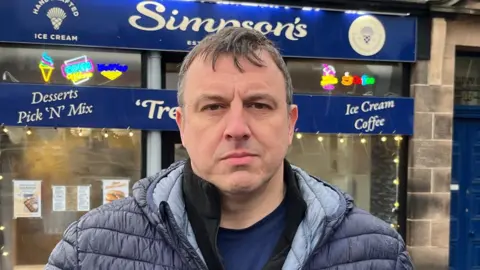
When the paperwork arrived, the terms were far from what he expected.
Richard found the deal "extraordinarily overpriced" at 70% more than the current price.
The broker insisted he had already agreed to the contract on the phone, leaving him locked into a deal that threatened his business.
"They were unrelenting. At that price, I wasn't sure how the business could continue," he said. "It caused a lot of stress and anguish and I didn't know where to turn to at the time."
After months of anxiety, Mr Simpson contacted the Energy Ombudsman, the independent body that helps resolve disputes between consumers, small firms and suppliers.
The Ombudsman ruled that the contract was unfair, allowing him to switch to another provider.
"They allowed me to release, and go with another broker. That allowed us to operate for the next couple of years at a fair price." he said.
But the episode left him frustrated that small businesses lack the protections available to domestic customers.
"There's no 14-day cooling-off period, no signature required, no safeguards. I felt really sick to the stomach that the market was allowed to do that."

Research by Consumer Scotland suggests cases like this are not unusual.
A recent survey found one in five Scottish firms had faced problems with their energy contracts serious enough to affect their turnover or profits.
Most of these contracts are arranged through third-party brokers — intermediaries who remain only lightly regulated.
David Eiser, Consumer Scotland's head of investigations, said small firms often face the same difficulties.
He said: "It's very clear that small business consumers do need greater protections in this market, because its so complex. We want to see broker services more robustly regulated."
He's seen lots of issues "around the transparency of their billing and metering, issues around disconnection, and the time taken to get reconnected."
Scottish Director of the Federation of Small Businesses (FSB), Colin Borland, says urgent action is needed, to rein in what he calls "rogue brokers".
He added: "They are overcharging people. They're mis-selling products. It's the Wild West out there because of the number of cowboys that seem to be operating in the industry."
"We need a new sheriff in town to make sure some basic standards are enforced. Any regulator is going to need some teeth."
The UK government is promising a clampdown on unregulated brokers.
The UK Minister for Energy Consumers Martin McCluskey said: "Small Scottish businesses have been taken advantage of for too long by cowboy energy brokers.
"We will end this exploitation, which has been allowed to suck growth out of our local high streets and communities."
"Our new plans will see every energy broker in the UK regulated by Ofgem, with protections and access to dispute resolution for small businesses let down in any way."
A consultation has recently closed, and legislation is expected to follow later this year.
Borland said the FSB broadly welcomed the move but still wanted reforms to go further.
"We need to start treating small firms more like individual consumers, not as if they were running steel mills," he said.
Back in Buckie, Mr Simpson's ice-cream business continues to thrive, but he says the experience left a lasting impression.
"I just felt this was wrong," he said. "You can't possibly be allowed to manipulate people like that."
