'My life changed dramatically after first ice bath'

 BBC
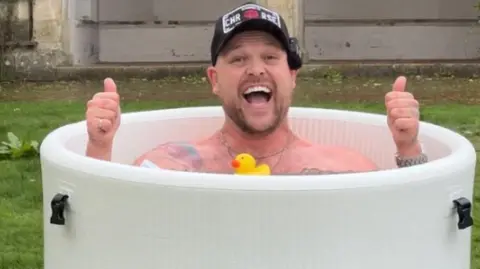
BBCA recovering drug addict has described taking ice baths for almost 600 days in a row as he documented his battle to become clean.
Harry Beattie, 33, from Portsmouth, started using cocaine in his early 20s and also drank heavily and gambled.
But he now shares daily cold water plunges with hundreds of thousands of followers on TikTok and Instagram in the hope of inspiring others.
Ice baths are not safe for everyone, particularly those with cardiovascular disease, high blood pressure and poor circulation.
Experts also say they should not replace established treatments such as counselling, medical support, rehabilitation programmes and peer-support groups.
But Harry credits the rush he gets from the cold water with having a positive impact on his mental health and believes they can be used as "another tool" for those fighting their demons.
"I spent years using drugs, drinking and gambling to try and change the way I felt because I was unhappy with who I was," he said.
He said he ran a double-glazing business, was engaged to be married and was expecting a baby.
From the outside his life appeared successful and happy.
But he said he had a "horrific cocaine addiction" and, despite wanting to stop, "wasn't ready to accept" he was hooked.
He lost everything and an attempt at rehab failed.
"I think maybe six years ago I might not have been ready to accept the help that was being offered," he said.
"I think I was doing it for the wrong reasons, for the wrong people. I was trying to get clean for my dad, I was trying to get clean for my [partner] at the time – I was trying to get clean for everyone else.
"And what I really needed to do was do it for me – because I think I'm worth something."
He said when he took his first ice bath on 21 July 2024 he was "ready" to beat his addiction and it had changed his life "dramatically".
Speaking to BBC Radio Solent last week, Harry said: "Today I took my 583rd ice bath, consecutively, filming it, editing it, uploading it and inspiring people on the internet to take the plunge and to try to change their lives for themselves.
"I think what's important now is the discipline to show up and hold myself accountable… there's days I haven't wanted to do it but I've still showed up and that's holding myself accountable."
'Not without risks'
Prof Mike Tipton, from the University of Portsmouth, has studied cold water immersion for more than 30 years and said the "rush" or "euphoria" people like Harry felt came from a surge of stress hormones as the body reacted to the cold.
He said proving the exact health benefits had "not been easy", and that dangerous changes to breathing and circulation could occur in the first minutes of immersion.
The professor added that medical checks were essential because the therapy could be dangerous.
Counsellor and psychotherapist Paula Marshall-Smith, based in Petersfield, said recovering from addiction was "deeply personal".
She said that what works for one individual may not work for another and "many people find their pathway through a process of trial and exploration".
She said: "Cold water immersion can have measurable effects on the body and mind.
"Particularly those recovering from addiction – this may provide a healthier way to experience intensity, regulate mood, and reconnect with their bodies.
"However, it is not without risks – such as hypothermia, cardiac stress and shock responses.
"Experiential approaches like cold water therapy may form part of a broader recovery toolkit, but they are rarely sufficient on their own."
